AMI Montessori Education: A Complete Guide for Parents
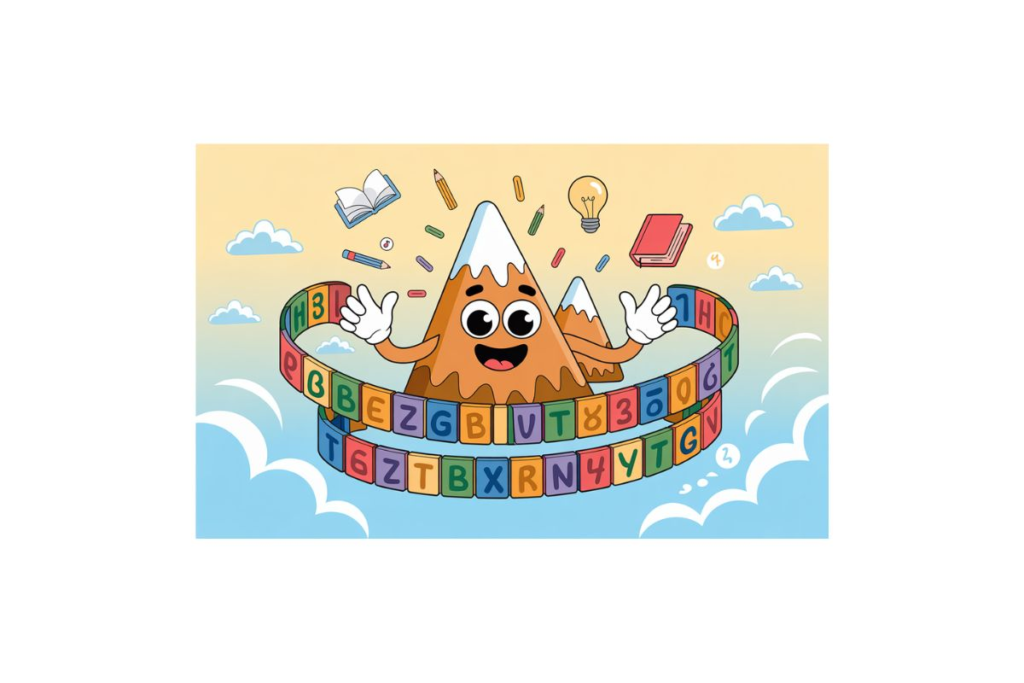
AMI Montessori Education: A Complete Guide for Parents Ks Montessori – Building Strong Foundations for Lifelong Learning Choosing the right educational environment for your child is one of the most important decisions a parent can make. Early childhood education not only shapes academic skills but also influences confidence, independence, emotional intelligence, and social behavior. At Ks Montessori, we follow the AMI Montessori approach, a globally respected method of education designed to support a child’s natural development. This guide will help parents understand AMI Montessori education, its benefits, and why Ks Montessori is an ideal choice for families seeking quality, trust, and long-term success. Understanding AMI Montessori Education The Association Montessori International (AMI) was founded by Dr. Maria Montessori to preserve her original educational philosophy. AMI Montessori schools follow strict international standards to provide authentic Montessori education, not a modified or diluted version. Keywords naturally included in this section: AMI Montessori education AMI Montessori school Montessori early childhood education Montessori learning environment Montessori materials Montessori teaching method AMI Montessori education respects each child as an individual, allowing learning to happen naturally through exploration, movement, and hands-on experience. The Philosophy Behind AMI Montessori AMI Montessori believes children are naturally curious and capable learners. Instead of traditional teacher-led instruction, children are guided to learn independently in a carefully prepared environment. Core Principles: Freedom within limits Self-directed learning Hands-on Montessori materials Mixed-age classrooms Respect for each child’s pace and interests At Ks Montessori, these principles are practiced daily in every classroom. Why Early Childhood Education Matters The first six years of a child’s life are crucial for brain development. During this period, children absorb information effortlessly from their surroundings. AMI Montessori education takes advantage of this sensitive period by creating an environment that encourages curiosity, independence, and responsibility. Benefits of Montessori classrooms: Learn through real-life activities Develop concentration and focus Build confidence through achievement Enjoy learning instead of fearing mistakes Benefits of AMI Montessori Education Independence and Self-Confidence Practical life activities such as pouring, dressing, cleaning, and organizing help children become independent. These small achievements boost confidence and self-esteem. Focus and Concentration AMI Montessori classrooms offer uninterrupted work periods, allowing children to fully engage with tasks and complete them at their own pace. Emotional and Social Development Mixed-age classrooms encourage cooperation, empathy, leadership, and mutual respect. Children naturally learn social skills by interacting with peers of different ages. Solid Academic Foundation AMI Montessori provides strong preparation in: Language and communication Mathematics Sensorial development Cultural studies Children understand concepts deeply because they learn through experience rather than memorization. Why Choose Ks Montessori? At Ks Montessori, we provide authentic AMI Montessori education in a safe, nurturing, and stimulating environment. AMI-Trained Educators Our teachers are professionally trained according to AMI standards. They observe, guide, and support children without pressure or comparison. Prepared Montessori Environment Each classroom is thoughtfully arranged with Montessori-approved materials that encourage independence and exploration. Individual Attention Every child is unique. Teachers carefully observe each child and adapt guidance according to individual needs. Learn more about Ks Montessori programs here Montessori Learning Materials AMI Montessori classrooms use scientifically designed materials that support hands-on learning. Children understand concepts through touch, movement, and repetition. Key Montessori materials with affiliate links: Practical Life Montessori Tools– pouring, spooning, dressing frames Language Montessori Materials– sandpaper letters, movable alphabet Mathematics Montessori Materials– number rods, golden beads Complete Montessori Kit– all-in-one Montessori learning set AMI Montessori vs Traditional Education Traditional education often expects all children to learn at the same pace. AMI Montessori respects each child’s development. In Montessori classrooms: Children choose their work Learning is self-paced Mistakes are part of growth Teachers act as guides, not lecturers This approach develops confident, curious learners who enjoy learning naturally.
Montessori Pink Tower
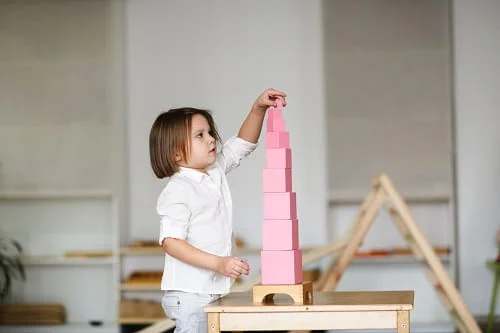
Montessori Pink Tower: Unlock Your Child’s Potential with ksMontessori As a parent or educator, you understand the importance of giving children tools that foster their development. You aspirefor tools that enhance creativity, and independence. One such essential Montessori material is the Montessori Pink Tower, a classic educational tool that helps children refine their fine motor skills, enhance their understanding of size and proportion, and build a strong foundation for early mathematics. At ksMontessori, we are passionate about providing high-quality Montessori materials that support children’s natural curiosity and growth. In this post, we will explore the numerous benefits of the Pink Tower, its educational value, and why it should be an essential part of your child’s learning experience. What is the Montessori Pink Tower? The Montessori Pink Tower is a set of 10 graduated cubes made from durable wood, each painted in a soft pink hue. The cubes range in size from 1 cm³ to 10 cm³, and the goal is to stack them in order of size, starting from the smallest to the largest. This simple yet effective educational material is part of the Montessori Sensorial curriculum, which helps children develop their senses, improve focus, and master critical early math skills. By engaging with the Pink Tower, children gain a tactile understanding of concepts like size, dimension, and proportion. The activity encourages independent learning and problem-solving, both core principles of the Montessori method. Benefits of the Montessori Pink Tower The Montessori Pink Tower offers a range of developmental benefits for children. From cognitive development to physical skills, here’s how the Pink Tower supports a child’s learning journey: 1. Enhances Fine Motor Skills and Hand-Eye Coordination As children handle and stack the cubes, they strengthen their fine motor skills. The precision required to stack the cubes without them toppling promotes hand-eye coordination, dexterity, and muscle control. These skills are vital for other everyday tasks, like writing, drawing, and using utensils. 2. Teaches Early Math Concepts The Pink Tower is a fantastic tool for introducing young children to early math concepts. The cubes offer a hands-on way to explore measurement, proportions, and volume. Children learn to understand how objects vary in size and volume, helping them grasp the basic concepts of mathematics in an intuitive and tangible way. 3. Promotes Spatial Awareness and Cognitive Development By arranging the cubes in different orders and patterns, children develop a strong sense of spatial relationships. The Pink Tower helps them visualize size gradation and order, which builds a solid foundation for geometry, problem-solving, and logical thinking. 4. Encourages Independence and Self-Correction One of the primary goals of the Montessori method is to foster independence in children. The Pink Tower is self-correcting; if the cubes are not stacked correctly, the structure will collapse. This encourages children to solve problems on their own, building critical thinking skills and boosting self-confidence. 5. Improves Concentration and Focus The process of stacking the cubes from smallest to largest requires a high level of concentration and patience. This simple activity encourages children to stay focused and be mindful of their actions, which contributes to their overall ability to concentrate in other areas of learning. How to Use the Montessori Pink Tower There are numerous ways to engage children with the Montessori Pink Tower. Here are a few ideas for maximizing its educational potential: 1. Stacking the Cubes by Size The primary activity is stacking the cubes from smallest to largest. This teaches children about size comparison, sequencing, and order, which are essential skills in early math. 2. Reversing the Order Once your child has mastered stacking the cubes from smallest to largest, challenge them to arrange the cubes in reverse order—from largest to smallest. This reinforces the concept of size and further develops cognitive skills. 3. Counting and Volume Exploration You can introduce counting with the cubes, helping children understand quantity while simultaneously exploring the concept of volume. For instance, ask your child to count how many cubes are in the tower or discuss how the volume changes as the cubes get larger. 4. Creative Play and Building Encourage your child to use the cubes for open-ended play. Have them build towers, houses, or other structures. This creative play helps children strengthen their problem-solving skills and think about balance, symmetry, and spatial relationships. Why Choose the Montessori Pink Tower from ksMontessori? At ksMontessori, we focus on providing high-quality, educational materials that are both durable and safe for children. Our Montessori Pink Tower is made from eco-friendly wood and is carefully crafted to ensure that it will last for years of educational play. Unlike plastic toys, which often lose their appeal over time, the Pink Tower is a timeless learning tool that grows with your child. Here’s why you should choose our Pink Tower: Durable & Safe: Made from high-quality, non-toxic wood for durability and child safety. Educational Value: Supports early learning in mathematics, fine motor skills, and spatial awareness. Timeless Design: The simple, elegant design appeals to children’s natural curiosity and encourages independent learning. Sustainable: Environmentally friendly materials ensure that the Pink Tower is safe for both children and the planet. Where to Buy the Montessori Pink Tower Are you ready to bring the Montessori Pink Tower into your home or classroom? You can easily purchase the Pink Tower through the link below. By buying through our affiliate link, you’ll not only be supporting ksMontessori but also investing in a valuable educational resource for your child. 👉 Click here to buy the Montessori Pink Tower on Amazon The Montessori Pink Tower is more than just a set of wooden cubes; it’s a valuable educational tool that helps children develop a wide range of skills, from fine motor abilities to early math concepts. Whether you are homeschooling or looking to enrich your classroom environment, the Pink Tower is an essential Montessori material that will provide your child with years of learning and growth. At ksMontessori, we are committed to offering the best in Montessori education. The Pink Tower is just one
An introduction to Dr. Maria Montessori
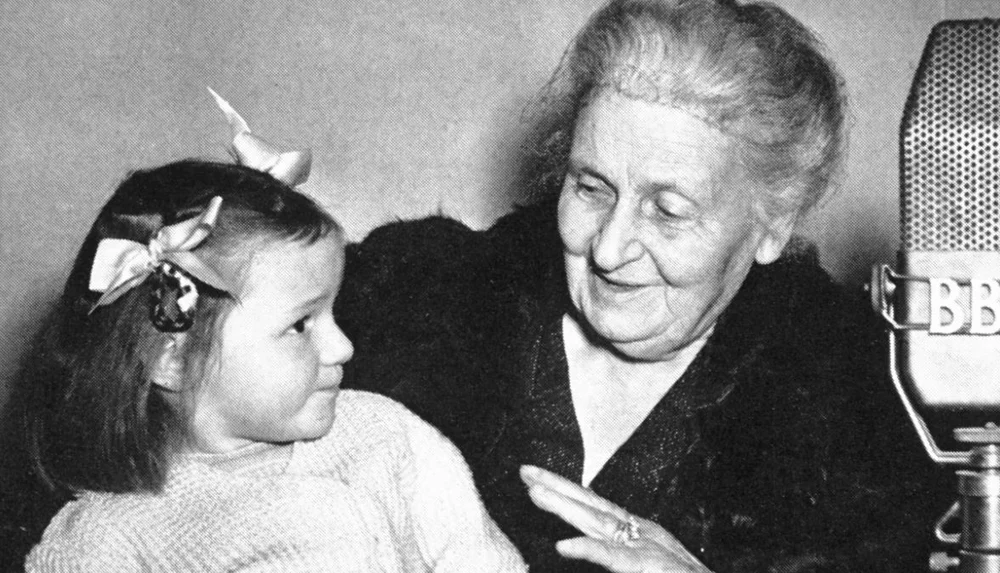
Dr. Maria Montessori: Who Introduced Early Childhood Education Early childhood is the most crucial time of human development.Not many people get that right, but Dr. Maria Montessori did better than anyone. She had a different vision of a child’s learning, growth and how they connect with everything around them. Her ideas are still changing early education all over the world by high quality early education programs that follow her philosophy, even the one at KSmontessori with its nurturing setup. It feels like her approach just sticks because it works so well for little kids. This blog looks into her life and what Dr.Maria Montessori theory is based on. Also, how she affected the world with her methods and why people trust it so much today in early education. Who Was Dr Maria Montessori? Dr Maria Montessori was an Italian physician, educator, and ideologist who forever changed the field of education. She was born back in 1870 and ended up being the first woman to become a doctor in Italy, breaking social barriers at a time when women had limited professional opportunities. When she started working with children she made some record breaking discoveries such as: Kids are just naturally curious and they can learn a lot if you keep them in the right place. Instead of pushing all these strict education systems on them, she believed in observing children scientifically and helping them grow in their own environment. That approach of hers basically started what we call Montessori education nowadays. It’s all focused on the child and the most trusted philosophy by parents and teachers worldwide. The Birth of the Montessori Method: The Montessori Method began in 1907 with the opening of the Casa dei Bambini (Children’s House) in Rome. Dr. Maria worked with children from lower backgrounds and closely observed how they interacted with specially designed learning materials. What she found was extraordinary. When given freedom within a structured environment, children: Developed focus and concentration. They learn on their own, without anyone pushing them. Showed self-discipline without punishment. Demonstrated a natural love for learning. These observations became the scientific basis of the Montessori Method, an educational approach built on respect for the child and hands-on learning. Core Principles of Montessori Education: The main pillar of Montessori education lies in its carefully designed principles, each aimed at nurturing the development of children. Respect for the Child The classrooms are set up in a unique way with materials accessible for different ages that every individual explores on their own with different interests and ways of learning. Child-Led Learning Students get an opportunity to pick what they want to do based on developmental needs, promoting intrinsic and motivation. The Prepared Environment Classrooms are thoughtfully designed with age-appropriate materials that encourage exploration and independence. Hands-On Learning The montessori material involves touching and seeing things, so abstract stuff becomes more real through hands-on play. Freedom with Responsibility Freedom comes with responsibility, like kids can choose but they learn to own their actions and build discipline. The Teacher as a Guide Teachers watch and guide instead of telling everyone what to do all the time. It feels a bit different from regular school. At KSmontessori, Dr maria montessori method is the heart of learning to ensure children’s academic, social and emotional development. Dr. Montessori’s View of the Child: Dr. Maria Montessori quotes that “children are not empty vessels waiting to be filled with information”. Instead, she viewed them as active participants in their own development. One of her most empowering theories was the concept of sensitive periods which explains specific times when children are especially receptive to learning certain skills such as language, movement, or order. When education aligns with these natural windows, learning becomes effortless and joyful. This Dr maria montessori philosophy of education empowers children to: Build confidence Develop independence Strengthen decision-making skills Cultivate lifelong curiosity The Global Impact of Dr. Maria Montessori: Today, Montessori education is practiced in over 140 countries, with thousands of schools serving millions of children. Dr. Montessori’s work influenced not only education but also psychology, neuroscience, and child development research. Her legacy includes: A scientifically grounded educational method International recognition as an educational reformer A timeless philosophy that adapts to modern learning needs From traditional classrooms to modern learning environments. Hence, Montessori education continues to shape confident and capable learning. Why Montessori Education Is More Relevant Than Ever? In this world that’s all about screens and rushing around all the time, Montessori seems like an alternative way to help kids build up those important skills they’ll need later on such as: Independent thinking Focus and concentration Problem-solving abilities Emotional intelligence Respect for others Parents seeking a balanced, holistic approach towards their kids’ education should start to look at places like KSmontessori more often. The learning there is focused on the child, making it purposeful and meaningful. Montessori Philosophy at KSmontessori: At KSmontessori, Dr. Maria Montessori’s vision comes alive every day. Our learning environment reflects her principles through: Carefully prepared classrooms Montessori-trained educators Hands-on, age-appropriate materials A strong focus on independence and confidence We believe education should inspire children, not pressure them. By honoring each child’s natural development, KSmontessori nurtures lifelong learners prepared for future success. Recommended Montessori Resource for Parents: For parents who want to increase their understanding of Montessori education at home, we recommend this highly trusted Montessori resource. Montessori Learning Materials & Books https://amzn.to/48RpxnG These carefully designed materials support hands-on learning, independence, and skill development perfect for extending Montessori principles beyond the classroom. Conclusion: Dr. Maria Montessori’s work was more than an educational method; it was a movement that respected childhood as a golden period of human development. Over a century later, her philosophy continues to shape confident, compassionate, and capable learners. At KSmontessori, we proudly carry forward her legacy by creating an environment where children thrive naturally. By choosing Montessori education, parents invest not just in academics but in their child’s lifelong success.