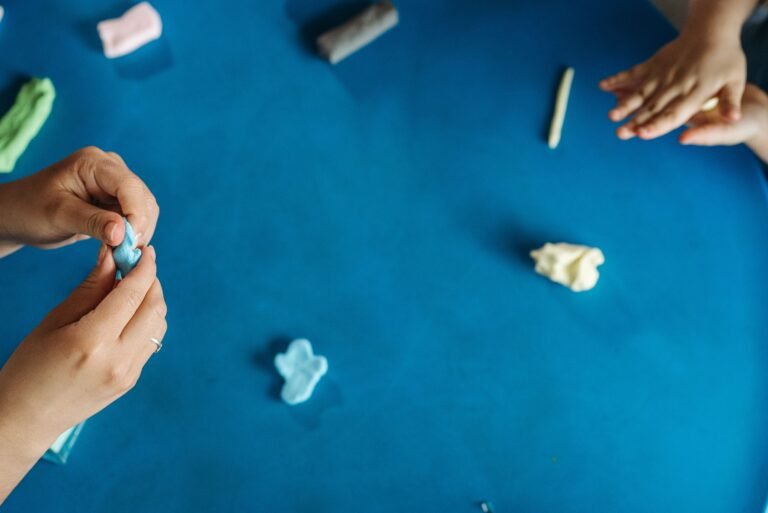
As children grow from toddlers (ages 1–3) into preschoolers (ages 3–6), their hands undergo a remarkable transformation. They transition from using a full-fist grip to mastering the delicate pincer grasp (holding small objects between the thumb and index finger).
Fine motor skills involve the coordination of small muscles in the fingers, hands, and wrists. These skills are essential not only for self-care—like buttoning a coat or using utensils—but also for building the precise muscle control needed to hold a pencil and write.
In a Montessori environment, fine motor development is never forced through repetitive drills or worksheets. Instead, it is nurtured naturally through purposeful, hands-on learning materials. Here is how you can support your child’s development at home.
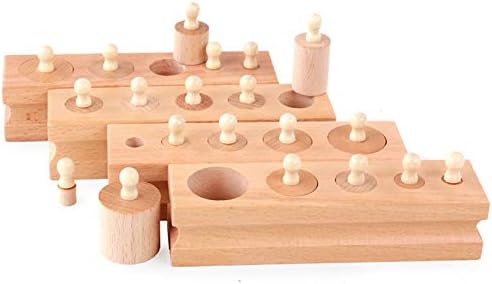
1. Build Finger and Wrist Strength with Knobbed Cylinders
Before a child ever picks up a pencil, they need to strengthen the three “writing fingers”—the thumb, index, and middle finger.
Montessori cylinder sets are designed with small wooden knobs on top of each piece. When a toddler grips the knob to lift, compare, and fit the cylinder into its socket, they are naturally practicing the exact three-finger pincer grasp needed for writing.
- Age Focus: Toddlers & Early Preschoolers (2–4 years)
- How It Helps: Develops pincer control, visual discrimination of size, and hand-eye coordination.
- 📌 Featured Material: Practice pincer grips with the Montessori Cylinder Blocks Set. For older preschoolers, transition to the Knobless Cylinders to refine gradation and balance.
2. Refine Spatial Coordination and Balance with Stacking
Stacking and balancing activities require children to make precise, micro-adjustments with their hand and finger movements.
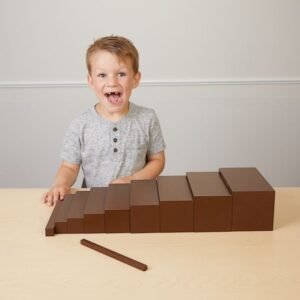
Classic Montessori materials like the Pink Tower and Brown Stair teach children how to carefully control their movements so they don’t tip over the structures. Controlling force, lightness of touch, and spatial placement are core aspects of motor control.
- Age Focus: Toddlers & Preschoolers (2–5 years)
- How It Helps: Builds arm-wrist balance, spatial awareness, and manual dexterity.
- 📌 Featured Material: Explore spatial control using the classic Montessori Pink Tower and the companion Brown Stair Set.
3. Prepare Hands for Writing with Tactile & Sandpaper Tracing
In Montessori education, writing begins long before holding a pen. Tracing textured surfaces helps children develop muscle memory, tactile sensitivity, and finger fluidity.
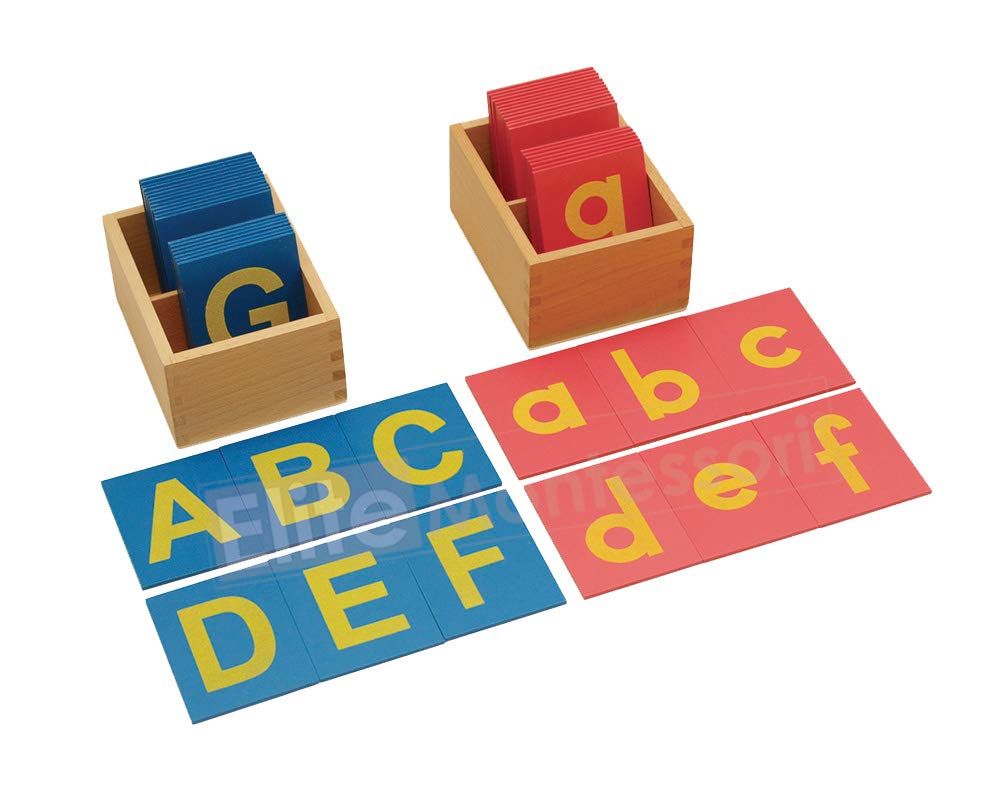
Using their index and middle fingers, children trace sandpaper shapes, letters, and numbers. This light pressure and focused motion build the exact finger pathways needed for fluid handwriting later on.
- Age Focus: Preschoolers (3–6 years)
- How It Helps: Trains two-finger tracing movements, improves tactile processing, and builds a foundation for literacy and math.
📌 Featured Material: Introduce letter and number tracing using Sandpaper English Letters and Sandpaper Numerals (0-9)
4. Develop Hand-Eye Precision through Geometric Insets & Puzzles
For older preschoolers preparing to write and draw, controlling a tool with speed and direction requires refined fine motor skill. Working with geometric puzzles and insets challenges children to manipulate small knobs while carefully inserting geometric shapes into matching frames.
- Age Focus: Preschoolers (3–6 years)
- How It Helps: Enhances visual-motor integration, wrist control, and spatial reasoning.
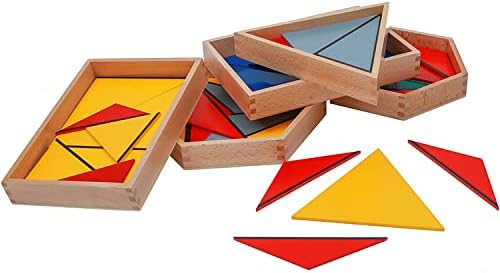
📌 Featured Material: Strengthen fine finger manipulation using the Adena Montessori Geometric Cabinet Puzzle or the Constructive Triangles Set
Incorporate Practical Life Activities at Home
You don’t always need dedicated materials—everyday practical life tasks are rich in fine motor development!
- Pouring & Transferring: Offer small wooden pitchers for water play or tongs for transferring pom-poms between bowls.
- Peeling & Squeezing: Let your toddler peel bananas, squeeze sponges, or peel stickers off a sheet.
- Dressing Practice: Practice zipping, buttoning, and snapping on real clothing or busy boards.
- Practical Tips for Parents
- Follow the Child’s Pace: Never force a toddler or preschooler to finish a task if they are tired. Fine motor muscles fatigue quickly in young children.
- Order and Simplicity: Keep learning materials organized on low, child-accessible shelves. Present one activity at a time on a clean tray or mat to minimize distractions.
- Choose Wood over Plastic: Wooden materials provide weight, natural texture, and realistic tactile feedback that help children gauge resistance and pressure far better than lightweight plastic toys.
Nurturing Independence, One Small Movement at a Time
Developing fine motor skills isn’t about rushing your child toward perfect penmanship or flawless shoe-tying overnight. It’s a continuous, joyful process of discovery. Every time your child grasps a cylinder knob, balances a Pink Tower block, or traces a sandpaper letter, they are not just building hand strength—they are constructing concentration, independence, and self-confidence.
As a parent, your role is simply to provide the environment, the right hands-on materials, and the time to let them explore at their own pace. Trust the process, celebrate their tiny victories, and watch as their little hands prepare for big achievements.