
Because pushing harder almost never works — and there is a better way
There is a particular kind of frustration that most parents know well. How to improve your childs focus ?” You sit down with your child to do something — a puzzle, a drawing, a few minutes of reading — and within ninety seconds they are off. Looking at the window. Fiddling with something. Asking for a snack. Somewhere else entirely.
Then you try again. ‘Come on, focus. Just for a few more minutes.’ They sit back down. Another forty seconds pass. Then the same drift.
And you start to wonder: is something wrong? Should they be able to concentrate better than this? Is this going to be a problem at school? Should I be doing something differently?
The answer to that last question is almost certainly yes — but probably not what you think. Because the most common response to a child who cannot seem to concentrate is to apply more pressure: more reminders, more corrections, more structured sitting-still time. And that approach, while completely understandable, tends to make things worse rather than better.
This guide is about the other way. The gentler, more effective, Montessori-aligned way that builds real concentration — the kind that comes from inside the child rather than being imposed from outside.
First — What Concentration Actually Is
Before we talk about how to build it, it helps to understand what concentration actually is — and what it is not.
Concentration is not the ability to sit still. Many children can sit perfectly still while being completely absent — staring blankly at a wall or a screen. Sitting still and focusing are different things.
Real concentration — the kind that matters for learning — is a state of absorbed, purposeful engagement with a task. The child is present, active, and sufficiently challenged that their attention is held without effort. Montessori called this state normalization — the deep, calm focus that emerges when a child is genuinely engaged with meaningful work.
You have seen it. Every parent has. A child who cannot sit through a five-minute story can spend forty-five minutes building something with blocks, completely absorbed, not needing to be reminded, redirected, or encouraged. That is not a child who cannot concentrate. That is a child who has not yet been offered tasks that demand and reward real concentration.That distinction changes everything about the approach.
Concentration is not something you can force. It is something you create the conditions for. The child’s job is to concentrate. Your job is to make it possible.
Why Pressure Makes It Worse
When a child is struggling to focus and an adult applies pressure — ‘sit down, pay attention, stop fidgeting, keep going’ — several things happen in the child’s brain, and none of them help concentration.
First, the attention shifts from the task to the adult. The child is no longer thinking about the puzzle — they are thinking about you, about the pressure, about their performance. The very act of monitoring whether they are concentrating enough disrupts the concentration.
Second, stress hormones are released. Even mild social pressure — the feeling of being watched and found inadequate — activates the brain’s stress response. And a brain under stress is a brain that contracts rather than expands. Creativity, problem-solving, and sustained attention all reduce when stress is present.
Third, the child begins to associate the task with negative feeling. Whatever they were doing before the pressure — the puzzle, the drawing, the reading — is now paired with anxiety and correction. Over time, they will avoid it. Not because they cannot do it, but because it has started to feel bad.
This is one of the most important things to understand about child development: we can damage the very capacity we are trying to build by using the wrong approach to build it. The solution to a child who cannot concentrate is almost never more pressure. It is almost always a better environment, a better task, and more trust.
.
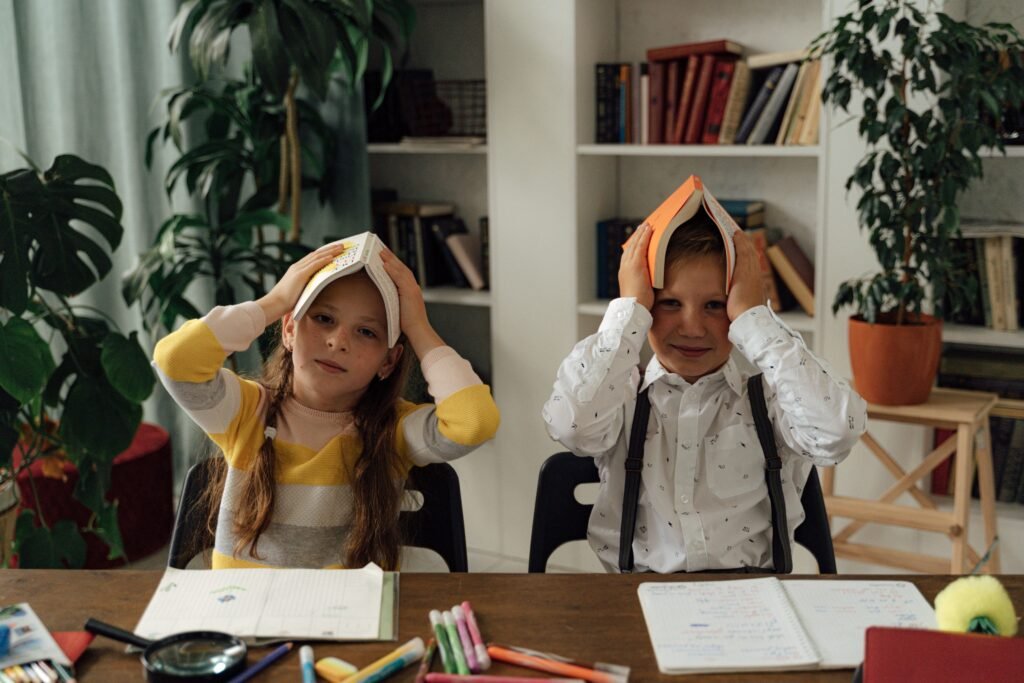
Every time you interrupt a child who is concentrating — even to praise them for concentrating — you disrupt the very state you want to nurture. The most powerful thing you can do when a child is focused is leave them alone.
The Montessori Discovery — Deep Work Emerges From Within
Dr. Maria Montessori spent decades watching children in her classrooms, and one of the things she noticed most consistently was that children’s capacity for concentration was far greater than anyone assumed — when the conditions were right.
She observed children working on a task for an hour or more without distraction. Children who had been described as impossible to manage in traditional classrooms, sitting absorbed in purposeful work for extended periods. Not because they had been drilled into compliance. But because the task was right, the environment was right, and the adult had stepped back enough to let the concentration emerge.
She identified what she called the work cycle — a pattern in which a child chooses a task, works with it through various stages of engagement (including some apparent wandering that is actually preparation), reaches a peak of deep concentration, and then completes the task with a sense of satisfaction that makes them want to begin again.
This cycle cannot be rushed. It cannot be imposed from outside. But it can be supported, protected, and — most importantly — not interrupted.
What Actually Builds Concentration — 12 Things That Work
- Give them tasks that are the right level of challenge
This is the most important variable of all, and it is often the one parents overlook. Concentration requires challenge — enough that the brain is engaged but not so much that it becomes overwhelming. Tasks that are too easy produce boredom and drift. Tasks that are too hard produce anxiety and avoidance. The sweet spot — slightly beyond what a child can do comfortably, but within reach — is where real concentration lives.
Watch what your child is doing when they are most focused. That level of challenge is your guide. As their skills grow, the challenge needs to grow with them.
- Protect the concentration that is already there
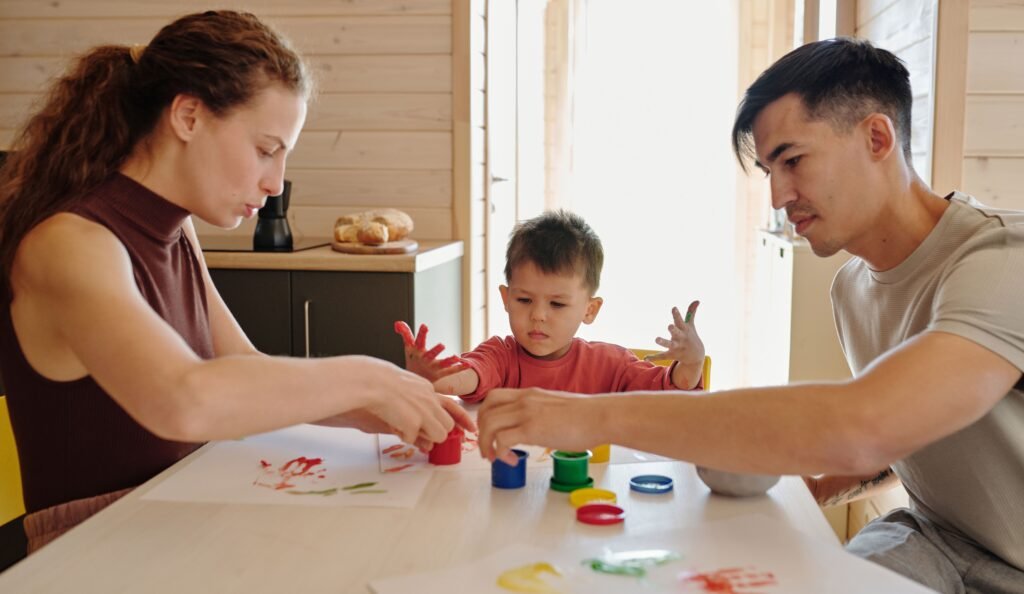
Before you work on building concentration, start by protecting the concentration your child already has. When they are deeply engaged in something — anything, even something that looks like play — do not interrupt. Do not ask questions. Do not praise. Do not redirect them to something more ‘educational.’ Just quietly observe, and let the concentration run its natural course.
Most children’s concentration is interrupted far more often than we realise — by adults who mean well but do not recognise what they are looking at. A child building a tower is not playing. They are working. And every interruption is a lesson that their focus is not worth protecting
- Reduce the noise and clutter in their environment
The brain’s attention system cannot distinguish between important and unimportant stimuli — it responds to everything. A cluttered room, a noisy background, a screen in the corner, too many toys visible at once — all of these draw attention away from the task at hand, without the child or the parent even noticing it happening.
A Montessori environment is deliberately simple, ordered, and calm. Not sterile — but uncluttered. The fewer competing stimuli, the more attention is available for the task. This applies at home too. A child who struggles to concentrate in a busy, noisy, visually complex room will often focus surprisingly well in a quieter, simpler one.
Decluttering is not about minimalism for its own sake. It is about protecting the attention of a brain that has not yet learned to filter the unimportant from the important. That filtering ability develops over years — you can support it now by simplifying the environment.
- Screens before focused work make focusing harder
This is not a moral judgement about screens — it is a practical observation about how the brain works. Fast-paced visual media trains the attention system to expect constant stimulation and rapid change. After thirty minutes of this, sitting down to do something that moves more slowly and requires sustained focus is genuinely harder. The brain has been primed for a different rhythm.
If concentration is a goal, keep screen time away from the times when you want focused engagement. Morning, before any screens, is often when children concentrate most easily. After screens, expect the transition to take time.
- Outdoor time improves concentration — reliably
This is one of the most consistently replicated findings in attention research. Time spent outdoors — especially in natural environments, away from the built environment — restores the brain’s directed attention capacity. The term researchers use is attention restoration theory, and the basic finding is that natural environments make the kind of attention needed for focused tasks more available and more sustainable.
A child who has had an hour outside before sitting down to do something that requires concentration will focus better than a child who has been inside all morning. This is not a coincidence. Build outdoor time into the day, especially before activities that require sustained focus.
- Routine reduces the mental load on the attention system
When a child knows what to expect — when the structure of the day is predictable — their brain spends less energy managing uncertainty and more energy on the task in front of them. Routine is not boring. For young children, routine is liberating. The predictable day is a day where concentration can happen because the brain is not having to work out what comes next.
This is one of the reasons children often concentrate better at school than at home — the school environment provides a rhythm that the home environment sometimes lacks. Introducing a gentle, consistent rhythm at home has a measurable effect on a child’s ability to focus within it.
- Let them choose their own work
A child who has chosen their task concentrates longer than a child who has been assigned one. This is one of the most robust findings in motivation research and one of the core principles of Montessori education. Autonomy and intrinsic motivation are not nice extras — they are the mechanism through which deep concentration happens.
This does not mean letting children choose to do nothing. It means, within a prepared environment with available, appropriate options, letting the child decide what to engage with. The decision itself is part of the concentration process — the child is already mentally preparing for the work before they begin it.
- Respect the child’s rhythm — some times of day are better than others
Every child has a natural rhythm of alertness and engagement. Most young children are sharpest in the mid-morning, after they have had time to wake up fully but before they become tired and hungry. Trying to get focused work from a child who is tired, hungry, or overstimulated is genuinely difficult — not because they are being difficult, but because the biology is working against you.
Notice your child’s natural concentration peaks and schedule demanding activities for those times. Save the easier, more physical activities for the troughs. Working with the child’s natural rhythm rather than against it makes an enormous practical difference.
- Use materials that hold attention naturally
Some materials are simply better at generating concentration than others. Materials that are self-correcting — where the child can see for themselves whether something has worked or not — keep attention on the task more effectively than materials that require constant adult feedback. Materials that involve the hands tend to generate longer concentration than materials that involve only the eyes or ears. Materials with a clear, satisfying endpoint — a completed puzzle, an ordered set, a finished drawing — create a sense of purpose that sustains engagement.
Montessori materials are designed with all of these principles in mind. But you can also find them in everyday life: a puzzle, a building set, a practical task with a clear result, a craft with a visible finished product.
- Model concentration yourself
Children absorb far more from observation than from instruction. A child who regularly sees their parent absorbed in a task — reading, cooking carefully, doing something with focused attention — is receiving a constant message that deep engagement is normal and valuable.
Conversely, a child who only ever sees adults multitasking, phone-scrolling between activities, half-watching television while doing something else, learns that fragmented attention is the adult norm. You cannot teach concentration while modelling distraction.
- Make sure they are getting enough sleep
This sounds obvious, but it is underestimated. Sleep deprivation has a profound and direct effect on a child’s ability to sustain attention. Even one hour less sleep than a child needs produces measurable effects on concentration, impulse control, and emotional regulation the following day. A child who cannot concentrate may simply need more sleep.
Most toddlers need 11 to 14 hours. Most children aged 3 to 5 need 10 to 13 hours. Most school-age children need 9 to 11 hours. These are not aspirational numbers — they are what the brain needs to function well.
- Trust that it develops — and give it time
Concentration is a capacity that grows slowly over years. A two-year-old can sustain focused attention for two to five minutes on a good day. A five-year-old can manage ten to fifteen. A seven-year-old, twenty to thirty. These are natural progressions — not signs of deficit or delay in the younger child.
The most important thing you can do for your child’s concentration is not drill it or pressure it or worry about it excessively. It is to provide the right conditions, consistently, over time, and trust the development that is happening even when you cannot see it.

What Montessori Looks Like in Practice
In a Montessori classroom, concentration is treated as something sacred. The three-hour work period is protected from interruption — not just for the individual child but for the whole class. Teachers move quietly. They do not call out across the room. They do not clap for attention or ring bells every twenty minutes. They understand that deep work requires deep conditions.
The materials are chosen specifically because they generate intrinsic engagement. They are beautiful. They have a clear purpose. They are available at the right level of challenge for each individual child. And each child can work with them for as long as they need to — not for a prescribed period, not until time is called.
The result — which Montessori documented and which any visitor to a well-run Montessori classroom can see — is children working with a quality of focus that surprises everyone who expects the chaos of a normal classroom. Not because they have been drilled into compliance. Because the conditions are right.
You can replicate some of this at home. Not all of it — you are not running a classroom. But the principles translate: fewer materials, more choice within them, longer uninterrupted time, a calmer and more ordered space, an adult who observes more than they direct.
Helpful Materials and Tools
A few thoughtfully chosen materials can make a significant practical difference to the quality of a child’s concentration at home. These are ones worth having:
For Building Focused Independent Work
- Montessori World Map Floor Puzzles — 48 Pieces — Floor puzzles at the right challenge level are one of the most reliable concentration-builders for children aged 3 to 6. Large pieces, beautiful illustrations, clear goal, satisfying completion. Children return to them many times. Choose a level that takes some effort — too easy and they disengage quickly.
- Grimm’s Rainbow — Open-Ended Wooden Stacking Toy — One of the most absorbing open-ended materials available for young children. Children build with it, stack it, sort it, line it up, use it in imaginative play — returning again and again in different ways as they grow. The lack of a single correct outcome means the engagement is driven entirely from within.
- Montessori Knobbed Cylinders — Set of 4 — One of the most concentration-building materials in the Montessori curriculum. Self-correcting, precise, and deeply absorbing. Children work with these for far longer than you would expect — the combination of physical precision, visual discrimination, and the satisfaction of completion generates genuine deep focus. Also available at ksmontessori.com.pk.
For Supporting Attention and Calm
- Visual Sand Timer — 60 Minute Flip Timer — A visual timer gives children a concrete, manageable sense of how long they are working. This reduces the anxiety of open-ended time and helps children understand what ‘ten minutes’ actually feels like. For children who struggle with transitions, a visible timer that counts down is enormously helpful.
- Kinetic Sand — 2lb Set — Sensory play with kinetic sand produces a calm, absorbed focus state in many children that is genuinely difficult to achieve with other materials. The repetitive, physical, tactile engagement quiets the busy mind and allows concentration to emerge. Particularly effective for children with high physical energy who find sitting still difficult.
- Calm Kids: Help Children Relax With Mindful Activities by Lorraine Murray — A practical, parent-friendly guide to mindfulness activities for children that directly support attention and concentration. Not abstract or preachy — concrete activities that take five to ten minutes and make a measurable difference to a child’s ability to focus afterward.
For Fine Motor and Sensorial Concentration
- Melissa and Doug Deluxe Bead Sequencing Set — Threading beads in sequence requires sustained attention, pattern recognition, and fine motor precision — three things that build concentration simultaneously. The pattern element adds cognitive challenge that keeps older children engaged beyond the basic threading activity.
- Magnetic Tiles — 100 Piece Set — Open-ended building materials generate some of the longest concentration periods of any children’s material available. A well-stocked set of magnetic tiles can absorb a child for an hour or more as designs grow in complexity. The immediate visual feedback of what works and what does not makes them self-correcting and intrinsically motivating.
- Montessori Metal Insets with Stand — The Montessori writing preparation material that also happens to be one of the most effective concentration-building activities available. Tracing and filling geometric shapes requires sustained pencil control, visual guidance, and the kind of quiet, absorbed attention that is exactly what we are trying to cultivate. Also available at ksmontessori.com.pk.
Most Montessori materials mentioned above are available at kiransaifmontessori.com. — add direct links when uploading. Amazon links are easiest for books and the non-Montessori materials.
The Questions Parents Ask Most
Yes, very much so — though ADHD requires understanding and support beyond what any blog post can offer. What is clear from research is that children with ADHD often concentrate with remarkable depth on activities they find genuinely engaging (this is called hyperfocus) and struggle significantly with tasks they find dull or overly demanding. The principles in this guide — right level of challenge, chosen tasks, reduced stimulation, physical engagement, outdoor time — all have strong evidence bases for children with ADHD specifically. A diagnosis is not a reason to give up on building concentration. It is a reason to be even more intentional about the conditions.
A rough guide: approximately two to three minutes per year of age, for a task that is genuinely engaging and appropriately challenging. So a two-year-old might concentrate for four to six minutes, a four-year-old for eight to twelve, a six-year-old for twelve to eighteen. These are starting points, not ceilings — children in Montessori environments often exceed these significantly when conditions are right. If your child’s focus is dramatically shorter than these estimates and it is affecting their daily functioning, a conversation with your paediatrician is worthwhile.
This is one of the most common concerns parents raise, and it makes complete sense as a worry. The screen is not building concentration — it is capturing attention with engineered stimulation that the brain cannot resist. It is passive rather than active, fast rather than slow, constantly novel rather than requiring sustained engagement with a single thing. The fact that a child can watch a screen for two hours does not mean they can concentrate — it means the screen is doing the concentration work for them. Reducing screen time and replacing it with the materials and activities in this guide, gradually and without conflict, is the approach that works. It takes time. Be patient.
A four-year-old who can focus for five to ten minutes on something they enjoy is completely normal. A four-year-old who cannot stay with anything for more than thirty seconds, who seems constantly in motion and unable to settle, and for whom this is causing difficulty in daily life — that is worth discussing with your paediatrician, not to worry you but because early support, when needed, makes a real difference. Most four-year-olds fall clearly within normal range — but you know your child, and your instinct that something might need attention is worth listening to
One Last Thing
There is a Montessori story told about a little girl: she observed on one of her first days in the Casa dei Bambini. The child had found a set of cylinders and was fitting them into their holes — over and over, methodically, with complete absorption. Montessori watched her, fascinated. A teacher rang a bell for lunch. The child did not look up. Other children moved past her. She stayed. When she finally lifted her head, her face had an expression Montessori described as the look of someone coming back from a very long way away.
That is what real concentration looks like. And that child — who a few weeks earlier had been considered unmanageable — had found it completely on her own, given the right conditions and the right material.
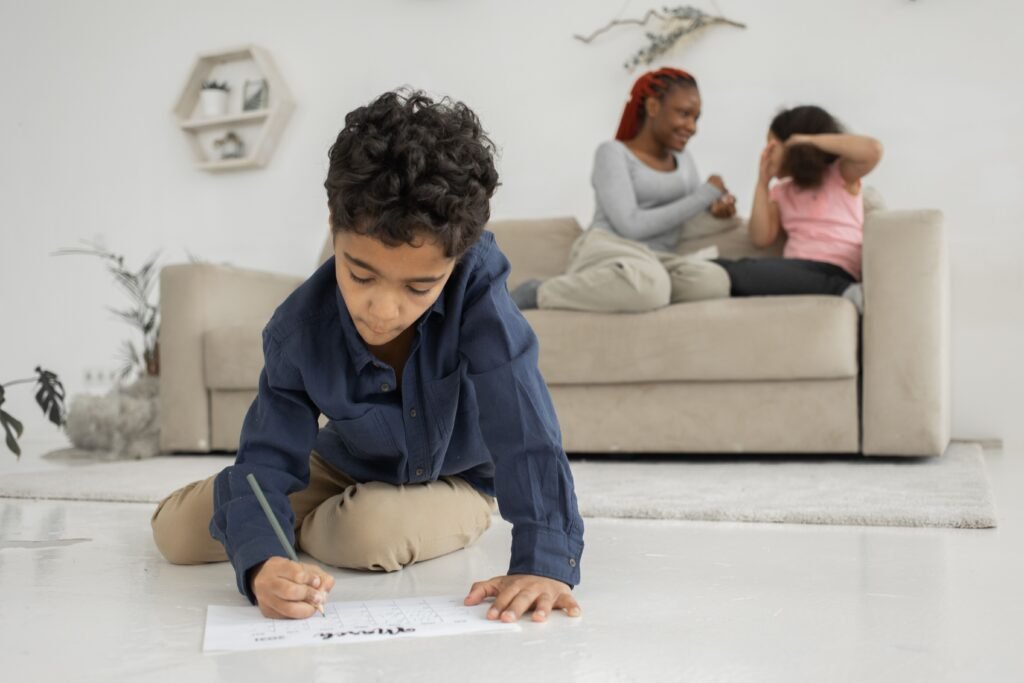
Your child has that capacity too. All children do. The concentration is there. Your job is not to build it from scratch — it is to remove the things that are getting in the way, provide the
things that help it emerge, and trust that what you cannot always see is happening.
It is happening.
More at kiransaifmontessori.com | Montessori materials at ksmontessori.com.pk