What Should a 3-Year-Old Know?
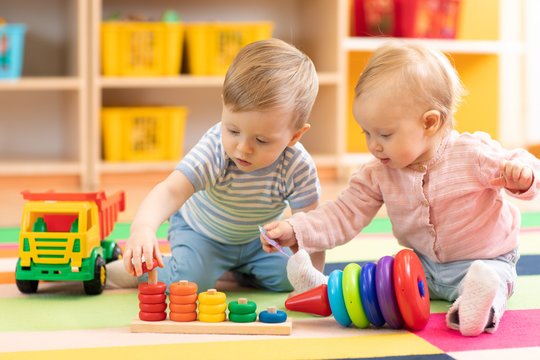
A Complete, Reassuring Guide for Parents Three years old is a magical, maddening, magnificent age. Your child has transformed from a baby into a real little person — with opinions, questions, preferences, jokes, and a will of iron. They can hold a conversation, run without falling (most of the time), and tell you with complete confidence exactly what they do and do not want for dinner. And yet, somewhere between the joy of watching them grow and the bedtime negotiations, a quiet worry creeps in for almost every parent: Is my child where they should be? Are they learning enough? Are they ahead? Are they behind? Am I doing enough? If you have typed ‘what should a 3-year-old know’ into a search engine at any point — often at night, often with a mix of pride and anxiety — this post is for you. As a certified Montessori educator who has worked with hundreds of children in this age group, here is what I want you to know before we dive into any milestone: your child is almost certainly doing better than you think. And the most important things a 3-year-old can know are not academic. They are human. Let’s walk through all of it — together. ⚠️ An Important Note Before We Begin Developmental milestones are ranges, not deadlines. The ages and skills listed in this guide represent what most children can do at or around age three — but ‘most’ is not ‘all’, and every child develops at their own pace across different areas. A child who speaks in full sentences at 2.5 years might not be ready to use scissors until 3.5. A child who can count to 20 might struggle with emotional regulation. Development is not linear, not uniform, and not a competition. If you have genuine concerns about your child’s development — not anxious googling at midnight, but real, persistent concerns — please speak to your paediatrician. This guide is for reassurance and practical guidance, not for diagnosis. Language and Communication — What to Expect Language development is one of the most rapidly advancing areas at age three and one of the most anxiety-producing for parents. Here is what is typically expected, and what the Montessori environment nurtures: 🗣️ Vocabulary of 200–1,000+ words The range is huge — and both ends of it are completely normal. By three, most children have a working vocabulary of several hundred words, with some children using over a thousand. What matters more than the number is whether vocabulary is growing consistently and whether the child is using words purposefully to communicate needs, observations, and ideas. 💬 Speaks in sentences of 3–5 words Typical three-year-olds speak in short sentences rather than single words. ‘I want more juice’, ‘the dog is big’, ‘Mama come here’ — these are all developmentally appropriate. Some children are producing longer, more complex sentences; others are still building. Both are fine. 👂 Understands two-step instructions Go to your room and get your shoes’ — a three-year-old can typically follow this kind of two-part instruction. If your child still needs instructions broken into single steps, that is also normal and will develop with time and practice. ❓ Asks constant questions — especially ‘Why?’ If your three-year-old asks ‘why?’ approximately four hundred times a day, they are developmentally right on track. This is not stubbornness or testing you — it is a genuine explosion of curiosity about how the world works. It is one of the most beautiful milestones of this age. 📖 Enjoys and engages with stories Three-year-olds who are read to regularly can follow simple narrative sequences, predict what comes next in familiar stories, and retell a story in their own words. This is not just a literacy milestone — it is the foundation of comprehension, sequencing, and empathy. 💛 Montessori Language Insight: In Montessori, we never dumb down language for children. We use precise, real vocabulary from the very beginning — not ‘doggie’ but ‘dog’, not ‘that thing’ but ‘cylinder’. A child whose vocabulary has been enriched with accurate, specific language at three will arrive at school with a measurable advantage. 💡 Simple thing you can do today: Narrate your day to your child as you go — ‘I’m chopping the onion, can you smell that? Now I’m adding the tomatoes.’ This constant, rich language input is one of the most powerful things you can do for language development, and it costs nothing. Cognitive Development — How a 3-Year-Old Thinks The three-year-old mind is a remarkable thing. It is concrete (they understand what they can touch and see), imaginative (pretend play is in full bloom), and beginning to develop logical thinking. Here is what to expect: 🔢 Counts to 10 (and sometimes beyond) Most three-year-olds can count to at least 10, though they may skip numbers or lose track. More important than rote counting is one-to-one correspondence — the understanding that when you count five objects, each object gets exactly one number. This is the true foundation of mathematical thinking, and it develops between 3 and 4. 🎨 Knows most basic colours and some shapes Red, blue, yellow, green — most three-year-olds can name these confidently. Circle, square, triangle — same. Some children this age know many more. Rather than drilling colours and shapes, Montessori introduces them through hands-on sensorial materials that make the concepts vivid and memorable. 🧩 Matches, sorts, and categorises Sorting objects by colour, size, or type is a typical three-year-old skill that is deeply satisfying to children of this age. They sort their toys, their food, their crayons. This categorisation drive is not just tidiness — it is the foundation of logical thinking and mathematical reasoning. 🖼️ Understands the concept of ‘same’ and ‘different’ ‘These two are the same colour.’ ‘This one is different.’ The ability to identify similarities and differences is a critical cognitive milestone at three and the basis for all comparison, classification, and eventually reading (letters that look similar but are different). 🌗 Understands simple
Best Montessori Toys for 18-Month-Olds on Amazon (2026 Picks)
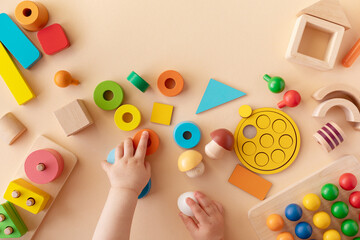
Affiliate Disclosure: As an Amazon Associate, I earn from qualifying purchases at no extra cost to you. I only recommend products that are personally vetted by our AMI-trained team and genuinely align with Montessori principles. Your 18-month-old is into absolutely everything — dumping, stacking, pulling, throwing, and doing it all over again five minutes later. If you’ve been searching for the best Montessori toys for 18-month-olds on Amazon, you already know the problem: the platform is flooded with brightly coloured plastic labelled “Montessori” that has nothing to do with the real philosophy.We get it. As AMI-trained Montessori educators, I’ve seen parents spend good money on toys that their toddler ignores after two days — because the toy does all the work and leaves nothing for the child to discover. That’s why we put together this guide. Every product below has been vetted against AMI Montessori principles: natural materials, single purpose, no batteries, and genuine developmental value for a child at the 18-month stage. Amazon is explored by our team so you don’t have to guess.Here are the 7 best Montessori toys for 18-month-olds you can order on Amazon today What Makes a Toy Truly Montessori at 18 Months? Before we get into the picks, it’s worth spending a moment on what we’re actually looking for — this will help you make smarter buying decisions beyond this list too. At 18 months, toddlers are in what Dr. Maria Montessori called sensitive periods — windows of heightened receptivity where the brain is primed to absorb specific skills. At this age, those sensitive periods are centred around: Movement — walking, climbing, carrying, and using their hands with increasing precision Language — absorbing words at a rapid pace, even if they aren’t speaking many yet Order — a strong need for routine, sequence, and things being “just so” A genuine Montessori toy at this age should honour those windows. Practically, that means Made from natural materials — wood, cotton, or wool. These engage the senses differently than plastic and feel more satisfying to handle. Single clear purpose — one skill at a time. A shape sorter teaches shape recognition. A stacking ring teaches seriation. Simple is better. The child does the work — no batteries, no lights, no music. If the toy entertains without the child’s effort, it’s doing the learning for them. Sized for little hands — knobbed pieces, chunky grips, and child-scaled tools all support the development of the tripod grip used later in writing. Invites repetition — toddlers learn by doing the same thing 20 times in a row. A good Montessori toy never gets “finished.” With that in mind, here are our top picks. Product Skill Focus Best Age Price Range Rating Wooden Shape Sorter Cognitive Fine Motor 12-15 month 15-25$ 5stars Knobbed Puzzle 3piece Fine motor, problem solving 15–30 mo 18-30$ 5 stars Object Permanence Box Cognitive development 10–18 mo 20-35$ 5 stars Practical Life Pouring Set Concentration, independence 12–24 mo 15-28$ 5stars The 7 Best Montessori Toys for 18-Month-Olds on Amazon 1. Wooden Shape Sorter — Best for Cognitive Development If there is one toy that belongs on every Montessori toddler shelf, it is a well-made wooden shape sorter. At 18 months, your child’s brain is beginning to form categories — round things, square things, things that fit and things that don’t. A shape sorter puts that cognitive process directly in their hands. The Montessori purpose: Shape sorting teaches discrimination (recognising differences), spatial reasoning (rotating the shape to find the correct angle), and the deeply satisfying concept of “fitting in.” When a toddler finally slots the triangle through the triangle hole after six attempts, the look on their face tells you everything. That moment of self-correction — without any adult telling them “well done” — is pure Montessori. What we love about it: A good wooden shape sorter has no sounds, no flashing lights, and no cheerful jingle when the piece goes in. The feedback is the piece dropping through the hole. That’s it. That’s enough — and it’s far more powerful developmentally than any electronic version. What to look for on Amazon: Natural wood with a water-based or non-toxic finish. Avoid versions with more than 6–8 shapes at this age — too many choices overwhelms an 18-month-old and leads to frustration rather than focus. Look for chunky, smooth-edged pieces large enough to avoid any choking risk. AMI educator tip: Present the shape sorter with only one shape and its matching hole visible at first. Once your child masters that shape, introduce the second. This graduated approach — classic Montessori — keeps the activity challenging but never discouraging. Price range: $15–25 on Amazon Age range: 12–24 months. For a Box shape sorter: Check Price on Amazon And for Wooden Knobbed Shape Sorter 🛒 Check Price on Amazon → 2. Wooden Knobbed Puzzle (3-Piece) — Best for Fine Motor Skills You will find knobbed puzzles in every authentic Montessori classroom in the world, and for good reason. The design — a flat wooden board with shaped cut-outs and chunky knobbed pieces — is one of the most elegant learning tools ever made for a toddler. The Montessori purpose: The knob itself is everything. When an 18-month-old reaches for the knob with their thumb, index, and middle finger, they are practising the exact same grip they will use to hold a pencil in three years’ time. This is what Montessori called indirect preparation — building a skill long before the child is asked to use it formally. Beyond the grip, the puzzle develops spatial awareness, problem-solving (which shape fits where?), and the satisfaction of completing a task from start to finish independently. What we love about it: Three pieces is the right number for this age. Fewer than three gives too little challenge. More than five overwhelms. A well-designed 3-piece knobbed puzzle can hold an 18-month-old’s attention for a surprising stretch of time — and every time they complete it, they are building concentration as much as motor skill.