Affiliate Disclosure: {As an Amazon Associate, I earn from qualifying purchases at no additional cost to you}
The Struggle Is Real — And You're Not Alone
You open Amazon, type ‘Montessori toys,’ and suddenly you’re drowning in brightly coloured plastic sets with the word ‘Montessori’ plastered across the box like a magic badge. Some are $8.99. Some are $89.99. And almost none of them actually follow the Montessori method.
As a certified Montessori educator with years of experience in the classroom and in supporting families at home, I see this confusion every single week. Parents who want to do right by their children, who’ve read about Montessori and felt inspired — but who have no idea which materials are the real deal and which are clever marketing dressed up in wooden packaging.
So I created this guide for you. I’ve vetted, tested, and used every category of material on this list. These are the top 10 authentic, durable, and purposeful Montessori materials available on Amazon right now — the ones that actually follow the philosophy, build the skills, and stand the test of time.
⚡ Quick Picks — Top 3 if You’re Skimming:
- Pink Tower (Sensorial) — the single most iconic Montessori material; mathematical preparation disguised as beautiful play
- Sandpaper Letters (Language) — the gateway to reading and writing; multi-sensory, non-negotiable
- Knobbed Cylinders (Fine Motor + Sensorial) — builds the writing grip years before a pencil is introduced
🔗 Internal Link: Browse our full Montessori Learning Toys collection at kiransaifmontessori.com for more curated recommendations
Why It’s Essential
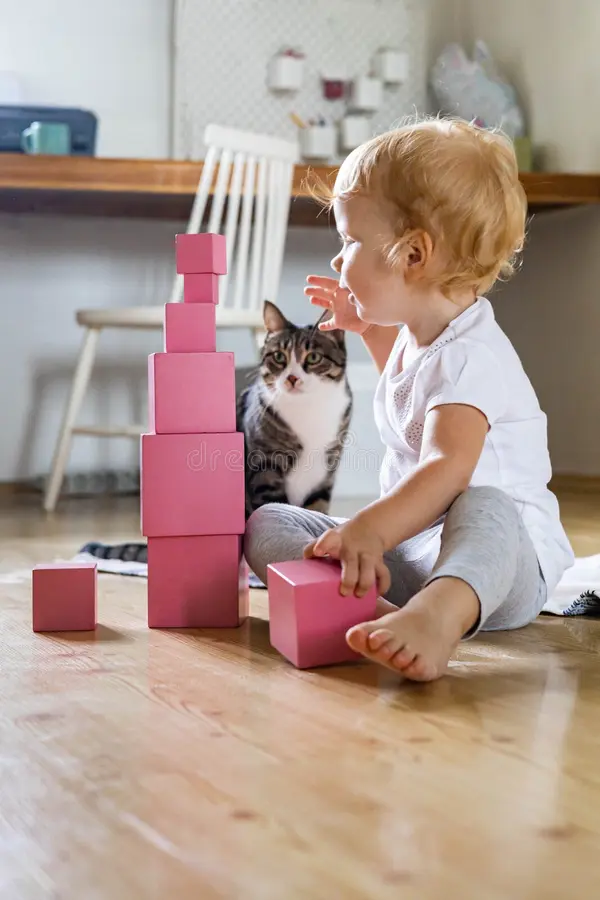
The Pink Tower is the most recognised Montessori material in the world — and for good reason. It consists of ten pink wooden cubes, ranging from 1 cm³ to 10 cm³, each differing by exactly one cubic centimetre. The child’s task is to build a tower from largest to smallest — and then knock it down and start again.
But here’s what most parents don’t know: the Pink Tower is not just a stacking toy. It is a precise mathematical preparation. The cubes increase in a fixed ratio, introducing the child’s hands and eyes to the concept of the cube of a number — 1³, 2³, 3³ — years before they will ever write that notation. This is the Montessori method at its finest: abstract mathematics taught through the body.
✏️ Expert Tip: The Pink Tower is used in combination with the Brown Stair (Item 4 below). When used together, they prepare the child for three-dimensional spatial reasoning and early geometry.
What to Look For on Amazon
- Solid, untreated or non-toxic painted wood — no MDF or hollow centres
- Cubes that are precisely sized — even a 1–2mm error disrupts the learning
- Weight: the smallest cube should feel noticeably lighter than the largest
- No plastic components
#2 — Object Permanence Box (Infant / Toddler)
Why It’s Essential
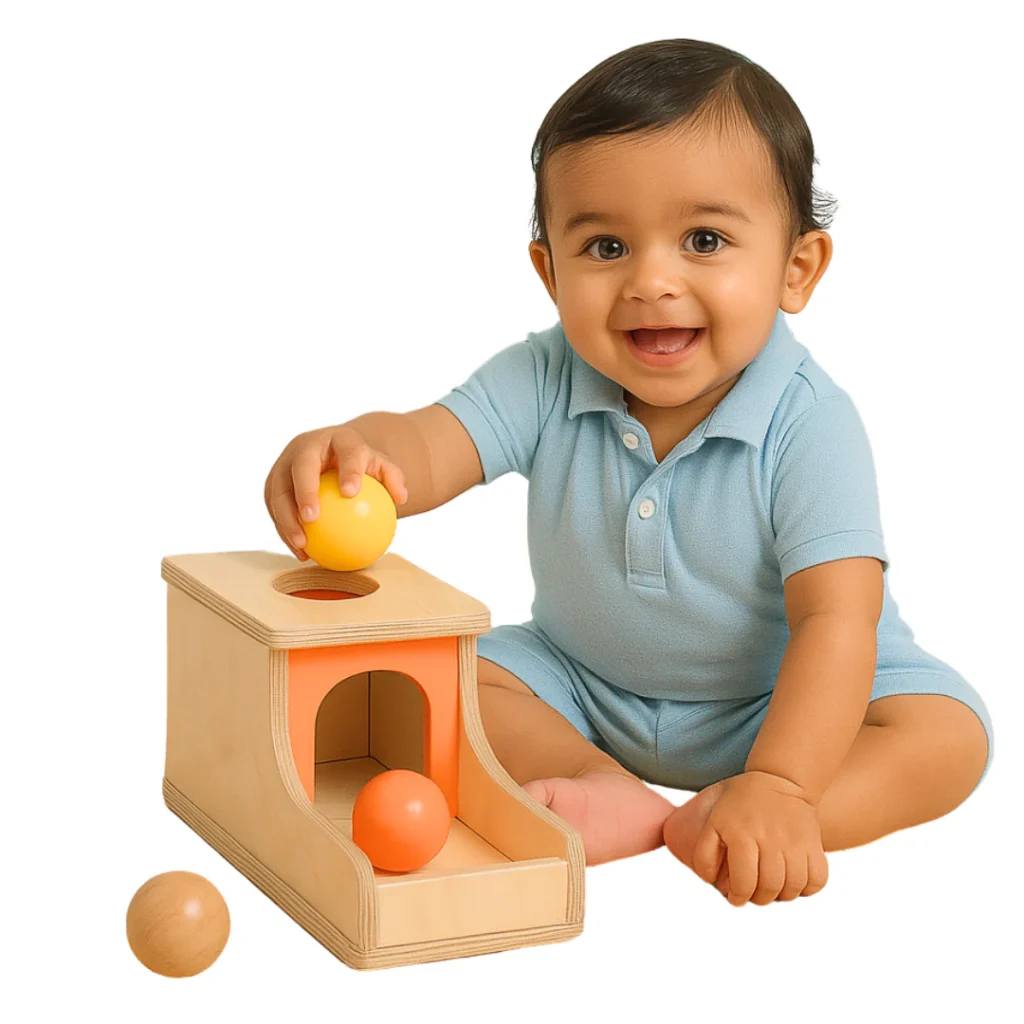
The Object Permanence Box is one of the earliest Montessori materials — typically introduced between 6 and 12 months of age. It teaches one of the most profound early cognitive lessons: that objects continue to exist even when they are out of sight.
Jean Piaget identified object permanence as a milestone cognitive achievement of infancy. The Montessori Object Permanence Box creates a purposeful, repeated activity around this concept: the child drops a ball through a hole, watches it disappear, and then sees it reappear through a drawer. Each repetition deepens the neural pathway and satisfies the infant’s drive to understand cause and effect.
🌿 Affiliate Angle: When shopping on Amazon, always filter for ‘Natural Wood’ and ‘Non-Toxic Finish.’ Infants mouth everything — the materials they work with must be
absolutely safe. Look for products with CE certification or ASTM compliance listed in the product description.
- Choose solid wood over MDF or plywood — it lasts longer and feels better
- The ball should be wooden, not rubber or plastic
- The drawer mechanism should slide smoothly — frustration-free for small hands
- No paint on the ball — natural finish only for infants
🛒 Shop Now: → Find Non-Toxic Wooden Object Permanence Boxes on Amazon
#3 — Child-Sized Practical Life Cleaning Set
Why Functional Work Is the Heart of Montessori
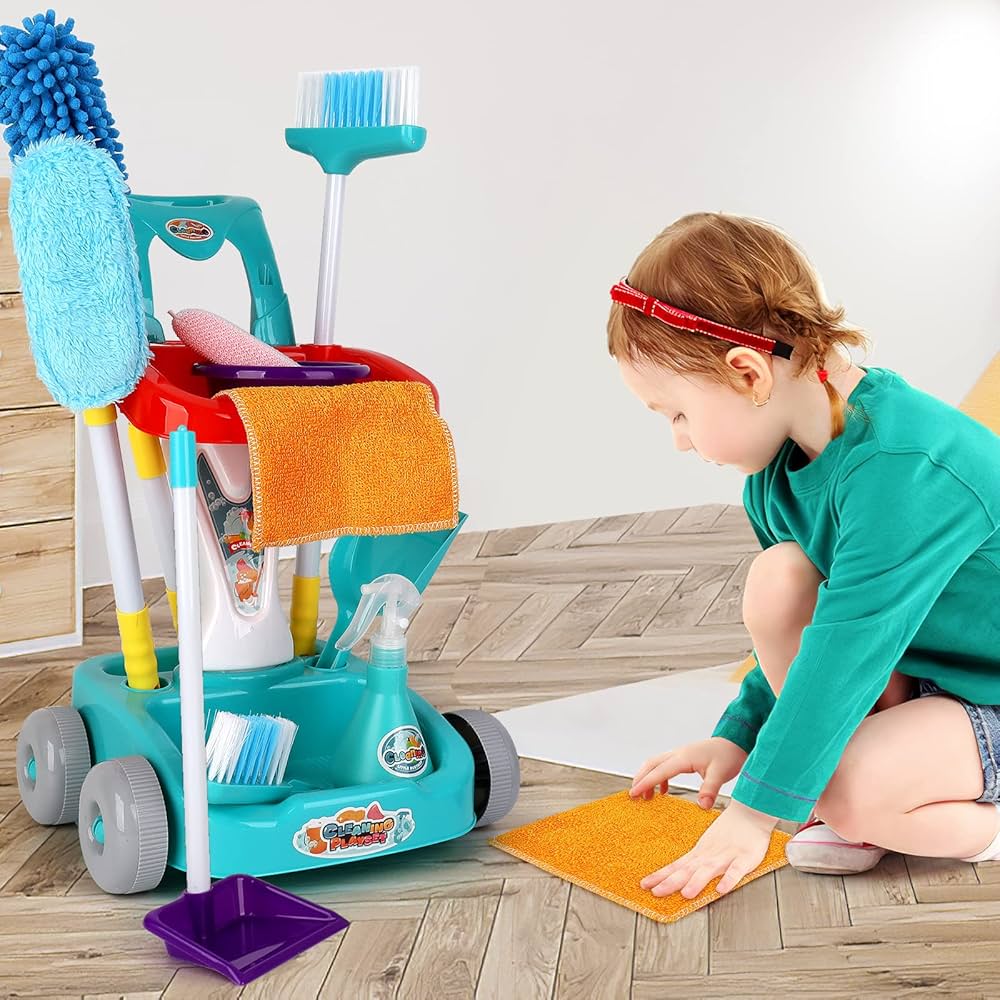
Many parents are surprised to learn that one of the most important areas of the Montessori classroom is Practical Life — not maths, not language, but the everyday work of caring for oneself and one’s environment. Sweeping, mopping, wiping tables, washing dishes, folding cloth — these are not chores imposed on children. They are deeply purposeful activities that build concentration, coordination, independence, and a profound sense of belonging.
A child-sized wooden broom and mop set is one of the best Amazon finds for Montessori parents. When a child has their own real tools — proportioned for their body, made of natural materials, genuinely functional — they engage with the work seriously and with enormous pride. Plastic imitations miss the point entirely.
💡 Montessori Principle: Children want to participate in real life, not pretend life. A toy broom teaches nothing. A real child-sized broom teaches responsibility, motor coordination, and the joy of contributing to the family.
- Look for natural wood handles — no plastic
- Broom bristles should be natural fibre or soft synthetic — functional, not decorative
- Set should include at minimum: broom, dustpan, and mop or floor cloth
- Height should be proportionate — when standing, the handle reaches the child’s shoulde
Items 4–7: The Learning Core
These four materials form the backbone of the Montessori sensorial and language curriculum. If you’re building a home Montessori environment, these are non-negotiable — and together, they cover fine motor, visual discrimination, geometry, language preparation, and early literacy.
#4 — Brown Stairs (Broad Stair)
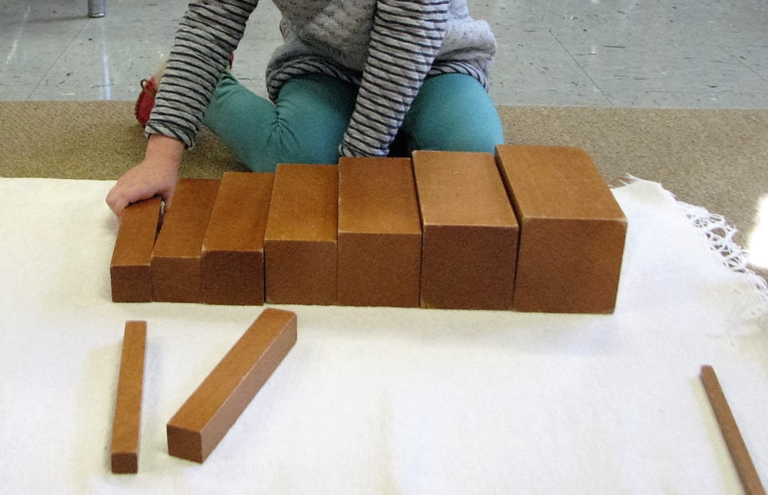
The Brown Stair consists of ten brown wooden prisms, each the same length but varying in cross-section from 1 cm² to 10 cm². Where the Pink Tower isolates three-dimensional size, the Brown Stair isolates two-dimensional thickness. Used together, they prepare the child for an embodied understanding of three-dimensional space and the relationships between dimensions.
✏️ Expert Tip: Children who have worked extensively with both the Pink Tower and the Brown Stair demonstrate significantly stronger spatial reasoning skills. Never rush past these materials.
#5 — Sandpaper Letters
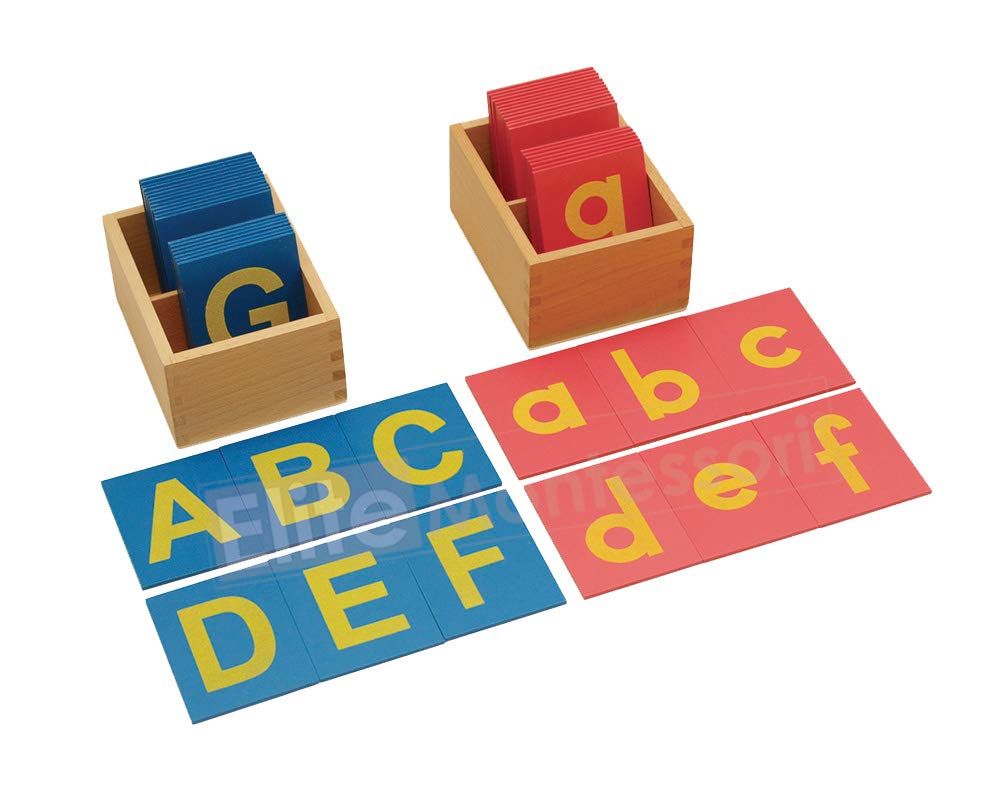
Sandpaper Letters are the gateway to reading and writing in the Montessori method. Each letter is cut from fine sandpaper and mounted on a wooden board — vowels on one colour, consonants on another. The child traces each letter with two fingers while hearing and repeating its phonetic sound, encoding the letter simultaneously through sight, hearing, and touch.
This multi-sensory approach creates deeper, more durable memory than any flashcard or screen-based phonics programme. Many children who work consistently with Sandpaper Letters begin writing spontaneously — often before they can read — in what Montessori called ‘the explosion into writing.’
🔗 Read more: See our full guide: Montessori Sandpaper Letters: The Gateway to Reading and Writing — kiransaifmontessori.com
#6 — Geometric Solids or Geometric Cabinet
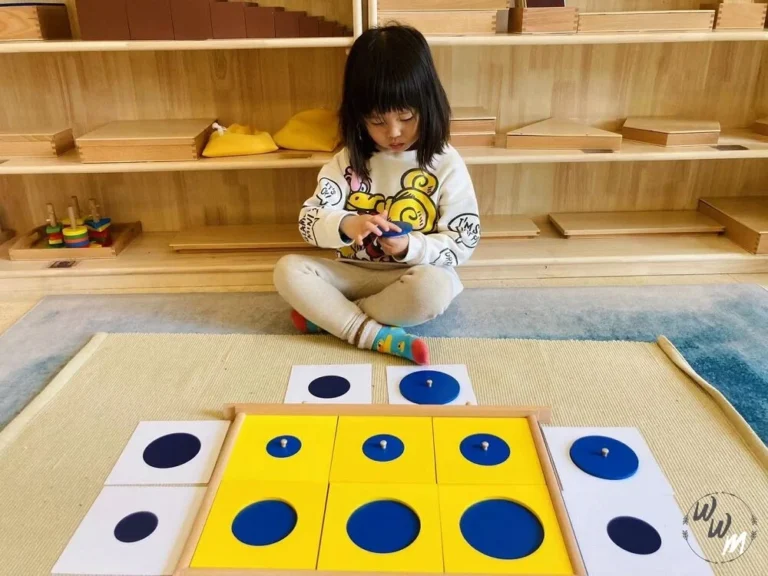
The Geometric Solids are a set of three-dimensional wooden shapes — sphere, cube, cone, cylinder, pyramid, and more — that introduce the child to solid geometry through direct sensory experience. The child handles each solid, feeling its faces, edges, and vertices, learning to name and distinguish three-dimensional forms long before geometry appears in any school curriculum.
Alternatively, the Geometric Cabinet — a series of drawers containing flat geometric insets — introduces two-dimensional shapes and their names. Both are superb choices; the Geometric Solids are often more engaging for younger children (ages 3–4) while the Cabinet suits slightly older children (4–5).
#7 — Knobbed Cylinders
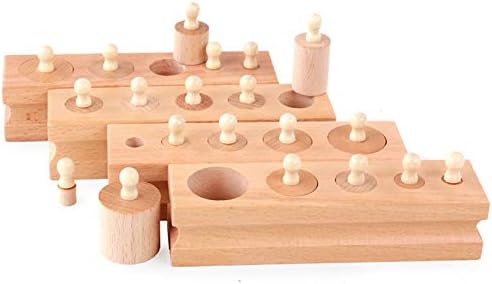
The Knobbed Cylinders are four blocks, each containing ten cylinders that decrease in size along one or two dimensions. The child removes each cylinder, mixes them up, and replaces them — guided only by visual and tactile comparison. The material has a built-in control of error: if any cylinder is in the wrong hole, one will not fit at the end.
The tiny knob on each cylinder is not a random design choice — it is the exact grip used to hold a pencil. Every time a child works with the Knobbed Cylinders, they are strengthening the three-finger pincer grip that will one day hold a writing instrument. This is the Montessori genius: writing preparation begins years before any writing occurs
⭐ Top Pick: Of all the sensorial materials, Knobbed Cylinders are among the most beloved by children — they return to them again and again. Invest in a high-quality set and it will last for years
#8 — Weaving or Lacing Activity
Building the Pincer Grip Through Play
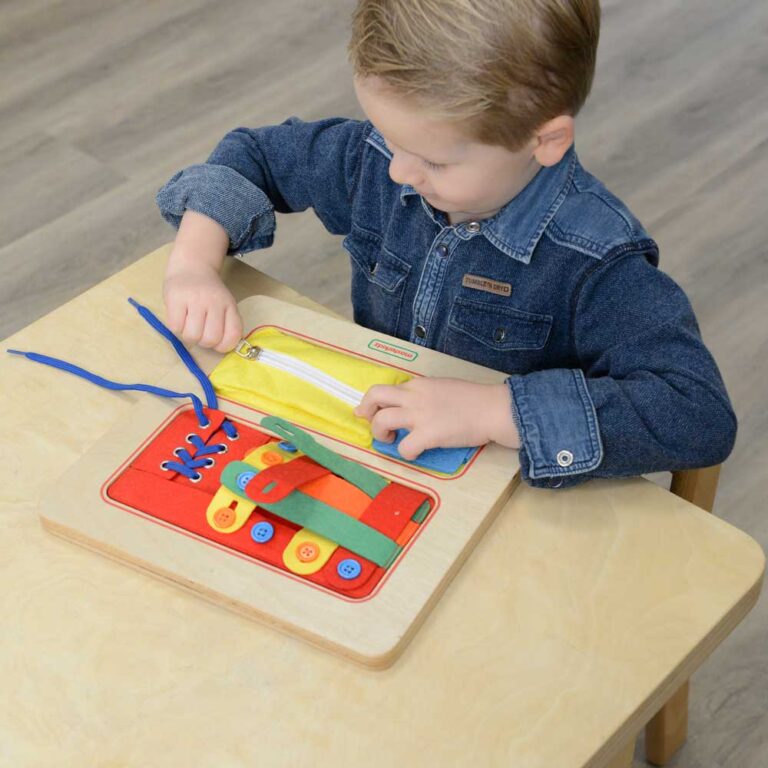
Every time a child threads a lace through a hole, weaves a strip of paper through a frame, or sews a simple stitch through a lacing card, they are building the precise fine motor control that writing demands. The Montessori classroom includes a wide range of such activities — from simple lacing frames for toddlers to full sewing cards for four and five year olds.
On Amazon, look for wooden lacing boards with thick, easy-to-grip laces for younger children, and more intricate weaving or sewing sets for children aged four and above. These are inexpensive, highly durable, and extraordinarily effective.
- Choose wooden boards over cardboard — they last far longer
- Laces should be firm and easy to pinch, not floppy or string-like
- Look for designs without sharp points or metal needles for children under four
#9 — Front-Facing Bookshelf / Montessori Low
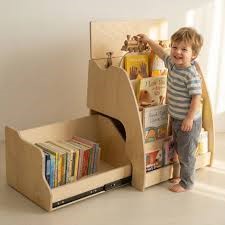
Montessori Is Not Just About Toys — It’s About the Environment
One of the most important insights of Dr. Maria Montessori was that the environment itself is an educator. A well-prepared home environment — where materials are accessible, beautiful, and ordered — does more for a child’s development than any single toy or activity.
The front-facing bookshelf is one of the most impactful and affordable environment changes any Montessori family can make. When books are displayed cover-outward at the child’s eye level, the child can browse, choose, and return books independently — building literacy habits, decision-making, and a love of books that lasts a lifetime.
💡 The Strategy: Replace one standard toy box with a low open shelf and watch how your child’s engagement with their materials transforms. Less clutter, deeper focus, more independence.
- Look for shelves no higher than 70–80 cm — accessible for children aged 1–6
- Front-facing display holds 8–15 books at a time — rotate regularly
- Natural wood finish integrates beautifully into any home aesthetic
- Some shelves double as toy/material display — an excellent two-in-one investment
#10 — Nature / Botany or Anatomy Wooden Puzzle
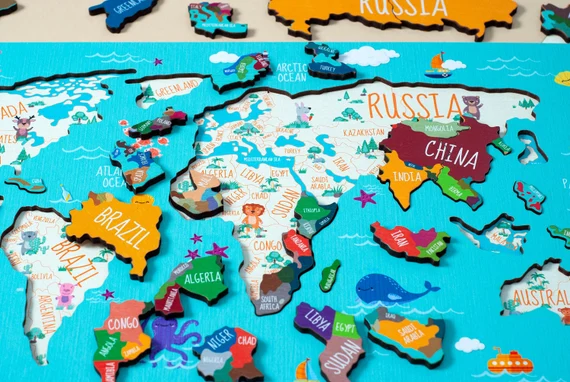
Connecting the Child to the Real World
Montessori education is grounded in reality. Unlike many early childhood approaches that introduce children to fantasy first (talking animals, magical worlds), Montessori begins with the real — real plants, real animals, real geography, real science. Botany and anatomy puzzles fit perfectly into this philosophy.
A wooden botany puzzle — showing the parts of a leaf, a flower, or a tree — gives the child precise scientific vocabulary and a genuine introduction to the living world. A human body or animal anatomy puzzle does the same for biology. These are not simplified or sanitised — they are real, and children respond to that reality with genuine curiosity and respect.
- Look for puzzles with labelled pieces or accompanying matching cards
- The leaf, flower, and root puzzles form a classic Montessori botany set — consider buying all three
- Human body puzzles should include major organs and systems — not just a silhouette
- Pieces should fit snugly — loose-fitting puzzles frustrate children and blur the learning
Why Material Quality Matters: The Non-Toxic Promise
In a Montessori environment, materials are handled dozens — sometimes hundreds — of times. They are carried, touched, mouthed, dropped, and explored with every sense a child possesses. The quality and safety of those materials is not a bonus feature. It is a fundamental requirement.
🌿 NON-TOXIC MATERIALS 🌿
Wood vs. Plastic: Why It Matters for Sensory Learning
The Montessori method is built on sensory experience — and wood is a superior sensory material in almost every way. Wood has natural warmth, weight, grain, and texture. When a child handles a wooden cube, they are experiencing something real and multi-dimensional. Plastic is cold, uniform, and sensorially impoverished — it tells the child almost nothing.
Beyond sensory quality, wood is also more durable (a well-made wooden Pink Tower will outlast decades of use), more sustainable, and — when properly finished — safer for children who mouth materials.
What to Check on Every Amazon Listing
- Non-toxic paint or finish — look for water-based, lead-free, and phthalate-free certification
- CE marking (European safety standard) or ASTM F963 compliance (US standard)
- Solid wood, not MDF or chipboard — check the product description and Q&A section
- No small parts for children under three — check the age recommendation
- Smooth edges and surfaces — no splinters, no sharp joins
- Avoid materials with strong chemical smell — off-gassing from varnishes can be harmful
⭐ Our Standard: Every material we recommend on this site and in this guide meets our non-toxic, natural materials standard. We never recommend plastic alternatives to Montessori materials, and we never recommend materials we would not use in our own classrooms.
Quick Reference: All 10 Materials at a Glance
# | Material | Area | Best For Age |
1 | Pink Tower | Sensorial | 2.5 – 5 years |
2 | Object Permanence Box | Infant / Toddler | 6 – 18 months |
3 | Child-Sized Cleaning Set | Practical Life | 18 months – 4 years |
4 | Brown Stairs | Sensorial | 2.5 – 5 years |
5 | Sandpaper Letters | Language | 3 – 5 years |
6 | Geometric Solids / Cabinet | Sensorial | 3 – 6 years |
7 | Knobbed Cylinders | Sensorial / Fine Motor | 2.5 – 5 years |
8 | Weaving / Lacing Activity | Fine Motor | 2 – 5 years |
9 | Front-Facing Bookshelf | Prepared Environment | All ages |
10 | Botany / Anatomy Puzzle | Science / Language | 3 – 6 years |
Conclusion: You Don’t Need a Whole Classroom — Just the Right Tools
Starting Montessori at home can feel overwhelming, especially when Amazon makes it so easy to accidentally buy the wrong things. But here’s the truth I share with every parent I work with: you don’t need everything at once, and you certainly don’t need to spend a fortune.
Start with two or three materials from this list — ideally from different areas of development — and observe your child. Watch what they are drawn to. Watch what they return to again and again. Let their interests guide your next purchase. That is the Montessori way: following the child, not a shopping list.
The materials on this list are not toys. They are tools — purposeful, beautiful, and built to last. Invest in quality once and you will still be using these materials years from now. And when your child sits down to read for the first time, or writes their first word, or independently prepares their own snack — you will know that it began here, with these small, simple, extraordinary objects.
🎁 Ready to organise your Montessori shopping list?
Download our FREE Room-by-Room Montessori Setup Checklist — covering every room of your home, every age group, and every area of development. Join hundreds of Montessori families already using it. → YES! Send Me the Free Checklist — kiransaifmontessori.com