A Complete, Reassuring Guide for Parents
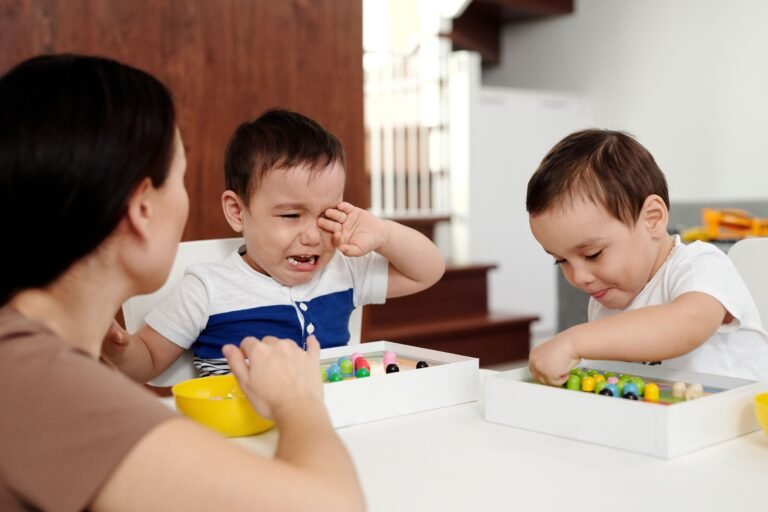
Three years old is a magical, maddening, magnificent age. Your child has transformed from a baby into a real little person — with opinions, questions, preferences, jokes, and a will of iron. They can hold a conversation, run without falling (most of the time), and tell you with complete confidence exactly what they do and do not want for dinner.
And yet, somewhere between the joy of watching them grow and the bedtime negotiations, a quiet worry creeps in for almost every parent: Is my child where they should be? Are they learning enough? Are they ahead? Are they behind? Am I doing enough?
If you have typed ‘what should a 3-year-old know’ into a search engine at any point — often at night, often with a mix of pride and anxiety — this post is for you.
As a certified Montessori educator who has worked with hundreds of children in this age group, here is what I want you to know before we dive into any milestone: your child is almost certainly doing better than you think. And the most important things a 3-year-old can know are not academic. They are human.
Let’s walk through all of it — together.
⚠️ An Important Note Before We Begin
Developmental milestones are ranges, not deadlines. The ages and skills listed in this guide represent what most children can do at or around age three — but ‘most’ is not ‘all’, and every child develops at their own pace across different areas.
A child who speaks in full sentences at 2.5 years might not be ready to use scissors until 3.5. A child who can count to 20 might struggle with emotional regulation. Development is not linear, not uniform, and not a competition.
If you have genuine concerns about your child’s development — not anxious googling at midnight, but real, persistent concerns — please speak to your paediatrician. This guide is for reassurance and practical guidance, not for diagnosis.
Language and Communication — What to Expect
Language development is one of the most rapidly advancing areas at age three and one of the most anxiety-producing for parents. Here is what is typically expected, and what the Montessori environment nurtures:
🗣️ Vocabulary of 200–1,000+ words
The range is huge — and both ends of it are completely normal. By three, most children have a working vocabulary of several hundred words, with some children using over a thousand. What matters more than the number is whether vocabulary is growing consistently and whether the child is using words purposefully to communicate needs, observations, and ideas.
💬 Speaks in sentences of 3–5 words
Typical three-year-olds speak in short sentences rather than single words. ‘I want more juice’, ‘the dog is big’, ‘Mama come here’ — these are all developmentally appropriate. Some children are producing longer, more complex sentences; others are still building. Both are fine.
👂 Understands two-step instructions
Go to your room and get your shoes’ — a three-year-old can typically follow this kind of two-part instruction. If your child still needs instructions broken into single steps, that is also normal and will develop with time and practice.
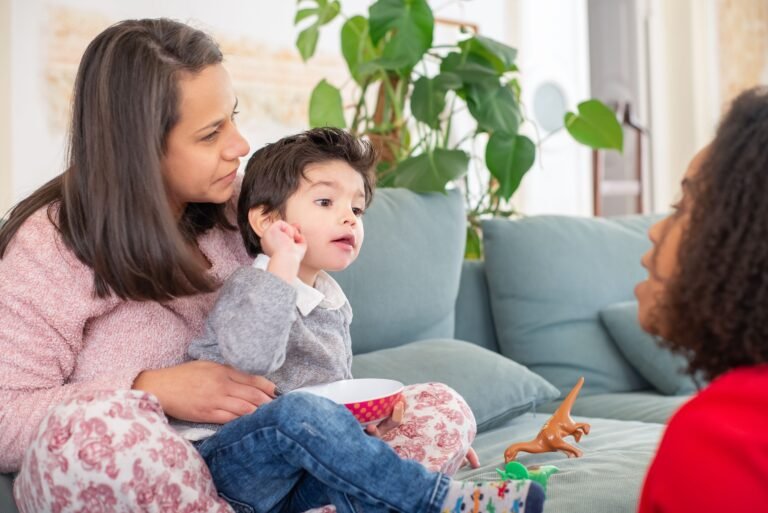
❓ Asks constant questions — especially ‘Why?’
If your three-year-old asks ‘why?’ approximately four hundred times a day, they are developmentally right on track. This is not stubbornness or testing you — it is a genuine explosion of curiosity about how the world works. It is one of the most beautiful milestones of this age.
📖 Enjoys and engages with stories
Three-year-olds who are read to regularly can follow simple narrative sequences, predict what comes next in familiar stories, and retell a story in their own words. This is not just a literacy milestone — it is the foundation of comprehension, sequencing, and empathy.
💛 Montessori Language Insight: In Montessori, we never dumb down language for children. We use precise, real vocabulary from the very beginning — not ‘doggie’ but ‘dog’, not ‘that thing’ but ‘cylinder’. A child whose vocabulary has been enriched with accurate, specific language at three will arrive at school with a measurable advantage.
💡 Simple thing you can do today: Narrate your day to your child as you go — ‘I’m chopping the onion, can you smell that? Now I’m adding the tomatoes.’ This constant, rich language input is one of the most powerful things you can do for language development, and it costs nothing.
Cognitive Development — How a 3-Year-Old Thinks
The three-year-old mind is a remarkable thing. It is concrete (they understand what they can touch and see), imaginative (pretend play is in full bloom), and beginning to develop logical thinking. Here is what to expect:
🔢 Counts to 10 (and sometimes beyond)
Most three-year-olds can count to at least 10, though they may skip numbers or lose track. More important than rote counting is one-to-one correspondence — the understanding that when you count five objects, each object gets exactly one number. This is the true foundation of mathematical thinking, and it develops between 3 and 4.
🎨 Knows most basic colours and some shapes
Red, blue, yellow, green — most three-year-olds can name these confidently. Circle, square, triangle — same. Some children this age know many more. Rather than drilling colours and shapes, Montessori introduces them through hands-on sensorial materials that make the concepts vivid and memorable.
🧩 Matches, sorts, and categorises
Sorting objects by colour, size, or type is a typical three-year-old skill that is deeply satisfying to children of this age. They sort their toys, their food, their crayons. This categorisation drive is not just tidiness — it is the foundation of logical thinking and mathematical reasoning.
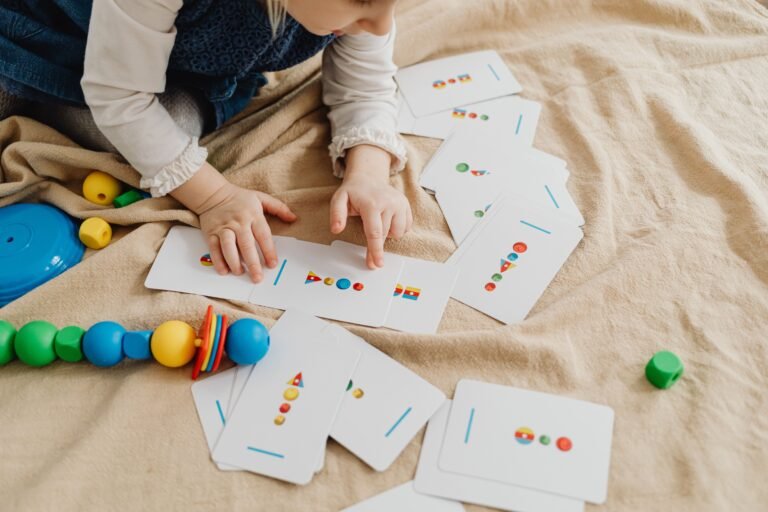
🖼️ Understands the concept of ‘same’ and ‘different’
‘These two are the same colour.’ ‘This one is different.’ The ability to identify similarities and differences is a critical cognitive milestone at three and the basis for all comparison, classification, and eventually reading (letters that look similar but are different).
🌗 Understands simple time concepts
Yesterday, today, tomorrow — three-year-olds are beginning to grasp these concepts, though they may still use them imprecisely. ‘Yesterday I went to the park’ might mean last week. That is fine. The concept is forming, the precision comes later.
🎭 Rich pretend play
If your three-year-old spends hours in elaborate imaginative play — pretending to be a doctor, a shopkeeper, a lion — they are doing something cognitively profound. Pretend play requires the ability to hold two realities simultaneously (this banana IS a phone), which is the foundation of symbolic thinking, and ultimately of reading and writing.
🌱 Montessori Cognitive Principle: Three-year-olds learn through the concrete, not the abstract. They understand quantity by holding real objects, not by seeing the number written on paper. Always anchor new concepts in physical, sensory experience before moving to symbols.
Physical Development — Gross Motor and Fine Motor
Physical development at three is exhilarating to watch. Children are gaining control of their bodies in increasingly refined ways — and every physical milestone directly supports cognitive and academic development too.
Gross Motor — Big Body Movement
🏃 Runs, jumps, and climbs confidently
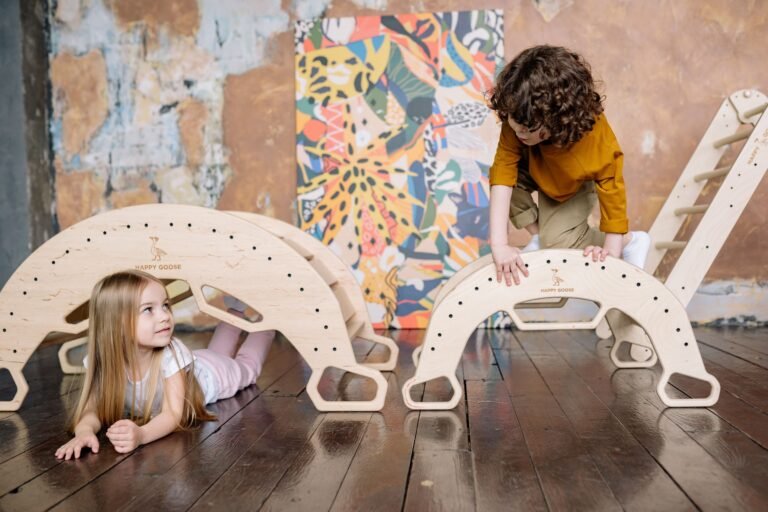
Three-year-olds run with coordination, jump with two feet, climb stairs alternating feet, and may be beginning to hop. If your child is still developing these skills, or if they prefer sedentary play, make sure they have daily outdoor time with space and permission to move.
🚲 Rides a tricycle or balance bike
Pedalling a tricycle or scooting on a balance bike is typical at three. This develops coordination, balance, spatial awareness, and builds the core strength that will later support sitting and writing.
⚽ Kicks and throws a ball
Three-year-olds can kick a ball forward with some accuracy and throw overarm, though catching is still developing (usually between 3.5 and 4). These activities build hand-eye coordination and spatial awareness.
Fine Motor — Small, Precise Movements
✏️ Holds a crayon or pencil with some control
At three, children are moving from a fist grip to a more mature pencil grip. They can draw simple shapes — a circle, a cross, maybe a very approximate square. They are beginning to copy lines and curves. The Montessori materials — especially the Knobbed Cylinders and Metal Insets — actively develop this grip through purposeful play.
✂️ Uses child scissors with support
Cutting with scissors is a complex fine motor skill that develops between 3 and 4. At three, most children can make snips in paper, though cutting along a line comes later. Never rush this skill — when the hand is ready, it comes quickly.
🧩 Completes simple puzzles (3–6 pieces)
Three-year-olds can typically complete simple inset puzzles and are beginning to manage interlocking puzzles of 4–6 pieces. Puzzles develop spatial reasoning, visual discrimination, problem-solving, and fine motor control simultaneously.
👕 Beginning to dress and undress with help
Pulling off a t-shirt, putting on trousers with elastic waistbands, removing shoes — these are realistic at three. Buttons, zips, and laces come later (this is exactly what Montessori Dressing Frames practise). Independence in dressing is a huge source of confidence and pride for this age group.
💛 Montessori Fine Motor Insight: Every Montessori Practical Life activity — pouring, spooning, threading, buttoning — is simultaneously a fine motor exercise. A child who spends twenty minutes transferring water between jugs is building the exact hand control they will need to write. The ‘work’ and the preparation are the same thing.
Social and Emotional Development — The Most Important Area of All
If I could change one thing about how parents think about child development at three, it would be this: stop worrying about whether your child knows their ABCs and start nurturing their emotional world. The research is unambiguous — social and emotional skills are stronger predictors of long-term success than academic skills at this age.
😊 Names basic emotions in themselves and others
Happy, sad, angry, scared — most three-year-olds can name these in themselves and are beginning to recognise them in others. This emotional vocabulary is the foundation of emotional regulation, empathy, and healthy relationships. Use the Three-Period Lesson to introduce emotion words naturally and without pressure.
👫 Plays alongside other children (parallel play) and beginning cooperative play
Three-year-olds are in transition between parallel play (playing beside others without true interaction) and cooperative play (playing with others toward a shared goal). Both are normal at this age. Forced sharing rarely works — natural turn-taking in a well-prepared environment works beautifully.
🌪️ Has strong emotions and is beginning to regulate them
Tantrums at three are completely normal — the emotional brain is highly active and the regulatory part of the brain (the prefrontal cortex) is still very much under construction. What you are looking for is not the absence of big feelings, but a slow improvement in recovery time and an emerging ability to name what they feel.
💪 Shows strong sense of independence
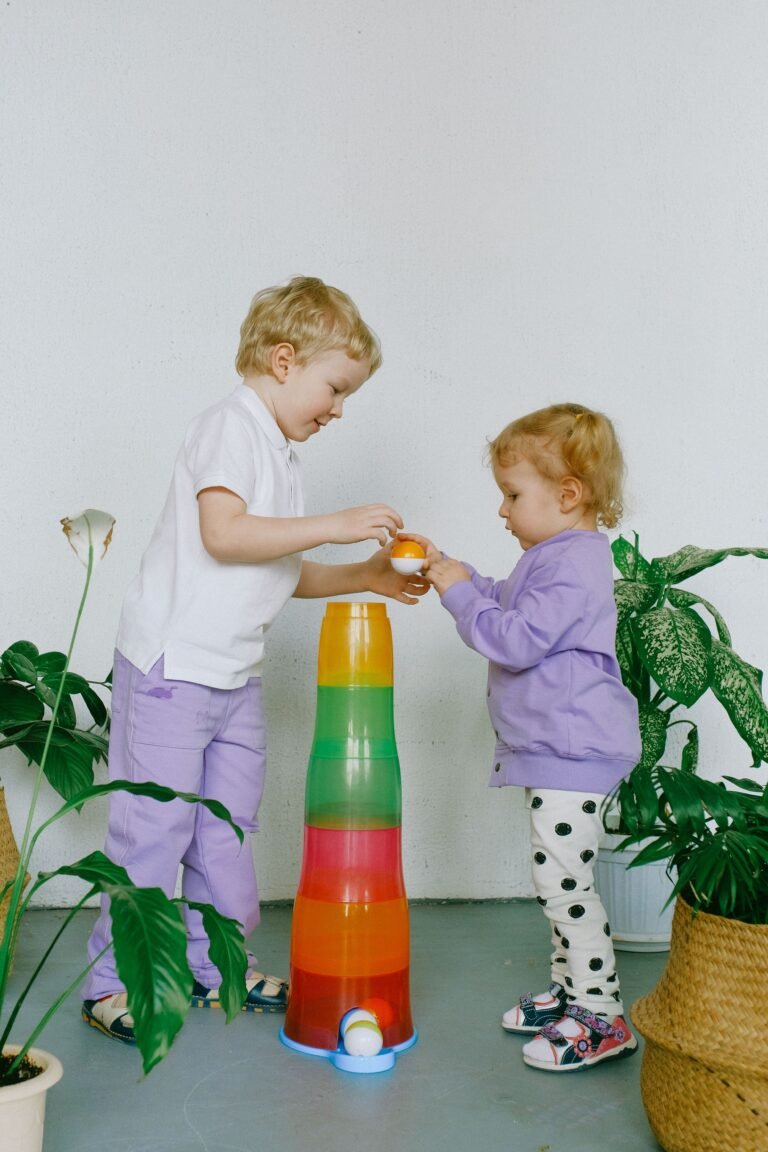
‘I do it myself’ — if this phrase is a daily feature of your life, your three-year-old’s development is right on track. This drive for independence is not defiance. It is a developmental imperative — the child’s growing sense of self asserting itself. The Montessori approach honours this drive rather than suppressing it.
❤️ Shows empathy and concern for others
Three-year-olds are beginning to notice when others are upset and to respond with concern. This is an early, important sign of empathy developing. It may be inconsistent — sometimes they comfort a crying friend, other times they seem oblivious. Both are normal.
🔬 Research Finding: A landmark study by Pennsylvania State University found that children with strong social-emotional skills at age 5 were more likely to graduate university, hold a full-time job, and have better mental health outcomes at 25 — more predictive than reading or maths ability at the same age.
Self-Care and Independence — The Montessori Priority
This is an area that traditional developmental checklists often undervalue, but that Montessori places at the very center of early childhood development. A three-year-old who can care for themselves is a three-year-old who believes they are capable — and that belief changes everything.
🍽️ Eats independently with a spoon and fork
Three-year-olds can typically use a spoon and fork with reasonable control. They should be eating at the family table, with real utensils, serving themselves where possible. Mealtimes are not just nutrition — they are practical life learning.
🚽 Toilet independent or nearly there
Most children complete toilet training between 2.5 and 3.5 years, though there is wide variation. Night-time dryness often comes later. Never shame or pressure around toileting — it is a developmental milestone that arrives when the body and mind are both ready.
🙌 Washes hands independently
With a step stool and accessible soap and towel, three-year-olds can wash their hands independently. This is a genuine Practical Life milestone that builds hygiene habits, fine motor skills, and self-confidence simultaneously.
🛏️ Helps tidy their space
A three-year-old can put their own toys away, carry their plate to the sink, and help with simple household tasks. This is not about cleanliness — it is about belonging, responsibility, and the profound satisfaction of contributing to family life.
At a Glance: 3-Year-Old Milestones Overview
Here is a quick reference showing typical milestones alongside what a Montessori-enriched environment actively nurtures at this age:
Area | Typical at Age 3 | Montessori Nurtures |
Language | 200–1000 word vocabulary, 3–5 word sentences, constant ‘why?’ | Precise vocabulary, Three-Period Lesson, rich language environment |
Cognitive | Counts to 10, knows colours and shapes, rich pretend play | Concrete maths materials, sensorial exploration, hands-on learning |
Gross Motor | Runs, jumps, climbs, rides tricycle | Outdoor time, real tools, freedom of movement in prepared environment |
Fine Motor | Beginning pencil grip, simple puzzles, cutting snips | Knobbed Cylinders, Metal Insets, Dressing Frames, Practical Life |
Social/Emotional | Names emotions, parallel play, big feelings, ‘I do it myself’ | Independence, mixed-age groups, freedom within limits, normalisation |
Self-Care | Eats independently, toilet training, washing hands | Practical Life curriculum — dressing, pouring, cleaning, cooking |
What If My Child Isn't Hitting These Milestones?
First — breathe. Children develop unevenly. A child who seems behind in one area is often ahead in another. Development is not a straight line — it comes in spurts, plateaus, and sometimes apparent regressions before a leap forward.
Here are some honest guidelines:
- If your child is missing multiple milestones across several areas, speak to your paediatrician — not Google
- If your child was hitting milestones and has suddenly regressed, check for stressors: a new sibling, a house move, a change in routine. Regression under stress is completely normal
- If your child has one area of delay but is thriving in others, monitor and support — don’t panic
- If you have a gut feeling that something is not right, trust it and seek a professional opinion. You know your child better than any checklist
- If your child has been assessed and has a developmental difference or delay, Montessori materials and methods are extraordinarily well-suited to supporting diverse learners — the hands-on, self-paced, multi-sensory approach works beautifully for all children
💛 From a Montessori Educator: In over a decade of working with young children, the most important thing I have learned is this: every child wants to learn. Every child wants to be capable. Our job is not to
push them forward — it is to prepare an environment rich enough that their natural drive to grow can do its work. Trust the child.
How to Support Your 3-Year-Old's Development at Home
You don’t need a Montessori classroom. You don’t need expensive materials. Here are the most impactful things you can do right now:
Talk to them — constantly and richly
Narrate what you’re doing. Ask open questions. Use precise vocabulary. Read aloud every day. Language development at three is directly proportional to the quality and quantity of language they hear from the adults around them.
Let them do things themselves
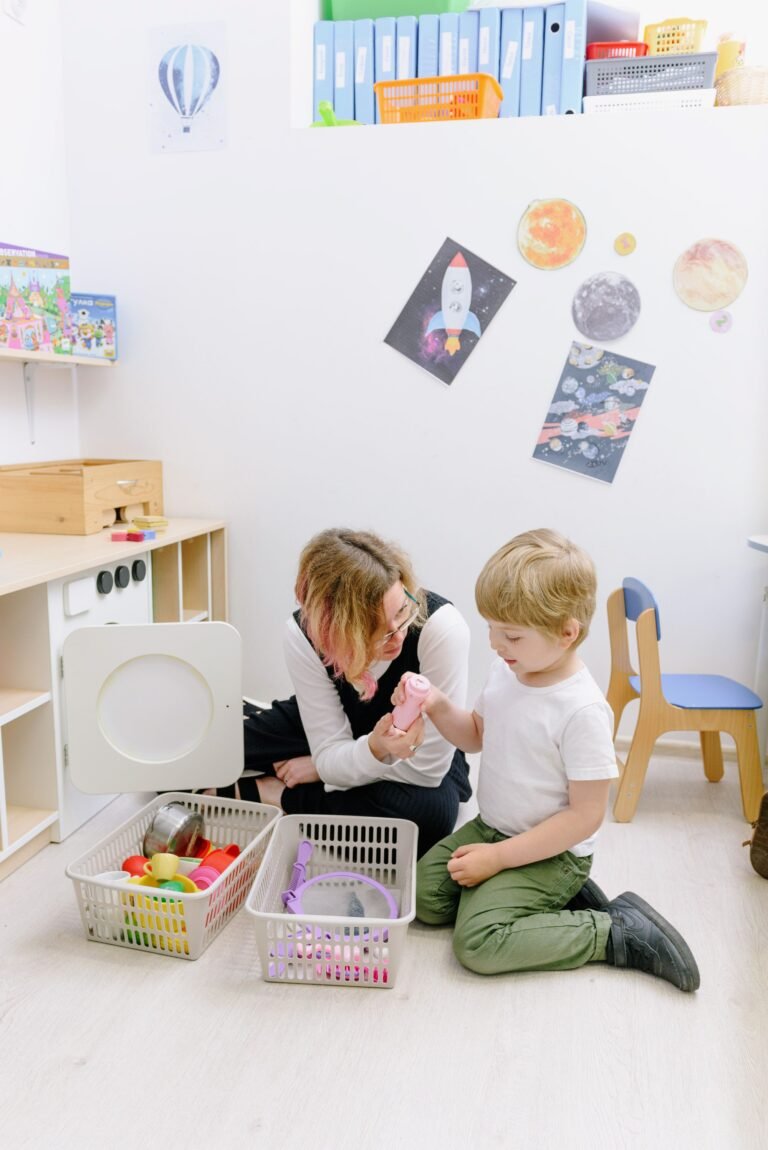
Resist the urge to help before help is needed. Let them put on their own shoes even if it takes ten minutes. Let them pour their own water even if it spills. Every ‘I did it myself’ moment builds the confidence that fuels all future learning.
Get outside every day
Nature is the richest sensorial environment in the world — and it is free. Mud, water, sticks, stones, insects, weather, light — all of it is developmental gold for a three-year-old. Thirty minutes outside every day, in all weathers, makes a measurable difference.
Create a yes space
Dedicate an area of your home where your child has full freedom to explore without constant redirection. A low shelf with accessible materials, books at eye level, art supplies within reach — a yes space says to the child: this is yours, you are trusted, you are capable.
Follow their interests
If your three-year-old is obsessed with dinosaurs — go deep on dinosaurs. Books, models, documentaries, drawings, pretend play. A child learning about something they are genuinely passionate about absorbs vocabulary, facts, and concepts at a staggering rate. Interest is the most powerful teacher of all.
Montessori Materials That Support 3-Year-Old Development
If you want to go further and provide your three-year-old with materials that actively support each area of their development, here are our top recommendations from KS Montessori:
For Language Development
- Sandpaper Letters — The Montessori gateway to reading and writing. Teaches letter sounds through three-sensory learning — perfect for curious 3-year-olds who are noticing letters in their environment.
For Cognitive and Maths Development
- Number Rods — Makes quantities 1–10 physical and real. A 3-year-old who works with Number Rods understands quantity in their hands before they understand it on paper — the deepest kind of mathematical knowledge.
- Counter Cards and Counters — Ideal for exploring numbers 1–10, odd and even concepts, and one-to-one correspondence. Deeply satisfying for three-year-olds who love arranging and organising.
- Spindle Boxes — Introduces the concept of zero alongside counting 1–9. Children count and place real spindles — quantity made completely concrete and tactile.
- Constructive Triangles — Builds geometry and spatial reasoning through hands-on shape construction. Three-year-olds love making shapes from triangles — early geometry that feels like pure play.
For Fine Motor and Self-Care
- Dressing Frames — Directly supports the dressing independence milestone of age three. Buttons, zips, buckles, laces — each frame teaches one fastening type, building the hand control and confidence to dress independently.
Metal Insets with Stand — The perfect fine motor bridge between sensorial work and writing. Three-year-olds can trace and fill shapes for extended periods, building the exact pencil grip and wrist control writing requires
For Sensorial and Cognitive Development
- Geometric solids — Develops the concepts of long, short, longer, shorter through direct physical experience. Three-year-olds carry, order, and compare — maths through the whole body.
🛒 Shop All Materials: All materials above are available at kiransaifmontessori.com — authentic, non-toxic, and specifically designed to support the developmental milestones of children aged 2.5–6 years.
Not necessarily — and not in the way most parents think. Many three-year-olds can sing the alphabet song, but that is memorisation, not reading readiness. What matters more is phonemic awareness — hearing and recognising individual sounds in words — which is what Sandpaper Letters develop. A child who knows the sound ‘sss’ and ‘mmm’ and ‘aaa’ is better prepared for reading than a child who can recite A-B-C without understanding what letters do
Some three-year-olds can write their name; many cannot, and that is completely normal. The hand needs to be physically ready for writing, and for most children that readiness comes between 4 and 5. Pushing writing before the hand is ready creates frustration, poor habits, and a negative association with writing. Focus on activities that build hand strength and pencil control — drawing, painting, threading, tracing — and writing will follow naturally
No — it is perfectly normal and, from a Montessori perspective, it is telling you something important: your child needs to move to learn. Sitting still to be taught is not a skill most three-year-olds have yet — and that is biologically appropriate. The Montessori approach builds learning around movement: children carry materials, trace letters with their fingers, count with real objects. The body and the mind learn together.
Trust your instincts as a parent — they are remarkably accurate. If your child has lost skills they previously had, if communication is significantly limited, if they show very little interest in other people, or if your gut tells you something is not quite right, speak to your paediatrician. Early support, when needed, makes an enormous difference. Waiting and hoping is rarely the right strategy.
The Most Important Thing a 3-Year-Old Can Know
After all the milestones, all the checklists, all the developmental stages — what is the most important thing a three-year-old can know?
That they are loved. That they are capable. That the world is a safe and interesting place to explore. That mistakes are part of learning, not reasons to feel ashamed. That they belong.
These are not measurable on any checklist. They do not appear in any developmental screening tool. But they are the invisible foundations upon which everything else — every word, every number, every skill — is built.
A three-year-old who knows those things, in their bones and in their body, will learn everything else in time. Your job is not to teach them the alphabet. It is to give them a world worth exploring, a self worth believing in, and a home where they are always, without exception, enough.
Explore our range of Montessori materials at KS Montessori to support your child’s development journey — one purposeful, joyful material at a time.
Explore Montessori developmental materials: kiransaifmontessori.com