Process Art vs Product Art:Which One Actually Helps Your Child?
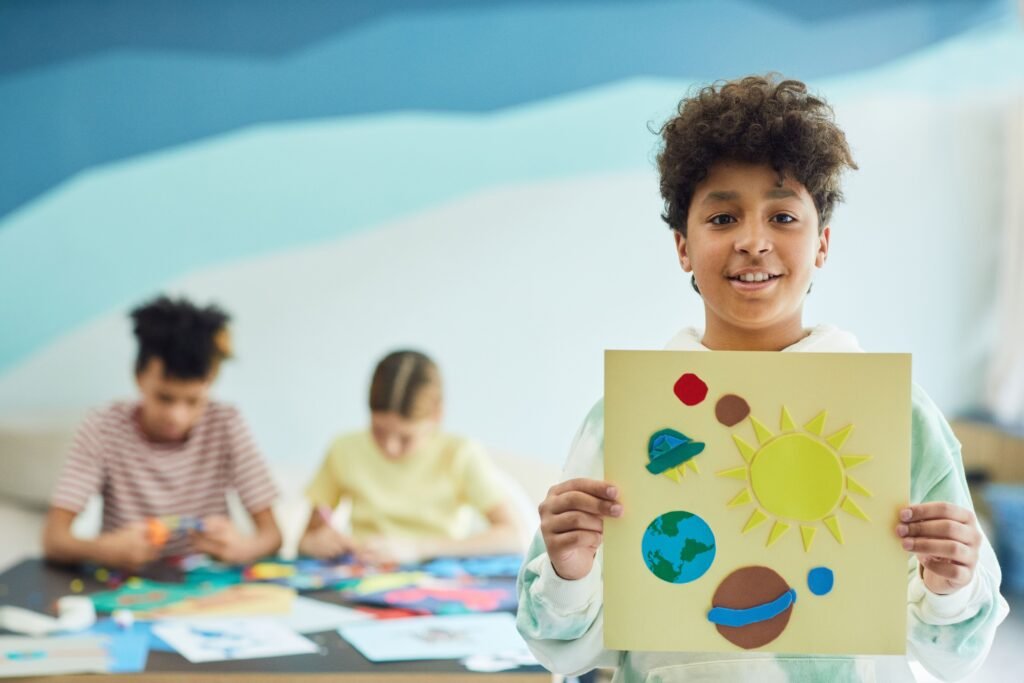
“A Montessori perspective on creative development — and why the mess matters more than the masterpiece“ Picture two scenes. In the first one, a four-year-old sits at a table covered in newspaper. In front of her are three pots of paint, a large sheet of white paper, and no instructions whatsoever. She starts by dipping her brush in the blue. Then she uses her finger and discovers that mixing blue and yellow makes something interesting happen. She spends twenty-five minutes doing this, completely absorbed, occasionally humming. The painting she produces looks, to an adult eye, like an energetic mess. To her, it is exactly what she wanted. In the second scene, a four-year-old sits at a table with a printed outline of a butterfly. He has been told which sections to colour in which colour. He works carefully within the lines. When he finishes, the butterfly looks like the example the teacher held up. His parent puts it on the fridge. Both children made art today. But only one of them actually did. That is the difference between process art and product art. And understanding it — really understanding it, not just as a theory but as a lived choice you make every time you sit your child down with a paintbrush — changes how you think about creativity, learning, and what art is actually for. So What Exactly Is the Difference? Process art Process art is child-led, open-ended creative experience where the activity itself is the point. There is no template to follow, no correct outcome, no example to replicate. The child decides what to make, how to make it, when it is finished, and what it means. An adult’s role is to provide materials, space, and enough trust to step back and let the exploration happen. It looks messy or may be often looks like nothing in particular. You cannot always tell what it is supposed to be — and that is completely fine, because it is not supposed to be anything. It is supposed to be whatever the child’s hands and mind made of the materials they were given. Product art Product art is adult-led, outcome-focused creative activity where the goal is a specific, predetermined result. The child follows a template, copies a model, colours within provided lines, or assembles pre-cut pieces. An adult has decided in advance what the finished piece should look like and child’s job is to execute the plan. It often looks impressive. Parents can immediately tell what it is. It photographs well and fills the fridge for a few weeks. And it teaches the child almost nothing about creativity, expression, or their own capacity for original thought. A child who has only ever done product art learns that art is something other people design and they execute. A child who has done process art learns that art is something they invent. These are not the same lesson. Why Process Art Matters — What It Actually Builds This is not just a philosophical preference. Process art builds specific, measurable capacities in young children that product art simply does not — and some that product art actively undermines. Here is what the research and the developmental science say: Creative thinking and problem-solving When a child has no template to follow, they have to make decisions. What colour? How much? What next? If I mix these what will happen? These micro-decisions, made hundreds of times across a creative session, are exactly the cognitive work of creative thinking. The child is generating options, evaluating them, choosing, executing, and adapting. This is problem-solving — the same cognitive process that will serve them in mathematics, science, writing, and every domain of human endeavour. Product art offers none of this. When the template has already decided what color the sky should be, the child’s creative brain is not needed. Intrinsic motivation and the love of making things Children who do process art regularly develop an intrinsic relationship with the act of making — they create because creating is satisfying, not because the result will earn praise. This is one of the most valuable things a child can develop: the ability to be motivated from within, to pursue something because it genuinely matters to them, regardless of how it looks to anyone else. Product art, by contrast, is almost entirely driven by external motivation — the approval of the finished result, look on the parent’s face, and the thing on the fridge. When that external validation is removed, the motivation evaporates. This is why children who have only done product art often say ‘I can’t draw’ and mean ‘I can’t draw in a way that looks right.’ The bar they are measuring themselves against is always someone else’s standard. Confidence and self-efficacy A child who decides what to make and then makes it has had an experience of being genuinely capable. They set the intention, executed the plan, and produced something that was entirely their own. This feeling — I made something that came from me — is one of the most powerful confidence-builders available to a young child. A child who colours inside someone else’s lines has had a different experience: they have done something correctly, which is not the same thing. Correctness is measured against an external standard. Capability is measured against their own intention. Concentration and sustained attention Children in genuine process art experiences concentrate for far longer than children doing product art. The reason is simple: they are genuinely engaged and are making real decisions, encountering real surprises, and doing real creative work. The attention is self-generated rather than externally maintained. This is the same principle behind the Montessori work cycle. Genuine engagement, freely chosen, generates the deepest and most sustained concentration available to a young child. Emotional expression and regulation Art is one of the oldest human tools for expressing what cannot be said in words. For young children who are still developing verbal communication, the ability to express emotion through colour, mark-making, and
How to Raise a Child Who Loves Reading
Think back to a book that changed something in you. Maybe it was a story you read as a child, curled up somewhere quiet, so absorbed that the world around you went silent. Maybe it was a character who felt like a friend. Maybe it was a sentence that described exactly how you felt but had never been able to say. That experience — of being genuinely lost inside a book — is one of the most extraordinary gifts a human being can give themselves. And it starts, almost always, in the first few years of life. Not with formal reading instruction. Not with sight word drills. But with a parent, a book, a lap, and twenty minutes when nothing else mattered. This guide is about how to create that experience for your child. How to build a relationship with books that begins in infancy and grows stronger with every year. How to raise a child who does not just know how to read — but who genuinely, deeply, joyfully loves it. There is a big difference between the two. And this guide is entirely about the second one. The Most Important Thing — And the One Thing Most Parents Get Wrong Before we talk about strategies, there is one truth so important that everything else in this guide depends on it: You cannot make a child love reading. But you can absolutely kill the love of reading before it has a chance to grow. The most common way parents do this — with the very best intentions — is by turning reading into a performance. Drilling sight words at the kitchen table. Asking comprehension questions after every page. Correcting every mispronounced word. Rewarding finishing books. Testing. Assessing. Measuring. Every one of these things sends the same message to the child: reading is work. Reading is something I do for you. Reading is something I can fail at. And a child who believes reading is work will stop doing it the moment no one is making them. The goal is not a child who can read. The goal is a child who wants to read. Those two outcomes require completely different approaches — and this guide is built around the second one. 💛 The Single Most Powerful Thing You Can Do: Read aloud to your child every single day. Not to teach them. Not to test them. Just because stories are wonderful and being together is wonderful and that combination — story plus togetherness — is the most powerful reading motivation in the world What the Research Actually Says About Raising Readers The science on this is remarkably clear and remarkably consistent. Here is what decades of reading research tells us: Reading aloud is the single highest-impact literacy activity Study after study — including the landmark report Becoming a Nation of Readers — identifies being read aloud to as the single most important activity for building the language, vocabulary, comprehension, and love of reading that underpin all later literacy. Not phonics worksheets. Not sight word flashcards. Read-aloud. Every time you read aloud to your child, you are building vocabulary they have never heard in conversation, exposing them to the rhythm and structure of written language, showing them that stories have the power to transport and delight, and associating books with warmth, safety, and your voice. That is an extraordinary amount of learning happening on a single couch. 🔬 Research Finding: A child who is read aloud to for just 20 minutes a day will have heard approximately 1.8 million words per year more than a child who is not read to. By the time they start school, that gap in vocabulary, comprehension, and world knowledge is enormous — and it affects reading success for years. Access to books matters enormously Children who have books at home read more. This seems obvious but the scale of the effect is striking — research from the University of Nevada found that having as few as 20 books in the home has a significant positive effect on children’s educational achievement. It is not about the number — it is about books being present, visible, and accessible as a normal part of life. Intrinsic motivation is the key variable Children who read because they want to read — because reading is pleasurable, because stories are interesting, because books feel like friends — develop into far stronger readers than children who read because they are made to. Extrinsic motivation (rewards, points, competition) produces short-term reading but undermines long-term love. Intrinsic motivation, once established, is self-sustaining. The parent’s own relationship with reading matters Children who see their parents reading are more likely to become readers themselves. Not because of instruction or encouragement — but because children model what they see. A parent who visibly, genuinely enjoys a book is sending a message that books are worth enjoying. That message lands. 15 Practical Strategies That Actually Build Reading Love These are not theories. They are real, practical, immediately usable strategies — some require nothing at all, some require a small change in how you set up your home, and some will take a few weeks to become habit. All of them work. .Read Aloud Every Single Day — Without Exception Not sometimes. Not when you have time. Every day. Even if it is only ten minutes. Even if you are tired. Even if they have already had a book today. The daily habit of read-aloud is the single most powerful thing you can do for your child’s reading life, and its power comes from the consistency — from the child knowing that this is what we do, every day, because stories matter in this family. Try saying: “Let’s find our book. This is my favourite part of the day.” Never Stop Reading Aloud — Even When They Can Read Themselves One of the most common mistakes parents make is stopping reading aloud the moment their child learns to read independently. This is exactly backwards. Children
My Child Won’t Share and Hides

Behind My Legs at Parties — Is Something Wrong? A Warm, Honest Guide for Parents of Shy Children and Reluctant Sharers | kiransaifmontessori.com The birthday party is in full swing. Every other child is running, shouting, grabbing cake, and making instant friends. Your child is pressed firmly against your leg, face buried in your side, absolutely certain they are not coming out until it is time to go home. Later, at the park, another child reaches for your toddler’s favourite digger. Your child snatches it back so fast it makes everyone flinch. No negotiation. No warning. Just a very clear: that is mine. You smile apologetically at the other parent, feel the familiar mix of embarrassment, worry, and love and wonder — is my child okay? Is something wrong? Should I be doing something differently? Here is the answer, and it is a good one: almost certainly, no. Both of these behaviours — shyness in social situations and reluctance to share — are completely normal parts of child development. They are not character flaws. They are not signs of bad parenting. They are signs of a child who is developmentally right on track. But normal does not mean you cannot help. And that is exactly what this guide is for. How to Help a Shy Child Build Confidence First — What Is Shyness, Really? Shyness is not a personality defect. It is not a sign that something has gone wrong. It is a temperament trait — a way of being in the world that some children are simply born with. Researchers estimate that around 15 to 20 percent of children are born with what psychologist Jerome Kagan called a ‘behaviourally inhibited’ temperament — meaning they are naturally more cautious, more sensitive to new stimuli, and slower to warm up to unfamiliar people and situations. This is biological. It is not something you caused. It is not something your child can simply choose to switch off. And crucially — it is not something that needs to be fixed. Shy children grow into thoughtful, perceptive, deeply empathetic adults who notice things that others miss and build fewer but profoundly deeper relationships. What parents can do is not eliminate shyness — but help their child move through it with confidence rather than being paralysed by it. There is a big difference between a shy child who feels supported and a shy child who feels ashamed of who they are. 🔬 Research Note: Studies by Dr. Jerome Kagan at Harvard found that while temperament is largely inborn, the environment makes an enormous difference to how it plays out. Shy children with warm, supportive, non-pressuring parents develop much better social outcomes than shy children who are pushed, labelled, or made to feel their shyness is a problem. The Things We Say That Make Shyness Worse Before we talk about what helps, let’s talk about what does not — because many of the instinctive things parents say in social situations can unintentionally make a shy child’s experience harder, not easier 😬 At a family gathering when a relative says hello ❌ What NOT to do: Pushing them forward: ‘Go on, say hello! Don’t be rude!’ or labelling them to the relative: ‘She’s shy, sorry.’ ✅ What works instead: Crouch down to your child’s level and say quietly: ‘It’s okay to feel shy. Take your time. I’m right here.’ Let them watch from the safety of your side until they are ready. Most shy children will engage — on their own timeline. 🌿 Montessori note: In Montessori we call this the sensitive period for warming up. Every child has their own pace of engagement with new people. Rushing it or shaming it does not accelerate it — it entrenches it. 🎂 At a birthday party where your child won’t join in ❌ What NOT to do: Separating from them before they are ready: ‘Go and play! You’ll be fine!’ or comparing them: ‘Look how all the other children are playing nicely.’ ✅ What works instead: Stay nearby and give a running, calm commentary: ‘There’s a sandpit over there. There’s a girl with a red dress building something.’ Let curiosity do the work. Do not push. When they are ready — and they usually are within 20 to 30 minutes — they will move toward the activity on their own. 🌿 Montessori note: The Montessori prepared environment principle applies here too. A warm, predictable, low-pressure social setting where a child can observe before participating is the ideal environment for a shy child to flourish. 🧒 When another adult asks your child a direct question ❌ What NOT to do: Answering for them immediately or pressuring: ‘Answer Aunty! Tell her your name!’ ✅ What works instead: Give your child a moment of silence — longer than feels comfortable. If they genuinely cannot respond, say gently: ‘He knows his name. He might need a moment.’ Then move the conversation on. Never answer for them unless they have clearly indicated they want you to. 🌿 Montessori note: Answering for a child repeatedly teaches them that they do not need to speak for themselves — which is the opposite of the independence and confidence we are trying to build 10 Gentle Ways to Help a Shy Child Build Real Confidence These are not tricks or hacks. They are genuine, research-informed, Montessori-aligned approaches that build confidence from the inside out — not a performance of confidence that falls apart when the pressure is on. Never Label Them as Shy — In Front of Them or Anyone Else The moment you say ‘she’s shy’ in front of your child, you have given them a story about themselves that they will carry and live up to. Children become what we name them. Instead of ‘she’s shy’, try ‘she takes a little time to warm up — she’ll get there.’ That is a story about a process, not a permanent identity. It leaves the door open. Try saying: “She is still getting comfortable. Give
What Should a 3-Year-Old Know?
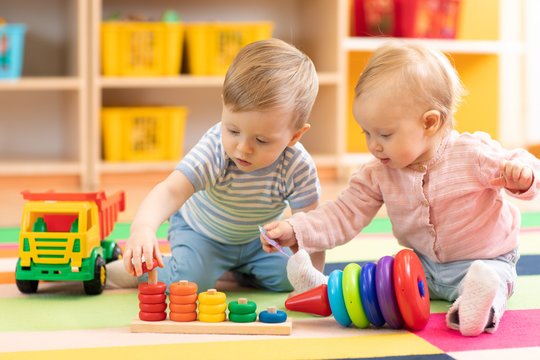
A Complete, Reassuring Guide for Parents Three years old is a magical, maddening, magnificent age. Your child has transformed from a baby into a real little person — with opinions, questions, preferences, jokes, and a will of iron. They can hold a conversation, run without falling (most of the time), and tell you with complete confidence exactly what they do and do not want for dinner. And yet, somewhere between the joy of watching them grow and the bedtime negotiations, a quiet worry creeps in for almost every parent: Is my child where they should be? Are they learning enough? Are they ahead? Are they behind? Am I doing enough? If you have typed ‘what should a 3-year-old know’ into a search engine at any point — often at night, often with a mix of pride and anxiety — this post is for you. As a certified Montessori educator who has worked with hundreds of children in this age group, here is what I want you to know before we dive into any milestone: your child is almost certainly doing better than you think. And the most important things a 3-year-old can know are not academic. They are human. Let’s walk through all of it — together. ⚠️ An Important Note Before We Begin Developmental milestones are ranges, not deadlines. The ages and skills listed in this guide represent what most children can do at or around age three — but ‘most’ is not ‘all’, and every child develops at their own pace across different areas. A child who speaks in full sentences at 2.5 years might not be ready to use scissors until 3.5. A child who can count to 20 might struggle with emotional regulation. Development is not linear, not uniform, and not a competition. If you have genuine concerns about your child’s development — not anxious googling at midnight, but real, persistent concerns — please speak to your paediatrician. This guide is for reassurance and practical guidance, not for diagnosis. Language and Communication — What to Expect Language development is one of the most rapidly advancing areas at age three and one of the most anxiety-producing for parents. Here is what is typically expected, and what the Montessori environment nurtures: 🗣️ Vocabulary of 200–1,000+ words The range is huge — and both ends of it are completely normal. By three, most children have a working vocabulary of several hundred words, with some children using over a thousand. What matters more than the number is whether vocabulary is growing consistently and whether the child is using words purposefully to communicate needs, observations, and ideas. 💬 Speaks in sentences of 3–5 words Typical three-year-olds speak in short sentences rather than single words. ‘I want more juice’, ‘the dog is big’, ‘Mama come here’ — these are all developmentally appropriate. Some children are producing longer, more complex sentences; others are still building. Both are fine. 👂 Understands two-step instructions Go to your room and get your shoes’ — a three-year-old can typically follow this kind of two-part instruction. If your child still needs instructions broken into single steps, that is also normal and will develop with time and practice. ❓ Asks constant questions — especially ‘Why?’ If your three-year-old asks ‘why?’ approximately four hundred times a day, they are developmentally right on track. This is not stubbornness or testing you — it is a genuine explosion of curiosity about how the world works. It is one of the most beautiful milestones of this age. 📖 Enjoys and engages with stories Three-year-olds who are read to regularly can follow simple narrative sequences, predict what comes next in familiar stories, and retell a story in their own words. This is not just a literacy milestone — it is the foundation of comprehension, sequencing, and empathy. 💛 Montessori Language Insight: In Montessori, we never dumb down language for children. We use precise, real vocabulary from the very beginning — not ‘doggie’ but ‘dog’, not ‘that thing’ but ‘cylinder’. A child whose vocabulary has been enriched with accurate, specific language at three will arrive at school with a measurable advantage. 💡 Simple thing you can do today: Narrate your day to your child as you go — ‘I’m chopping the onion, can you smell that? Now I’m adding the tomatoes.’ This constant, rich language input is one of the most powerful things you can do for language development, and it costs nothing. Cognitive Development — How a 3-Year-Old Thinks The three-year-old mind is a remarkable thing. It is concrete (they understand what they can touch and see), imaginative (pretend play is in full bloom), and beginning to develop logical thinking. Here is what to expect: 🔢 Counts to 10 (and sometimes beyond) Most three-year-olds can count to at least 10, though they may skip numbers or lose track. More important than rote counting is one-to-one correspondence — the understanding that when you count five objects, each object gets exactly one number. This is the true foundation of mathematical thinking, and it develops between 3 and 4. 🎨 Knows most basic colours and some shapes Red, blue, yellow, green — most three-year-olds can name these confidently. Circle, square, triangle — same. Some children this age know many more. Rather than drilling colours and shapes, Montessori introduces them through hands-on sensorial materials that make the concepts vivid and memorable. 🧩 Matches, sorts, and categorises Sorting objects by colour, size, or type is a typical three-year-old skill that is deeply satisfying to children of this age. They sort their toys, their food, their crayons. This categorisation drive is not just tidiness — it is the foundation of logical thinking and mathematical reasoning. 🖼️ Understands the concept of ‘same’ and ‘different’ ‘These two are the same colour.’ ‘This one is different.’ The ability to identify similarities and differences is a critical cognitive milestone at three and the basis for all comparison, classification, and eventually reading (letters that look similar but are different). 🌗 Understands simple
Best Montessori Toys for 18-Month-Olds on Amazon (2026 Picks)
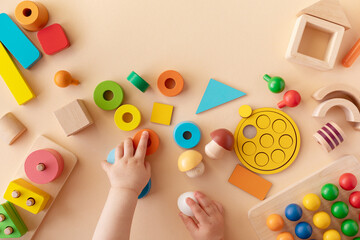
Affiliate Disclosure: As an Amazon Associate, I earn from qualifying purchases at no extra cost to you. I only recommend products that are personally vetted by our AMI-trained team and genuinely align with Montessori principles. Your 18-month-old is into absolutely everything — dumping, stacking, pulling, throwing, and doing it all over again five minutes later. If you’ve been searching for the best Montessori toys for 18-month-olds on Amazon, you already know the problem: the platform is flooded with brightly coloured plastic labelled “Montessori” that has nothing to do with the real philosophy.We get it. As AMI-trained Montessori educators, I’ve seen parents spend good money on toys that their toddler ignores after two days — because the toy does all the work and leaves nothing for the child to discover. That’s why we put together this guide. Every product below has been vetted against AMI Montessori principles: natural materials, single purpose, no batteries, and genuine developmental value for a child at the 18-month stage. Amazon is explored by our team so you don’t have to guess.Here are the 7 best Montessori toys for 18-month-olds you can order on Amazon today What Makes a Toy Truly Montessori at 18 Months? Before we get into the picks, it’s worth spending a moment on what we’re actually looking for — this will help you make smarter buying decisions beyond this list too. At 18 months, toddlers are in what Dr. Maria Montessori called sensitive periods — windows of heightened receptivity where the brain is primed to absorb specific skills. At this age, those sensitive periods are centred around: Movement — walking, climbing, carrying, and using their hands with increasing precision Language — absorbing words at a rapid pace, even if they aren’t speaking many yet Order — a strong need for routine, sequence, and things being “just so” A genuine Montessori toy at this age should honour those windows. Practically, that means Made from natural materials — wood, cotton, or wool. These engage the senses differently than plastic and feel more satisfying to handle. Single clear purpose — one skill at a time. A shape sorter teaches shape recognition. A stacking ring teaches seriation. Simple is better. The child does the work — no batteries, no lights, no music. If the toy entertains without the child’s effort, it’s doing the learning for them. Sized for little hands — knobbed pieces, chunky grips, and child-scaled tools all support the development of the tripod grip used later in writing. Invites repetition — toddlers learn by doing the same thing 20 times in a row. A good Montessori toy never gets “finished.” With that in mind, here are our top picks. Product Skill Focus Best Age Price Range Rating Wooden Shape Sorter Cognitive Fine Motor 12-15 month 15-25$ 5stars Knobbed Puzzle 3piece Fine motor, problem solving 15–30 mo 18-30$ 5 stars Object Permanence Box Cognitive development 10–18 mo 20-35$ 5 stars Practical Life Pouring Set Concentration, independence 12–24 mo 15-28$ 5stars The 7 Best Montessori Toys for 18-Month-Olds on Amazon 1. Wooden Shape Sorter — Best for Cognitive Development If there is one toy that belongs on every Montessori toddler shelf, it is a well-made wooden shape sorter. At 18 months, your child’s brain is beginning to form categories — round things, square things, things that fit and things that don’t. A shape sorter puts that cognitive process directly in their hands. The Montessori purpose: Shape sorting teaches discrimination (recognising differences), spatial reasoning (rotating the shape to find the correct angle), and the deeply satisfying concept of “fitting in.” When a toddler finally slots the triangle through the triangle hole after six attempts, the look on their face tells you everything. That moment of self-correction — without any adult telling them “well done” — is pure Montessori. What we love about it: A good wooden shape sorter has no sounds, no flashing lights, and no cheerful jingle when the piece goes in. The feedback is the piece dropping through the hole. That’s it. That’s enough — and it’s far more powerful developmentally than any electronic version. What to look for on Amazon: Natural wood with a water-based or non-toxic finish. Avoid versions with more than 6–8 shapes at this age — too many choices overwhelms an 18-month-old and leads to frustration rather than focus. Look for chunky, smooth-edged pieces large enough to avoid any choking risk. AMI educator tip: Present the shape sorter with only one shape and its matching hole visible at first. Once your child masters that shape, introduce the second. This graduated approach — classic Montessori — keeps the activity challenging but never discouraging. Price range: $15–25 on Amazon Age range: 12–24 months. For a Box shape sorter: Check Price on Amazon And for Wooden Knobbed Shape Sorter 🛒 Check Price on Amazon → 2. Wooden Knobbed Puzzle (3-Piece) — Best for Fine Motor Skills You will find knobbed puzzles in every authentic Montessori classroom in the world, and for good reason. The design — a flat wooden board with shaped cut-outs and chunky knobbed pieces — is one of the most elegant learning tools ever made for a toddler. The Montessori purpose: The knob itself is everything. When an 18-month-old reaches for the knob with their thumb, index, and middle finger, they are practising the exact same grip they will use to hold a pencil in three years’ time. This is what Montessori called indirect preparation — building a skill long before the child is asked to use it formally. Beyond the grip, the puzzle develops spatial awareness, problem-solving (which shape fits where?), and the satisfaction of completing a task from start to finish independently. What we love about it: Three pieces is the right number for this age. Fewer than three gives too little challenge. More than five overwhelms. A well-designed 3-piece knobbed puzzle can hold an 18-month-old’s attention for a surprising stretch of time — and every time they complete it, they are building concentration as much as motor skill.
How Montessori Red Rods Help Children Learn Math Early
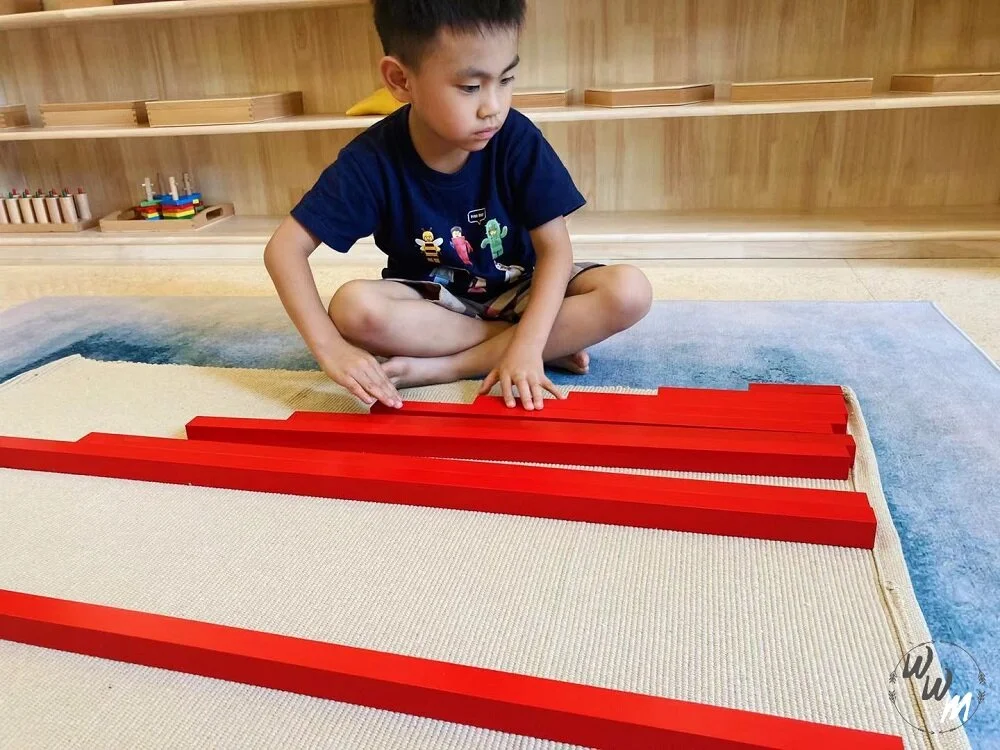
Before a child can understand that 10 is greater than 1, they need to feel it. They need to hold it, carry it, line it up, and see it take up more space in the room. This is the quiet but powerful logic behind the Montessori Red Rods — one of the earliest and most beautiful math materials in the Montessori classroom. Long before numbers are introduced, long before counting begins, the Red Rods give children a direct, physical, sensory experience of length and quantity. They are the foundation upon which all future mathematical understanding is built — and in this post, we explore exactly how and why. Whether you are a parent curious about Montessori math, an educator deepening your understanding of the materials, or someone looking to support early numeracy at home, this guide is for you. What Are Montessori Red Rods? The Montessori Red Rods are a set of ten smooth wooden rods, each painted red, that vary in length from 10 centimetres to 1 metre. The rods increase in length by equal increments of 10 centimetres — so the shortest rod is 10 cm, the next is 20 cm, the next 30 cm, and so on up to the longest rod at 100 cm (one metre). The width and height of every rod is identical — only the length changes. This elegant, uniform design is entirely intentional. Because every variable except length is controlled, the child’s attention is drawn naturally and exclusively to the one concept the material is designed to teach: length — and by extension, the mathematical idea that quantities differ in measurable, predictable ways. Design principle: In Montessori, each material isolates a single concept. The Red Rods isolate length — nothing else changes, so nothing else distracts. How Red Rods support the Montessori Curriculum The Red Rods or long rods belong to the Sensorial area of the Montessori classroom — the section dedicated to refining the child’s five senses and building the perceptual foundations of all later academic learning. They are typically introduced between the ages of two and a half and three and a half, before any formal numeracy work begins. The Red Rods sit alongside other beloved sensorial materials — the Pink Tower, the Brown Stair, the Colour Tablets, the Sound Cylinders — each of which isolates a different quality: size, dimension, colour, sound. Together, these materials build what Montessori called the mathematical mind — a mind naturally attuned to precision, order, pattern, and measurement. The Red Rods are also the direct sensorial precursor to the Number Rods — the material through which quantities and numerals are first formally linked. A child who has worked thoroughly with the Red Rods arrives at the Number Rods with a fully prepared body and mind. What Do Red Rods Actually Teach? At first glance, the Red Rods might seem too simple — just ten rods of different lengths. But in the hands and mind of a young child, they quietly lay down some of the most important mathematical foundations of all. 1.What Do Red Rods Actually Teach? This seems obvious — but it is not. Many children arrive at school able to recite numbers without understanding what quantity really means. The Red Rods make length physical and real. The child does not learn that the longest rod is ‘big’ in an abstract sense — they carry it across the room, feel its weight and unwieldiness, and understand bigness in their body 2.Comparative Language and Reasoning Working with the Red Rods naturally invites the language of comparison: longer, shorter, longest, shortest, the same as, more than, less than. These are not just vocabulary words — they are the building blocks of mathematical reasoning. A child who can confidently compare, order, and describe lengths is thinking mathematically, even before they have touched a number. 3. Seriation — Ordering by Gradation When a child arranges the ten rods in order from shortest to longest (or longest to shortest), they are practising seriation — the ability to arrange objects along a continuum. Seriation is a foundational cognitive skill identified by Jean Piaget as essential for later mathematical thinking, particularly for understanding number sequences and the number line. 4. Concentration and Order Working with the Red Rods requires the child to carry each rod carefully (some are heavy and long), arrange them precisely, and return them to the mat or shelf in order. This builds concentration, physical coordination, and the Montessori quality of normalisation — that calm, focused, purposeful engagement that is the hallmark of a prepared child. How to Present the Red Rods: A Step-by-Step Guide The Red Rods are introduced through a simple, three-stage lesson that follows the natural Montessori presentation method. As with all Montessori lessons, the emphasis is on minimal language, clear demonstration, and allowing the child to discover rather than be told. Before You Begin Choose a large floor mat or a clear area of floor — the rods need space Bring the rods one at a time from the shelf to the mat, laying them randomly Sit beside the child, not across from them Stage One — Exploration Before imposing any structure, allow the child to freely handle the rods. Let them carry them, feel the difference in weight, notice which is long and which is short. This free exploration is not wasted time — it is essential preparation. Stage Two — Ordering Begin with just three rods — the shortest, the longest, and one in the middle. Demonstrate finding the longest: run your hand along several rods, pause, and place the longest at the top of the mat. Then find the next longest and place it below. Invite the child to continue. Gradually expand to all ten rods as the child gains confidence. Stage Three — Language and Three-Period Lesson Once the child can order the rods reliably, introduce comparative language using the Three-Period Lesson: ‘This is the longest rod. This is the shortest rod. Show me the longest. Show me
Active and Passive learning:How children learn best
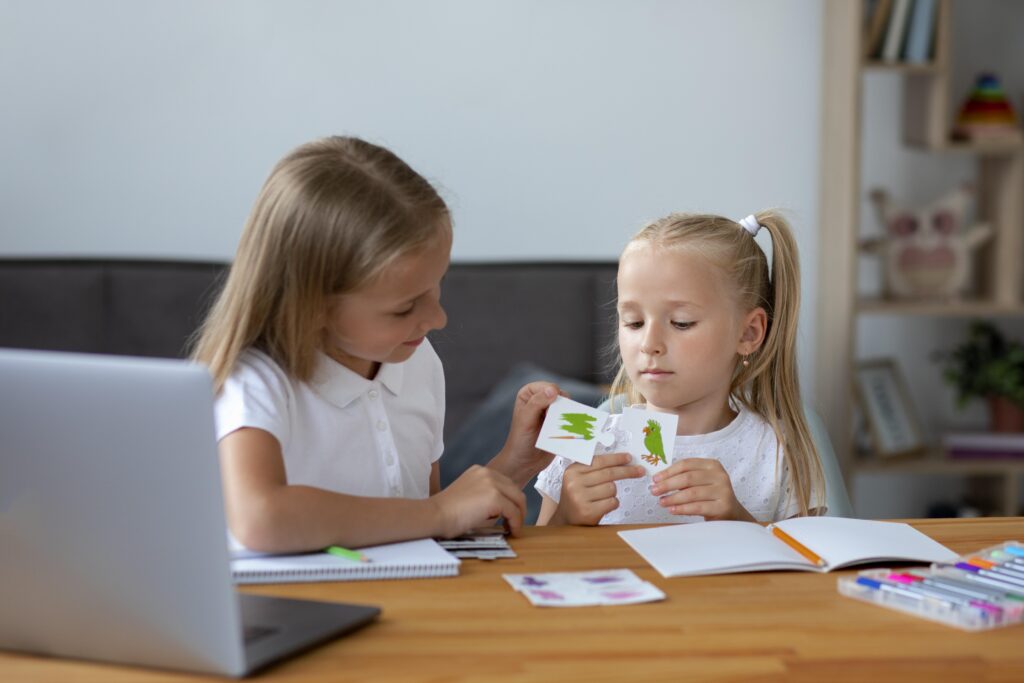
Have you ever noticed how a child who builds a block tower learns something completely different from a child who simply watches someone else build one? That difference — between doing and watching — lies at the heart of one of the most important questions in early childhood education: How do children learn best?As parents and educators, understanding the difference between active and passive learning can transform the way we support children’s growth — especially in those critical first six years of life. In this blog post, we explore both learning styles, what the research tells us, and how the Montessori method puts active learning front and centre. What Is Passive Learning? Passive learning happens when a child receives information without engaging with it directly. In this mode, the child is primarily an observer or listener — absorbing content rather than interacting with it. Common examples of passive learning include: Watching an educational video or TV programme Listening to a lecture or explanation without doing anything with the information Being shown how to do something without getting a turn to try it Reading a textbook page without applying the knowledge Passive learning isn’t entirely without value — children do absorb language, concepts, and ideas through observation. However, on its own, it tends to produce surface-level understanding that fades quickly without reinforcement. What Is Active Learning? Active learning, by contrast, is when a child is mentally and physically engaged in the learning process. The child is not just receiving information — they are exploring, doing, creating, questioning, and making meaning. In active learning, the child: Manipulates real objects with their hands Solves problems through trial and error Makes choices and experiences natural consequences Collaborates, communicates, and constructs understanding Connects new knowledge to what they already know The difference is the child’s role. In passive learning, the child is an audience. In active learning, the child is the protagonist. What Does the Research Say? Decades of research in developmental psychology and neuroscience consistently show that active, hands-on experiences produce deeper, more lasting learning — especially in young children. The Brain Needs Engagement to Learn When a child actively engages with a task, multiple areas of the brain light up simultaneously — the sensory cortex, the motor cortex, the prefrontal cortex, and the limbic system. This multi-area activation strengthens neural pathways and makes learning stick. Passive watching, on the other hand, tends to activate only the visual and auditory cortices. The learning is shallower and more easily forgotten. Jean Piaget’s Theory of Constructivism The influential Swiss psychologist Jean Piaget argued that children are not empty vessels waiting to be filled with knowledge. Instead, they are active constructors of their own understanding. Children build their knowledge through hands-on experience and interaction with the world around them. Key Insight: Children don’t learn by being told — they learn by doing, discovering, and experiencing. Lev Vygotsky and Social Learning Vygotsky’s work highlighted how active, collaborative learning — where children interact with peers and supportive adults — leads to higher-order thinking. When children talk through problems, explain their reasoning, and work alongside others, they consolidate learning far more effectively than in isolated passive settings. Active Learning in the Montessori Method Dr. Maria Montessori was a pioneer of active learning long before the term became popular in modern educational research. She observed children carefully and recognised that they learn most powerfully through purposeful, self-directed activity in a prepared environment. The Montessori approach is built on active learning at every level: Hands-On Materials Montessori materials — such as the Pink Tower, the Brown Stair, Sandpaper Letters, and the Number Rods — are designed so that children use their hands to explore abstract concepts. A child doesn’t just hear that 10 is larger than 1 — they feel the weight and size of the materials and discover it for themselves. This sensorial foundation is critical. When concepts are experienced physically before they are understood abstractly, children develop genuine comprehension rather than rote memorisation. Freedom of Movement In a Montessori classroom, children are free to move around, choose their work, and engage with materials at their own pace. This freedom is not chaos — it is purposeful. Movement is understood as essential to learning, not a distraction from it. Research supports this: physical activity and fine motor engagement are directly linked to cognitive development in young children. Self-Correction Through the Control of Error Most Montessori materials are designed with a built-in control of error — meaning the child can see for themselves when something is not right, without needing to be told by an adult. A cylinder that doesn’t fit its socket, a tower that topples because a block is placed incorrectly — these moments of self-correction are powerful active learning experiences. This builds independence, perseverance, and intrinsic motivation — qualities that passive learning rarely cultivates. The Three-Period Lesson Even when a Montessori teacher introduces a concept verbally, the lesson is structured to move quickly into active engagement. The Three-Period Lesson — Introduce, Recognise, Recall — ensures that the child doesn’t simply hear information but actively works with it to cement understanding. The Role of the Prepared Environment One of Dr. Montessori’s greatest insights was that the environment itself must be an active participant in learning. A Montessori classroom is not arranged for a teacher to perform at the front — it is arranged for children to engage. Every shelf, every material, every piece of furniture is placed intentionally to invite exploration, promote independence, and support active engagement. The environment says to the child: this is your space; you are capable; discover for yourself. Parents can apply this principle at home too. A low shelf with accessible, open-ended materials; a kitchen stool so a child can participate in cooking; a small watering can for tending to plants — these simple changes turn a home into a rich active learning environment. Finding the Right Balance This is not to say that passive learning has no
The Role of well prepared Environment in Child Development|
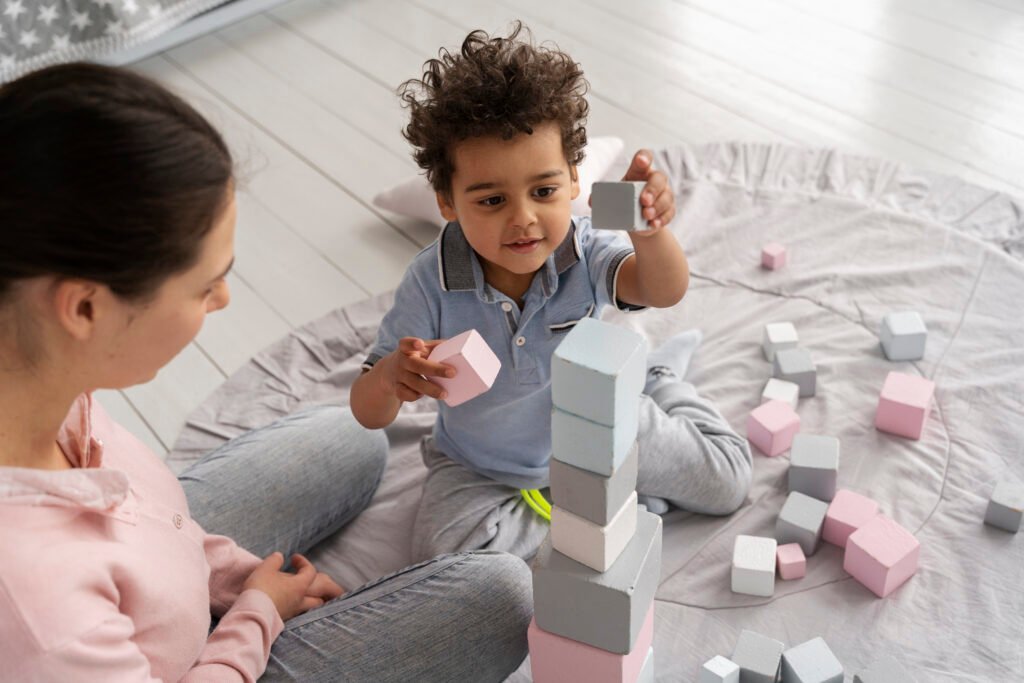
“Children do not need perfect parents. They need present, warm, consistent, and curious ones.” The role of environment in child development matters more than you think. Harvard’s Center on the Developing Child describes a concept called ‘serve and return’ — one of the most powerful tools in early childhood development. It simply means: your child reaches out (a look, a sound, a gesture), and you respond. This back-and-forth exchange builds the neural connections that form the foundation of communication, trust, and learning. What you need is: Consistency — routines help children feel safe and regulate their nervous system Warmth — physical affection and emotional validation build secure attachment Stimulation — new sights, sounds, textures, and experiences grow the brain Language — rich conversation is the single most impactful thing you can do at home Freedom to explore — children learn best through discovery, not instruction The stress of poverty, neglect, or exposure to violence — what researchers call ‘toxic stress’ — can disrupt brain development in measurable ways. On the flip side, a consistently warm and stimulating environment can help even children who face early challenges to thrive. The Montessori Approach — Building the Foundation Right The Montessori method, developed by Dr. Maria Montessori over a century ago, was built on a deep understanding of how young children naturally learn — long before modern neuroscience could confirm what she observed. Today, brain research consistently validates the principles that Montessori educators have applied for generations. At KS Montessori, we believe that children are not empty vessels waiting to be filled with knowledge. They are naturally curious, capable, and driven to explore. Our role — as educators and as parents — is to prepare the right environment and step back, allowing children to take ownership of their own learning. Key Montessori Principles That Support Early Brain Development: Child-led learning: Children work at their own pace, building confidence and intrinsic motivation Mixed-age classrooms: Younger children learn from older peers; older children reinforce their learning by teaching Hands-on materials: Every Montessori material is designed to isolate a specific concept, making abstract ideas concrete Freedom within limits: Children choose their work, but within a structured, purposeful environment Respect for the child: Every child is treated as a unique individual with their own timeline and strengths Children who attend high-quality early childhood programs are more likely to graduate high school, pursue higher education, maintain stable employment, and have healthier relationships as adults. The return on investment in quality early education is estimated at $7 to $12 for every $1 spent — in reduced social costs and increased productivity. Common Myths About Early Childhood — Busted Myth 1: “My child will catch up — there’s plenty of time.” While children are resilient and can absolutely learn and grow throughout their lives, certain windows of development are more sensitive than others. Language acquisition, emotional regulation, and attachment patterns are most powerfully shaped in the early years. Waiting is not the same as harmful — but intentionality now pays dividends later. Myth 2: “Academic pressure early leads to smarter kids.” Research consistently shows the opposite. Children who are pushed into formal, desk-based academics too early often experience increased anxiety and reduced love of learning. Play-based, child-directed learning in the early years produces better long-term academic outcomes than drilling letters and numbers before children are developmentally ready. Myth 3: “Good parenting means keeping children busy with activities.” Over-scheduling children actually deprives them of something crucial: unstructured play. Free play is where children develop creativity, resilience, and self-regulation. Some of the most important learning happens when children are ‘just playing.’ Myth 4: “Screen time is fine if it’s educational.” The American Academy of Pediatrics recommends no screen time for children under 18-24 months (except video chatting), and very limited, high-quality content for children ages 2-5. Even ‘educational’ screen time cannot replicate the rich, multi-sensory, relationship-based learning that happens through real-world interaction. What Parents Can Do Starting Today You do not need to wait to enroll in the perfect school or buy the right curriculum. The most powerful early childhood education happens in everyday moments at home. Here is a simple, practical framework: The TALK Principle for Parents T TALK — and listen Narrate your day. Ask open questions. Have real conversations — not just instructions. A ACT — with your hands and body Cook together, build things, go outside. Physical, sensory experiences grow the brain. L LOVE — unconditionally Consistent warmth and emotional safety are the most critical inputs for healthy brain development. K KNOW — your child as an individual Every child has a unique pace and learning style. Trust their timeline. Observe before intervening. The Takeaway: You Have More Power Than You Know “It is easier to build strong children than to repair broken men.” — Frederick Douglass The early years of your child’s life are not just a ‘phase’ to get through. They are the most extraordinary window of human development — a time when the brain is more open, more flexible, and more responsive to nurturing input than it will ever be again. You do not need to be a perfect parent. You do not need a perfect school. What you need is presence, warmth, curiosity, and consistency. The conversations you have at the dinner table, the books you read at bedtime, the way you respond when your child is upset — all of it matters, all of it counts, and all of it is building the person your child will become. At KS Montessori, we are here to be your partner in this extraordinary journey. Whether you are just beginning to explore early education options or looking to deepen your understanding of your child’s development, we would love to connect with you. Explore more resources, schedule a visit, or reach out to our team at www.ksmontessori.com References & Further Reading The information in this post is grounded in established research from the following organizations
The First 6 Years of a child :A life long Impact
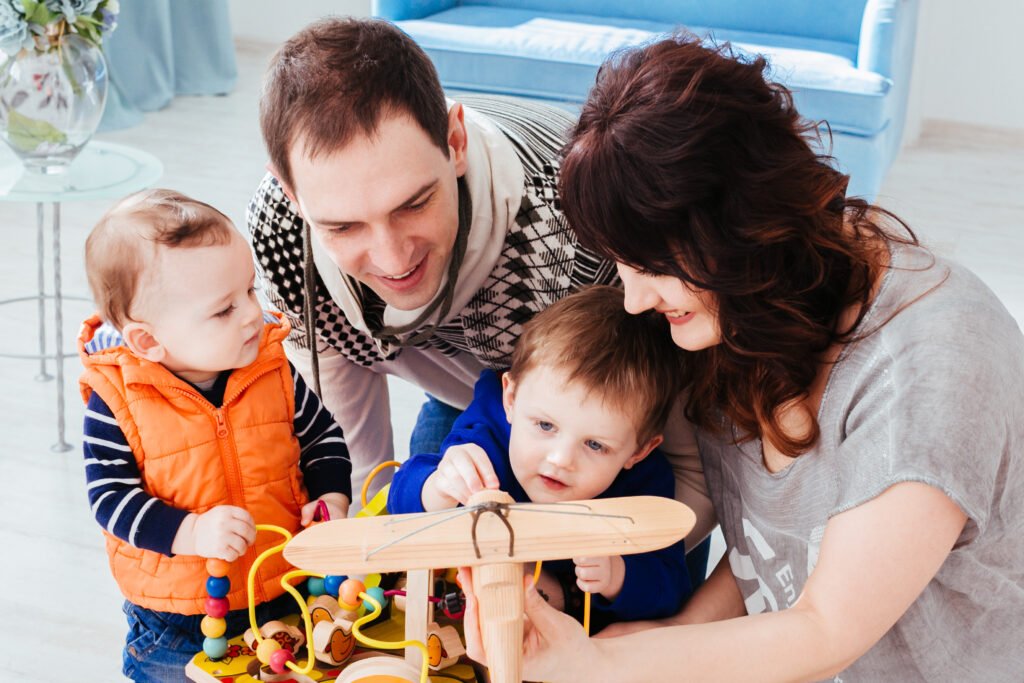
Why the Early Years of Your Child’s Life Are the Most Important “Your child’s brain at age 3 is twice as active as an adult’s — it’s working around the clock, building the foundations of everything they will ever learn, feel, and become. What happens in these early years doesn’t just shape childhood — it shapes an entire life.” As a parent, you are your child’s first and most important teacher. The choices you make in their early years — the environment you create, the language you use, the experiences you offer — have a ripple effect that extends decades into the future. This might sound overwhelming, but it is actually one of the most empowering truths about parenting. In this post, we are going to walk you through the science and heart behind early childhood development — in plain, everyday language — and show you why these golden years truly matter more than any other period in your child’s life. 1. The Brain Builds Itself — and It Does It Fast Imagine constructing a building. The foundation must be strong before you can build walls, add floors, or install the roof. Your child’s brain works the same way. At birth, a baby’s brain has about 100 billion neurons — almost as many as an adult. But those neurons are not yet connected. The magic happens in the first few years of life when these neurons begin forming connections (called synapses) at a breathtaking speed. 1 million new neural connections are formed every single second in a baby’s first 3 years 90% of a child’s brain development is complete by age 5 3x more active — a 3-year-old’s brain is three times more active than an adult brain These connections are built through every single experience — a song you sing, a word you say, a hug you give, a puzzle you solve together. Every positive, nurturing experience literally shapes the physical structure of your child’s brain. And here is the key: the brain never grows this fast again. After the early years, unused connections are pruned away — and the window to build certain foundations begins to narrow. This is not something to fear; it is something to embrace with action and intention. 2. What Exactly Is Developing in the Early Years? Early childhood development is not just about learning to talk or walk. It covers several critical areas that work together to shape the whole child: Cognitive Skills (Thinking and Problem Solving) Children learn to think, reason, remember, and solve problems through exploration and play. When a toddler stacks blocks and watches them fall, they are not just playing — they are discovering gravity, cause and effect, and spatial reasoning. Provide open-ended toys: blocks, sand, water, art materials Ask questions instead of always giving answers: ‘What do you think will happen?’ Let them make age-appropriate choices and experience natural consequences Emotional and Social Development A child who feels safe, loved, and understood develops a secure attachment — and this becomes the template for all future relationships. Children who develop strong emotional intelligence grow into adults who can manage stress, empathize with others, and build meaningful connections. Name emotions out loud: ‘You seem frustrated right now. That’s okay.’ Teach calming strategies: deep breaths, hugging a toy, counting to five Model kindness, patience, and conflict resolution in your own behavior Language and Communication Children absorb language like sponges in the first three years. The more words they hear — through conversation, reading, and storytelling — the richer their vocabulary becomes. Strong language skills at age 5 are one of the biggest predictors of academic success at age 10. Talk to your child constantly — narrate your day, describe what you see Read aloud every single day, even from infancy Respond to their babbles and attempts to communicate — this builds confidence. Physical Development Gross motor skills (running, jumping, climbing) and fine motor skills (holding a pencil, buttoning a shirt) both develop rapidly in the early years. Physical play is not a distraction from learning — it IS learning. Outdoor play every day for gross motor development Activities like drawing, playdough, and threading beads for fine motor skills Limit screen time — children need real-world, physical interaction with their environment Choosing the Right Early Childhood Program If you are considering an early childhood program for your child, here are the key qualities to look for — regardless of whether it is Montessori, Reggio Emilia, play-based, or another approach: Warm, responsive teachers who get on the child’s level — literally and emotionally Low child-to-teacher ratios (ideally 8:1 or less for toddlers, 10:1 for preschoolers) A rich, language-filled environment with books, conversation, and storytelling Time for unstructured play alongside guided activities An outdoor space and regular physical activity A curriculum grounded in developmental science, not just test preparation Clear communication and partnership with parents. At KS Montessori, we have designed our program with every one of these principles at its core. Our classrooms are calm, purposeful, and child-centered environments where every child is seen, valued, and supported to reach their full potential — at their own beautiful pace.
AMI Montessori Education: A Complete Guide for Parents
AMI Montessori Education: A Complete Guide for Parents Ks Montessori – Building Strong Foundations for Lifelong Learning Choosing the right educational environment for your child is one of the most important decisions a parent can make. Early childhood education not only shapes academic skills but also influences confidence, independence, emotional intelligence, and social behavior. At Ks Montessori, we follow the AMI Montessori approach, a globally respected method of education designed to support a child’s natural development. This guide will help parents understand AMI Montessori education, its benefits, and why Ks Montessori is an ideal choice for families seeking quality, trust, and long-term success. Understanding AMI Montessori Education The Association Montessori International (AMI) was founded by Dr. Maria Montessori to preserve her original educational philosophy. AMI Montessori schools follow strict international standards to provide authentic Montessori education, not a modified or diluted version. Keywords naturally included in this section: AMI Montessori education AMI Montessori school Montessori early childhood education Montessori learning environment Montessori materials Montessori teaching method AMI Montessori education respects each child as an individual, allowing learning to happen naturally through exploration, movement, and hands-on experience. The Philosophy Behind AMI Montessori AMI Montessori believes children are naturally curious and capable learners. Instead of traditional teacher-led instruction, children are guided to learn independently in a carefully prepared environment. Core Principles: Freedom within limits Self-directed learning Hands-on Montessori materials Mixed-age classrooms Respect for each child’s pace and interests At Ks Montessori, these principles are practiced daily in every classroom. Why Early Childhood Education Matters The first six years of a child’s life are crucial for brain development. During this period, children absorb information effortlessly from their surroundings. AMI Montessori education takes advantage of this sensitive period by creating an environment that encourages curiosity, independence, and responsibility. Benefits of Montessori classrooms: Learn through real-life activities Develop concentration and focus Build confidence through achievement Enjoy learning instead of fearing mistakes Benefits of AMI Montessori Education Independence and Self-Confidence Practical life activities such as pouring, dressing, cleaning, and organizing help children become independent. These small achievements boost confidence and self-esteem. Focus and Concentration AMI Montessori classrooms offer uninterrupted work periods, allowing children to fully engage with tasks and complete them at their own pace. Emotional and Social Development Mixed-age classrooms encourage cooperation, empathy, leadership, and mutual respect. Children naturally learn social skills by interacting with peers of different ages. Solid Academic Foundation AMI Montessori provides strong preparation in: Language and communication Mathematics Sensorial development Cultural studies Children understand concepts deeply because they learn through experience rather than memorization. Why Choose Ks Montessori? At Ks Montessori, we provide authentic AMI Montessori education in a safe, nurturing, and stimulating environment. AMI-Trained Educators Our teachers are professionally trained according to AMI standards. They observe, guide, and support children without pressure or comparison. Prepared Montessori Environment Each classroom is thoughtfully arranged with Montessori-approved materials that encourage independence and exploration. Individual Attention Every child is unique. Teachers carefully observe each child and adapt guidance according to individual needs. Learn more about Ks Montessori programs here Montessori Learning Materials AMI Montessori classrooms use scientifically designed materials that support hands-on learning. Children understand concepts through touch, movement, and repetition. Key Montessori materials with affiliate links: Practical Life Montessori Tools– pouring, spooning, dressing frames Language Montessori Materials– sandpaper letters, movable alphabet Mathematics Montessori Materials– number rods, golden beads Complete Montessori Kit– all-in-one Montessori learning set AMI Montessori vs Traditional Education Traditional education often expects all children to learn at the same pace. AMI Montessori respects each child’s development. In Montessori classrooms: Children choose their work Learning is self-paced Mistakes are part of growth Teachers act as guides, not lecturers This approach develops confident, curious learners who enjoy learning naturally.
Montessori Pink Tower
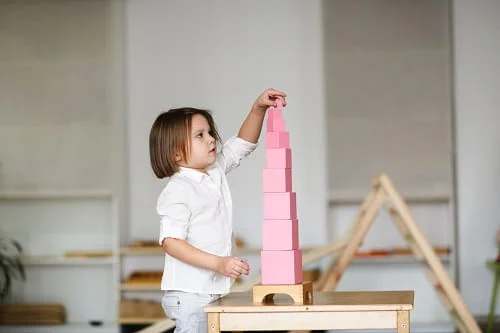
Montessori Pink Tower: Unlock Your Child’s Potential with ksMontessori As a parent or educator, you understand the importance of giving children tools that foster their development. You aspirefor tools that enhance creativity, and independence. One such essential Montessori material is the Montessori Pink Tower, a classic educational tool that helps children refine their fine motor skills, enhance their understanding of size and proportion, and build a strong foundation for early mathematics. At ksMontessori, we are passionate about providing high-quality Montessori materials that support children’s natural curiosity and growth. In this post, we will explore the numerous benefits of the Pink Tower, its educational value, and why it should be an essential part of your child’s learning experience. What is the Montessori Pink Tower? The Montessori Pink Tower is a set of 10 graduated cubes made from durable wood, each painted in a soft pink hue. The cubes range in size from 1 cm³ to 10 cm³, and the goal is to stack them in order of size, starting from the smallest to the largest. This simple yet effective educational material is part of the Montessori Sensorial curriculum, which helps children develop their senses, improve focus, and master critical early math skills. By engaging with the Pink Tower, children gain a tactile understanding of concepts like size, dimension, and proportion. The activity encourages independent learning and problem-solving, both core principles of the Montessori method. Benefits of the Montessori Pink Tower The Montessori Pink Tower offers a range of developmental benefits for children. From cognitive development to physical skills, here’s how the Pink Tower supports a child’s learning journey: 1. Enhances Fine Motor Skills and Hand-Eye Coordination As children handle and stack the cubes, they strengthen their fine motor skills. The precision required to stack the cubes without them toppling promotes hand-eye coordination, dexterity, and muscle control. These skills are vital for other everyday tasks, like writing, drawing, and using utensils. 2. Teaches Early Math Concepts The Pink Tower is a fantastic tool for introducing young children to early math concepts. The cubes offer a hands-on way to explore measurement, proportions, and volume. Children learn to understand how objects vary in size and volume, helping them grasp the basic concepts of mathematics in an intuitive and tangible way. 3. Promotes Spatial Awareness and Cognitive Development By arranging the cubes in different orders and patterns, children develop a strong sense of spatial relationships. The Pink Tower helps them visualize size gradation and order, which builds a solid foundation for geometry, problem-solving, and logical thinking. 4. Encourages Independence and Self-Correction One of the primary goals of the Montessori method is to foster independence in children. The Pink Tower is self-correcting; if the cubes are not stacked correctly, the structure will collapse. This encourages children to solve problems on their own, building critical thinking skills and boosting self-confidence. 5. Improves Concentration and Focus The process of stacking the cubes from smallest to largest requires a high level of concentration and patience. This simple activity encourages children to stay focused and be mindful of their actions, which contributes to their overall ability to concentrate in other areas of learning. How to Use the Montessori Pink Tower There are numerous ways to engage children with the Montessori Pink Tower. Here are a few ideas for maximizing its educational potential: 1. Stacking the Cubes by Size The primary activity is stacking the cubes from smallest to largest. This teaches children about size comparison, sequencing, and order, which are essential skills in early math. 2. Reversing the Order Once your child has mastered stacking the cubes from smallest to largest, challenge them to arrange the cubes in reverse order—from largest to smallest. This reinforces the concept of size and further develops cognitive skills. 3. Counting and Volume Exploration You can introduce counting with the cubes, helping children understand quantity while simultaneously exploring the concept of volume. For instance, ask your child to count how many cubes are in the tower or discuss how the volume changes as the cubes get larger. 4. Creative Play and Building Encourage your child to use the cubes for open-ended play. Have them build towers, houses, or other structures. This creative play helps children strengthen their problem-solving skills and think about balance, symmetry, and spatial relationships. Why Choose the Montessori Pink Tower from ksMontessori? At ksMontessori, we focus on providing high-quality, educational materials that are both durable and safe for children. Our Montessori Pink Tower is made from eco-friendly wood and is carefully crafted to ensure that it will last for years of educational play. Unlike plastic toys, which often lose their appeal over time, the Pink Tower is a timeless learning tool that grows with your child. Here’s why you should choose our Pink Tower: Durable & Safe: Made from high-quality, non-toxic wood for durability and child safety. Educational Value: Supports early learning in mathematics, fine motor skills, and spatial awareness. Timeless Design: The simple, elegant design appeals to children’s natural curiosity and encourages independent learning. Sustainable: Environmentally friendly materials ensure that the Pink Tower is safe for both children and the planet. Where to Buy the Montessori Pink Tower Are you ready to bring the Montessori Pink Tower into your home or classroom? You can easily purchase the Pink Tower through the link below. By buying through our affiliate link, you’ll not only be supporting ksMontessori but also investing in a valuable educational resource for your child. 👉 Click here to buy the Montessori Pink Tower on Amazon The Montessori Pink Tower is more than just a set of wooden cubes; it’s a valuable educational tool that helps children develop a wide range of skills, from fine motor abilities to early math concepts. Whether you are homeschooling or looking to enrich your classroom environment, the Pink Tower is an essential Montessori material that will provide your child with years of learning and growth. At ksMontessori, we are committed to offering the best in Montessori education. The Pink Tower is just one
An introduction to Dr. Maria Montessori
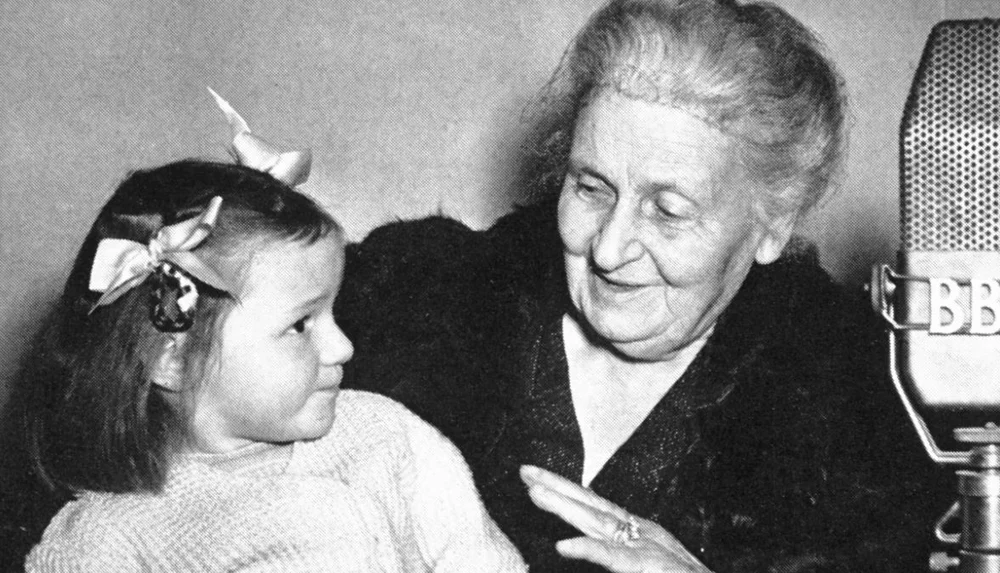
Dr. Maria Montessori: Who Introduced Early Childhood Education Early childhood is the most crucial time of human development.Not many people get that right, but Dr. Maria Montessori did better than anyone. She had a different vision of a child’s learning, growth and how they connect with everything around them. Her ideas are still changing early education all over the world by high quality early education programs that follow her philosophy, even the one at KSmontessori with its nurturing setup. It feels like her approach just sticks because it works so well for little kids. This blog looks into her life and what Dr.Maria Montessori theory is based on. Also, how she affected the world with her methods and why people trust it so much today in early education. Who Was Dr Maria Montessori? Dr Maria Montessori was an Italian physician, educator, and ideologist who forever changed the field of education. She was born back in 1870 and ended up being the first woman to become a doctor in Italy, breaking social barriers at a time when women had limited professional opportunities. When she started working with children she made some record breaking discoveries such as: Kids are just naturally curious and they can learn a lot if you keep them in the right place. Instead of pushing all these strict education systems on them, she believed in observing children scientifically and helping them grow in their own environment. That approach of hers basically started what we call Montessori education nowadays. It’s all focused on the child and the most trusted philosophy by parents and teachers worldwide. The Birth of the Montessori Method: The Montessori Method began in 1907 with the opening of the Casa dei Bambini (Children’s House) in Rome. Dr. Maria worked with children from lower backgrounds and closely observed how they interacted with specially designed learning materials. What she found was extraordinary. When given freedom within a structured environment, children: Developed focus and concentration. They learn on their own, without anyone pushing them. Showed self-discipline without punishment. Demonstrated a natural love for learning. These observations became the scientific basis of the Montessori Method, an educational approach built on respect for the child and hands-on learning. Core Principles of Montessori Education: The main pillar of Montessori education lies in its carefully designed principles, each aimed at nurturing the development of children. Respect for the Child The classrooms are set up in a unique way with materials accessible for different ages that every individual explores on their own with different interests and ways of learning. Child-Led Learning Students get an opportunity to pick what they want to do based on developmental needs, promoting intrinsic and motivation. The Prepared Environment Classrooms are thoughtfully designed with age-appropriate materials that encourage exploration and independence. Hands-On Learning The montessori material involves touching and seeing things, so abstract stuff becomes more real through hands-on play. Freedom with Responsibility Freedom comes with responsibility, like kids can choose but they learn to own their actions and build discipline. The Teacher as a Guide Teachers watch and guide instead of telling everyone what to do all the time. It feels a bit different from regular school. At KSmontessori, Dr maria montessori method is the heart of learning to ensure children’s academic, social and emotional development. Dr. Montessori’s View of the Child: Dr. Maria Montessori quotes that “children are not empty vessels waiting to be filled with information”. Instead, she viewed them as active participants in their own development. One of her most empowering theories was the concept of sensitive periods which explains specific times when children are especially receptive to learning certain skills such as language, movement, or order. When education aligns with these natural windows, learning becomes effortless and joyful. This Dr maria montessori philosophy of education empowers children to: Build confidence Develop independence Strengthen decision-making skills Cultivate lifelong curiosity The Global Impact of Dr. Maria Montessori: Today, Montessori education is practiced in over 140 countries, with thousands of schools serving millions of children. Dr. Montessori’s work influenced not only education but also psychology, neuroscience, and child development research. Her legacy includes: A scientifically grounded educational method International recognition as an educational reformer A timeless philosophy that adapts to modern learning needs From traditional classrooms to modern learning environments. Hence, Montessori education continues to shape confident and capable learning. Why Montessori Education Is More Relevant Than Ever? In this world that’s all about screens and rushing around all the time, Montessori seems like an alternative way to help kids build up those important skills they’ll need later on such as: Independent thinking Focus and concentration Problem-solving abilities Emotional intelligence Respect for others Parents seeking a balanced, holistic approach towards their kids’ education should start to look at places like KSmontessori more often. The learning there is focused on the child, making it purposeful and meaningful. Montessori Philosophy at KSmontessori: At KSmontessori, Dr. Maria Montessori’s vision comes alive every day. Our learning environment reflects her principles through: Carefully prepared classrooms Montessori-trained educators Hands-on, age-appropriate materials A strong focus on independence and confidence We believe education should inspire children, not pressure them. By honoring each child’s natural development, KSmontessori nurtures lifelong learners prepared for future success. Recommended Montessori Resource for Parents: For parents who want to increase their understanding of Montessori education at home, we recommend this highly trusted Montessori resource. Montessori Learning Materials & Books https://amzn.to/48RpxnG These carefully designed materials support hands-on learning, independence, and skill development perfect for extending Montessori principles beyond the classroom. Conclusion: Dr. Maria Montessori’s work was more than an educational method; it was a movement that respected childhood as a golden period of human development. Over a century later, her philosophy continues to shape confident, compassionate, and capable learners. At KSmontessori, we proudly carry forward her legacy by creating an environment where children thrive naturally. By choosing Montessori education, parents invest not just in academics but in their child’s lifelong success.