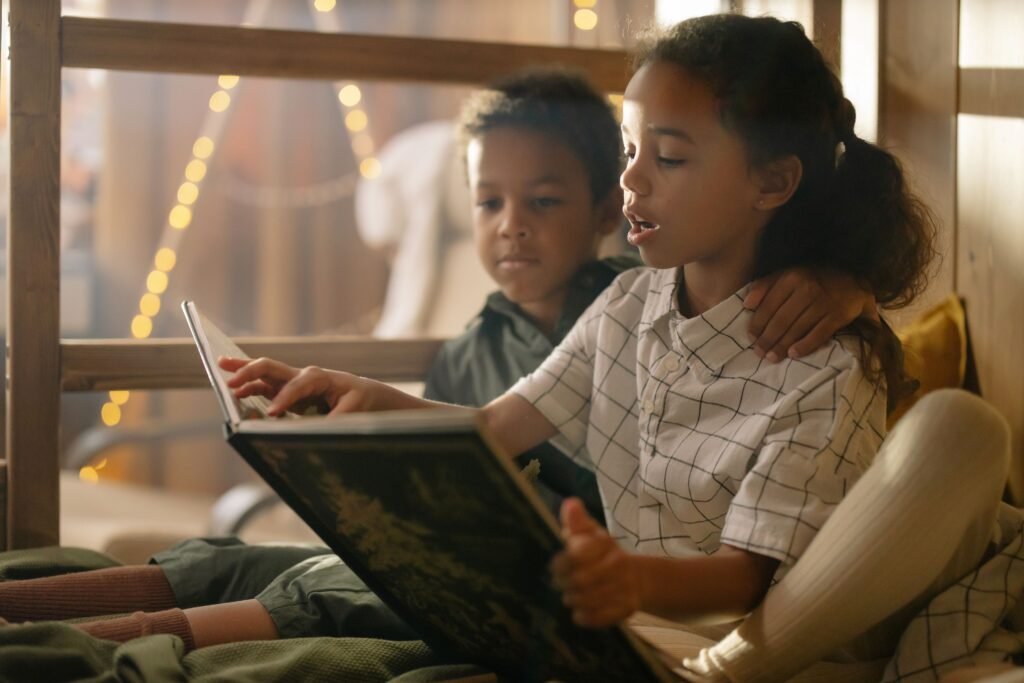
Think back to a book that changed something in you. Maybe it was a story you read as a child, curled up somewhere quiet, so absorbed that the world around you went silent. Maybe it was a character who felt like a friend. Maybe it was a sentence that described exactly how you felt but had never been able to say.
That experience — of being genuinely lost inside a book — is one of the most extraordinary gifts a human being can give themselves. And it starts, almost always, in the first few years of life. Not with formal reading instruction. Not with sight word drills. But with a parent, a book, a lap, and twenty minutes when nothing else mattered.
This guide is about how to create that experience for your child. How to build a relationship with books that begins in infancy and grows stronger with every year. How to raise a child who does not just know how to read — but who genuinely, deeply, joyfully loves it.
There is a big difference between the two. And this guide is entirely about the second one.
The Most Important Thing — And the One Thing Most Parents Get Wrong
Before we talk about strategies, there is one truth so important that everything else in this guide depends on it:
You cannot make a child love reading. But you can absolutely kill the love of reading before it has a chance to grow.
The most common way parents do this — with the very best intentions — is by turning reading into a performance. Drilling sight words at the kitchen table. Asking comprehension questions after every page. Correcting every mispronounced word. Rewarding finishing books. Testing. Assessing. Measuring.
Every one of these things sends the same message to the child: reading is work. Reading is something I do for you. Reading is something I can fail at.
And a child who believes reading is work will stop doing it the moment no one is making them.
The goal is not a child who can read. The goal is a child who wants to read. Those two outcomes require completely different approaches — and this guide is built around the second one.
💛 The Single Most Powerful Thing You Can Do: Read aloud to your child every single day. Not to teach them. Not to test them. Just because stories are wonderful and being together is wonderful and that combination — story plus togetherness — is the most powerful reading motivation in the world
What the Research Actually Says About Raising Readers
The science on this is remarkably clear and remarkably consistent. Here is what decades of reading research tells us:
Reading aloud is the single highest-impact literacy activity
Study after study — including the landmark report Becoming a Nation of Readers — identifies being read aloud to as the single most important activity for building the language, vocabulary, comprehension, and love of reading that underpin all later literacy. Not phonics worksheets. Not sight word flashcards. Read-aloud.
Every time you read aloud to your child, you are building vocabulary they have never heard in conversation, exposing them to the rhythm and structure of written language, showing them that stories have the power to transport and delight, and associating books with warmth, safety, and your voice. That is an extraordinary amount of learning happening on a single couch.
🔬 Research Finding: A child who is read aloud to for just 20 minutes a day will have heard approximately 1.8 million words per year more than a child who is not read to. By the time they start school, that gap in vocabulary, comprehension, and world knowledge is enormous — and it affects reading success for years.
Access to books matters enormously
Children who have books at home read more. This seems obvious but the scale of the effect is striking — research from the University of Nevada found that having as few as 20 books in the home has a significant positive effect on children’s educational achievement. It is not about the number — it is about books being present, visible, and accessible as a normal part of life.
Intrinsic motivation is the key variable
Children who read because they want to read — because reading is pleasurable, because stories are interesting, because books feel like friends — develop into far stronger readers than children who read because they are made to. Extrinsic motivation (rewards, points, competition) produces short-term reading but undermines long-term love. Intrinsic motivation, once established, is self-sustaining.
The parent’s own relationship with reading matters
Children who see their parents reading are more likely to become readers themselves. Not because of instruction or encouragement — but because children model what they see. A parent who visibly, genuinely enjoys a book is sending a message that books are worth enjoying. That message lands.
15 Practical Strategies That Actually Build Reading Love
These are not theories. They are real, practical, immediately usable strategies — some require nothing at all, some require a small change in how you set up your home, and some will take a few weeks to become habit. All of them work.
.Read Aloud Every Single Day — Without Exception
Not sometimes. Not when you have time. Every day. Even if it is only ten minutes. Even if you are tired. Even if they have already had a book today. The daily habit of read-aloud is the single most powerful thing you can do for your child’s reading life, and its power comes from the consistency — from the child knowing that this is what we do, every day, because stories matter in this family.
Try saying: “Let’s find our book. This is my favourite part of the day.”
- Never Stop Reading Aloud — Even When They Can Read Themselves
One of the most common mistakes parents make is stopping reading aloud the moment their child learns to read independently. This is exactly backwards. Children can listen at a much higher level than they can read independently for years — which means you can read them books that are far richer, more complex, and more rewarding than anything they could read alone. Reading aloud to a seven or eight-year-old is still one of the highest-value literacy activities you can do together.
Let Them Choose — Even If You Hate the Book
The fastest way to make reading feel like a chore is to always choose the books yourself. Let your child choose. If they want to read the same book seventeen times, let them. If they want a book about trucks and you find trucks deadly dull, get the truck book. Autonomy in reading is not a nice-to-have — it is the mechanism through which reading love is built. A child who chooses their own books is a child who is building a reading identity.
Try saying: “You choose tonight. What are you in the mood for?”
- Create a Beautiful, Accessible Book Corner
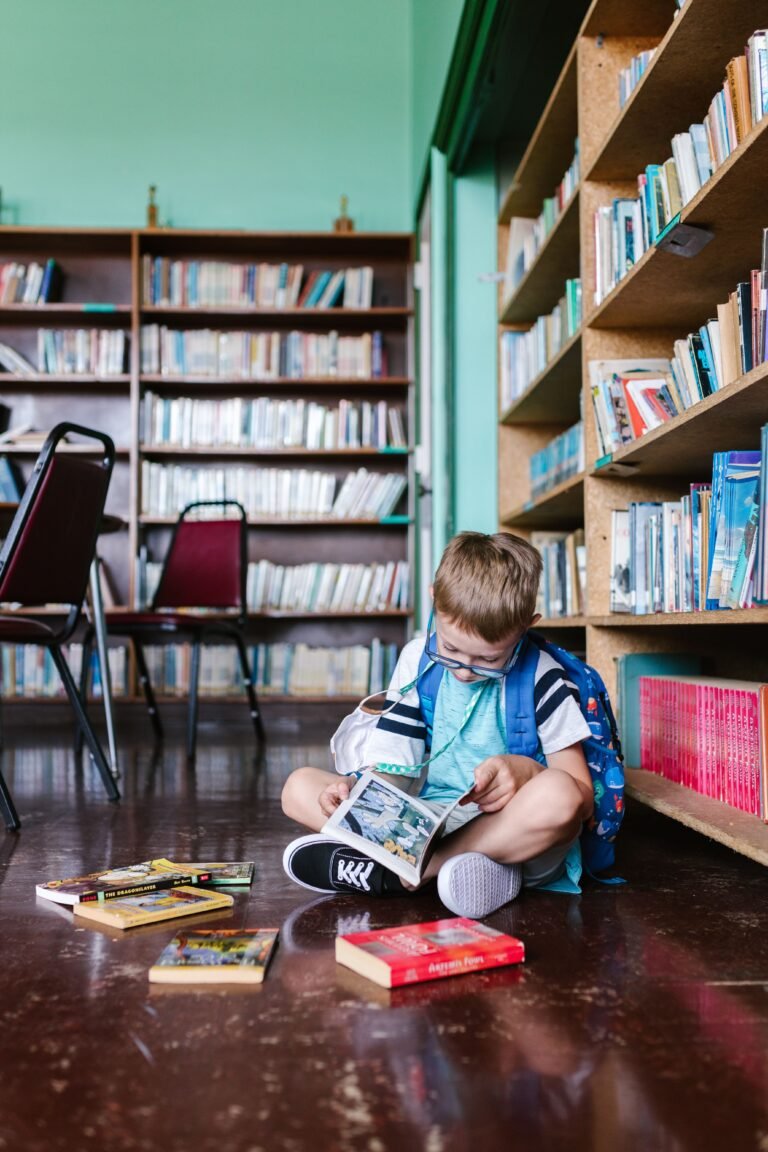
Books that are stuffed spine-out into a crowded shelf are books that are invisible. Books displayed with covers facing outward, at the child’s eye level, on a low open shelf — those are books that invite. Set up a dedicated reading corner: a small shelf, a cushion or beanbag, good light, and a rotating selection of books the child can reach and browse independently. The environment is an invitation, and invitations matter.
- Rotate the Books Regularly
A book shelf that never changes becomes wallpaper — invisible and uninviting. Rotate books every two to three weeks. Put some away, bring out others. Get them from the library. Borrow from friends. The appearance of a new book on the shelf is a small event — a small excitement. Novelty drives curiosity, and curiosity drives reading.
Try saying: “I put some new ones on the shelf this morning. Want to see what they are?”
- Make the Library a Regular Outing
The public library is one of the most underused resources in most families’ lives. It is free. It is unlimited. It allows children to choose from a vast selection without any financial pressure. And crucially — it makes choosing books feel like an adventure, not a chore. Make library visits a regular, pleasant family ritual. Let the child choose whatever they want. Borrow generously. Return. Repeat.
Try saying: “Library day today. You can choose five books. What are you looking for?
- Follow the Child’s Obsessions Into Books
If your child is obsessed with dinosaurs, there are hundreds of books about dinosaurs — fiction and non-fiction, picture books and chapter books, funny and informative. If they love football, cooking, space, dogs, or volcanoes — there are books for all of it. A child who has discovered that books contain the things they care most about is a child who has discovered the deepest reason to read. Follow the obsession. Let it lead to books.
Try saying: “You love dinosaurs so much. Did you know there are books that tell you things even dinosaur experts are still figuring out?”
- Let Them See You Reading — For Pleasure
If your child only ever sees you reading emails, scrolling your phone, or reading for work — they learn that reading for pleasure is not something adults do. Let them see you with a novel. On the sofa. At the kitchen table with a cup of tea. Actually absorbed. When they ask what you are reading, tell them — enthusiastically. Share what you love about it. Model the thing you want them to become.
Try saying: “I have been thinking about this book all day. It is so good. I can not wait to get back to it tonight.”
- Never Make Reading a Punishment or a Reward
Both approaches — ‘you have to read for twenty minutes before any screen time’ and ‘if you read three books you get a prize’ — tell the child the same thing: reading is not intrinsically valuable. It is either a punishment to be endured or a means to an end. Both undermine reading motivation over time. Keep reading completely separate from reward and punishment systems. It belongs in a different category entirely — the category of good things we do because they are good.
- Do Voices, Do Expressions, Make It Alive
When you read aloud, you are performing. Not perfectly — you do not need to be an actor. But put some life into it. Do the characters’ voices, even badly. Slow down for suspense. Speed up for excitement. Whisper the scary parts. Laugh at the funny parts. When reading aloud is lively and expressive and engaged, it feels like a gift. When it is flat and mechanical, it teaches the child that books are flat and mechanical too.
Talk About Books — Not Test About Them
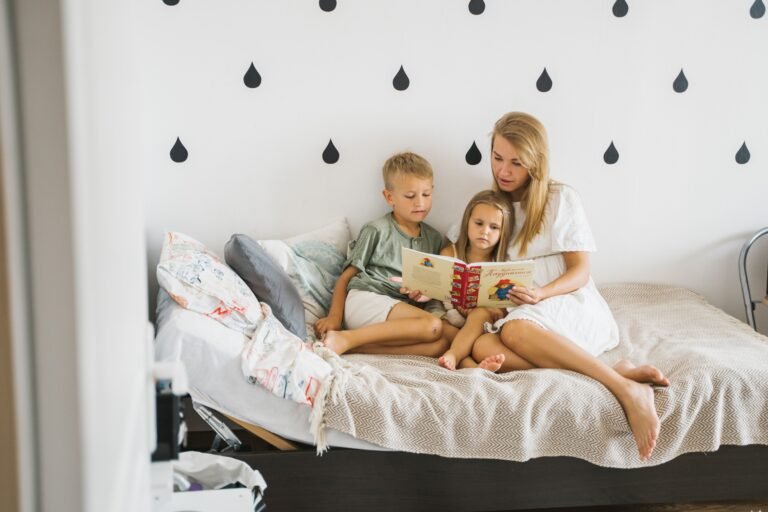
After you read together, have a conversation rather than a quiz. Not ‘what happened in the story?’ but ‘which character did you like best?’ Not ‘what did the bear do at the end?’ but ‘if you were there, what would you have done?’ Conversations about books build comprehension, inference, and empathy far more effectively than comprehension questions — and they keep the experience enjoyable rather than turning it into school.
Try saying: “That ending surprised me. Did you see it coming? What did you think was going to happen?”
- Let Books Spill Into Life
When a story has left your child interested in something, follow it into the real world. Read a book about seeds and then plant some. Read a book about the ocean and then go to the beach or watch a documentary. Read a book about baking and then bake. When books connect to real experiences, they gain a depth and relevance that makes them unforgettable. The child learns that books are not separate from life — they are a way of understanding it more deeply.
- Respect the Re-Read
Children request the same book again and again, and parents often resist — surely they have had enough of that one? But re-reading is deeply valuable. Children process, notice, and absorb different things with each reading of a familiar text. They also find enormous comfort and pleasure in the predictable — in knowing what comes next and anticipating it with satisfaction. Never dismiss the re-read. It is doing real work.
Try saying: “You want that one again? I love that book too. Let’s get it.”
- Connect Reading to Identity
Children who think of themselves as readers read more. Help your child build a reading identity by talking about them as a reader: ‘You are someone who really loves adventure stories, aren’t you?’ or ‘I have been thinking about a book that I think you would love because of the kind of reader you are.’ When reading is part of how a child sees themselves, it becomes something they protect and return to — even through the difficult teenage years when many children lose the habit.
Try saying: “You are such a good reader. Not because you read fast — because you really get into the stories. I love that about you.”
- Be Patient and Trust the Long Game
Some children take to books immediately and hungrily. Others need years of gentle, consistent exposure before the love ignites. There is no fixed timeline. There is no right age for the love of reading to arrive. Your job is to keep the conditions right — the daily read-aloud, the accessible books, the library visits, the conversations, the modelling — and trust that the love is forming, even when you cannot see it yet. It will come. It almost always does.
Age by Age — What Reading Looks Like at Each Stage
Reading together looks different at different ages. Here is a brief guide to what to expect and what to offer at each stage — from the very beginning all the way to independent reading:
👶 Birth to 12 Months — Board Books, Rhymes and Your Voice
Babies cannot understand the words but they can hear the rhythm, the warmth, and the sound of your voice. Read anything — nursery rhymes, picture books, even what you happen to be reading yourself. The content matters far less than the habit and the connection. Choose board books with high contrast images and simple, rhythmic text. Sing. Rhyme. Repeat. The brain is absorbing every sound.
What to read: Board books with simple images, strong contrast, and repetitive text. Nursery rhyme collections. Books with faces — babies are drawn to faces from birth.
🧒 12 Months to 2 Years — Point, Name, and Wonder
Toddlers want to participate — they want to point at pictures, turn pages (often before you have finished reading them), and hear the same book over and over. Let them. This age is about the pleasure of participation and the magic of repetition. Choose books with big clear illustrations, simple stories, and satisfying repetitive language. Read slowly. Follow their pointing. Name what they point to. This is language building at its most alive.
What to read: Books with one clear image per page. Repetitive language — ‘Brown Bear, Brown Bear.’ Animal sounds. Books about the world they know — food, family, animals, daily routines.
📚 2 to 3 Years — Story and Sequence
Two-year-olds are ready for simple stories with a beginning, middle, and end. They will begin to anticipate what comes next — finishing familiar phrases before you do, predicting plot points, noticing when you skip a page (and being outraged about it). This is the beginning of narrative comprehension. Choose books with clear story structure, a small number of characters, and satisfying endings. Illustrations are still doing a lot of the work.
What to read: Simple picture books with clear narrative. Books where the story can be guessed from the pictures. Books with a bit of humour — toddlers love funny. Series they can return to again and again.

🌟 3 to 5 Years — Characters, Emotion and Imagination
This is the golden age of picture books. Children this age can follow complex stories, feel deeply for characters, hold a narrative over multiple sittings, and begin to understand that books can make you feel things — frightened, delighted, sad, triumphant. They are also developing phonemic awareness, which means books with rhyme and wordplay are doing double duty — entertaining and building literacy foundations simultaneously.
What to read: Picture books with rich language and complex emotions. Books with humour and wordplay. Non-fiction about things they are passionate about. Slightly longer stories that can be read over two sittings.
📖 5 to 8 Years — Chapter Books and Reading Independence
This is the stage when independent reading begins — but the best thing you can do for a new reader is continue reading aloud to them at a level above what they can manage alone. Choose chapter books with short chapters, strong characters, and lots of plot momentum. The best read-aloud chapter books for this age have children begging for one more chapter at bedtime. That feeling — of not being able to wait to find out what happens — is the feeling that makes lifelong readers.
What to read: Short chapter books with cliffhangers at the end of each chapter. Books in series — finishing one creates immediate motivation to read the next. Books that match their current interests precisely. Do not worry about difficulty level for independent reading — let them choose freely.
The Montessori Approach to Building Reading Love
In Montessori, we do not teach reading the way most schools do. We do not sit children down with flashcards, drill them on sight words, or push them through reading schemes on a predetermined schedule. We prepare the environment, follow the child, and trust that the love of language — built through years of rich oral language, storytelling, and Sandpaper Letter work — will lead naturally to reading when the child is ready.
Here is what the Montessori approach to reading love looks like in practice:
Rich language comes first
In a Montessori environment, children are spoken to with precise, beautiful, varied language from the very beginning. Not baby talk — real words. Not simplified sentences — full, rich expression. This language immersion builds the vocabulary and comprehension that reading depends on. A child with a rich oral vocabulary reads with far greater fluency and understanding than a child who has been drilled on decoding but given little language experience.
Books are part of the prepared environment
A Montessori classroom always has books — not in a locked cupboard or on a high shelf, but at child height, cover-facing-outward, accessible and inviting. Children browse, choose, and look at books independently as a normal part of the work period. Books are not special-occasion objects. They are part of the furniture of a literate life.
Reading is never rushed
The Montessori approach does not push children toward independent reading before they are ready. The preparation — phonemic awareness through Sandpaper Letters, vocabulary through rich oral language, comprehension through storytelling and discussion — takes time. When it is complete, reading often emerges rapidly and naturally. The child who has been thoroughly prepared reads with joy. The child who has been rushed reads with anxiety.
Stories are taken seriously
In a Montessori environment, stories are not vehicles for literacy instruction. They are complete, meaningful experiences in their own right — sources of beauty, wisdom, delight, and understanding. This distinction matters. When a child experiences a story as something worth having for its own sake — not as a reading practice exercise — they develop a relationship with books that is intrinsically motivated and genuinely deep.
Montessori Materials That Build the Foundation for Reading Love
The following materials from KS Montessori directly support the language, phonemic awareness, and literacy foundations that make reading love possible:
For Language and Phonemic Awareness
- Sandpaper Letters — The gateway to reading in the Montessori method. Each letter is traced with the fingers while the sound is spoken aloud — building phonemic awareness through three senses simultaneously. A child who has worked with Sandpaper Letters arrives at reading with both the love of language and the physical memory of letter sounds already in their hands.
- Montessori Wooden Movable Alphabet with Box — Children build words with the Movable Alphabet before their hand is ready to write them — composing and reading their own creations. There is nothing that builds reading motivation more powerfully than the moment a child realises they can build words themselves. Reading becomes something they do, not something that is done to them.
- Montessori Reading Workbook: A LEARN TO READ — A beautifully structured introduction to reading that follows the Montessori sequence — phonetic awareness first, then word building, then simple text. Designed to make the journey to reading feel like an adventure rather than a test.
For Building the Environment for Reading
- Montessori Shelf — Wooden Toy Storage Organizer — The foundation of the Montessori prepared reading environment. Books displayed cover-outward at child height on an open shelf are books that are seen, chosen, and read. This single change in how books are presented makes a measurable difference in how often children choose to read independently.
For Supporting Language-Rich Learning
- Montessori Preschool Workbook: 200+ Educational Activities — Rich language activities that build vocabulary, comprehension, and the love of learning through engaging, varied exercises. An excellent complement to daily read-aloud for children approaching school age.
- Montessori Mama World Map Wooden Puzzle — Geography and language learning combined. When children know the names of real places, real animals, and real things in the world, books about those things become immediately more meaningful and engaging. World knowledge is reading comprehension.
- Constructive Triangles — Geometric thinking builds the spatial awareness that underlies the recognition of letter shapes. Children who work with shapes and forms read letters and words with greater visual discrimination and ease.
🛒 Shop All Reading Foundation Materials: All materials above are available at kiransaifmontessori.com and ksmontessori.com.pk — chosen to build the language, phonemic awareness, and love of learning that are the true foundations of reading.
Frequently Asked Questions About Raising Readers
My child refuses to sit still for books. What should I do?
Do not force it. Some children — particularly younger toddlers and children with high physical energy — find sitting still for a book very difficult. Try shorter books. Try reading while they play on the floor nearby — you do not need eye contact for read-aloud to work. Try audiobooks. Try reading while they are in the bath. Try reading a page or two at a time rather than a whole book. The goal is to associate books with pleasure, and that association can be built in small doses. Over time, as language comprehension grows, the ability to sit and listen grows with it.
My child only wants screen time, not books. How do I compete?
You cannot compete with screen time using books alone — screens are engineered to be maximally engaging and books are not. What you can do is make the conditions for books as inviting as possible: read aloud at times when screens are naturally unavailable (before bed, in the car, over breakfast), make library visits a genuine outing, follow their obsessions into books, and limit screens enough that quieter pleasures — including books — have space to fill the gap. Books do not need to win every battle. They just need to stay in the picture.
My child can decode words but does not seem to enjoy reading. What is missing?
This is actually common — children can learn to decode without ever falling in love with reading. What is usually missing is reading for meaning and pleasure rather than reading for performance. Reduce any pressure or testing around reading. Go back to reading aloud books that are well above their reading level — books that are genuinely exciting and engaging. Let them choose their own independent reading entirely. And look for the book that cracks them open — the one they cannot put down. Every reader has one. Your job is to help them find it.
Is it okay if my child only wants non-fiction?
Absolutely. Non-fiction reading is as valuable as fiction — arguably more so for certain kinds of knowledge building. A child who reads voraciously about space, history, animals, or science is building vocabulary, world knowledge, and reading stamina just as surely as a child reading novels. Never push fiction on a committed non-fiction reader. Follow the interest wherever it leads. The love of reading is the goal — not a particular genre.
What if I do not enjoy reading myself?
This is more common than parents admit, and it does not disqualify you from raising a reader. You do not need to enjoy reading for your own sake to read aloud effectively. What matters is that you are present, warm, and willing — that you show up for the read-aloud even when you are tired, that you put some life into the voice, that you let your child see you taking the story seriously. If you find yourself genuinely enjoying what you read to your child — and many parents discover this — all the better.
The Gift That Keeps Giving
A child who loves reading has been given something that no curriculum can provide and no examination can measure. They have a companion for life. A resource for loneliness. A window into other minds, other times, other worlds. A way of understanding themselves through the understanding of others. A skill that compounds — growing richer, deeper, and more rewarding with every year of practice.
Reading love, once established, is remarkably durable. The child who loved books at five tends to find their way back to books after the difficult teenage years. The adult who loved books as a child tends to remain a reader through all the busyness and distraction of adult life. Because reading is not just a skill. It is a relationship. And like all the best relationships, it rewards faithfulness.
Start tonight. Find a book. Find your child. Find fifteen minutes where nothing else matters. Read.
That is how it begins. That is how it always begins.
For Montessori materials that build the language, literacy, and love of learning that make reading possible, visit us at KS Montessori. Everything we offer is chosen with the whole child in mind — curious, capable, and ready to discover that the world inside a book is as real and as wonderful as the world outside it.
Explore reading and language materials: ksmontessori.com.pk | kiransaifmontessori.com
Written for kiransaifmontessori.com