“Children do not need perfect parents. They need present, warm, consistent, and curious ones.”
The role of environment in child development matters more than you think. Harvard’s Center on the Developing Child describes a concept called ‘serve and return’ — one of the most powerful tools in early childhood development. It simply means: your child reaches out (a look, a sound, a gesture), and you respond. This back-and-forth exchange
builds the neural connections that form the foundation of communication, trust, and learning.
What you need is:
- Consistency — routines help children feel safe and regulate their nervous system
- Warmth — physical affection and emotional validation build secure attachment
- Stimulation — new sights, sounds, textures, and experiences grow the brain
- Language — rich conversation is the single most impactful thing you can do at home
- Freedom to explore — children learn best through discovery, not instruction
The stress of poverty, neglect, or exposure to violence — what researchers call ‘toxic stress’ — can disrupt brain development in measurable ways. On the flip side, a consistently warm and stimulating environment can help even children who face early challenges to thrive.

The Montessori Approach — Building the Foundation Right
The Montessori method, developed by Dr. Maria Montessori over a century ago, was built on a deep understanding of how young children naturally learn — long before modern neuroscience could confirm what she observed. Today, brain research consistently validates the principles that Montessori educators have applied for generations.
At KS Montessori, we believe that children are not empty vessels waiting to be filled with knowledge. They are naturally curious, capable, and driven to explore. Our role — as educators and as parents — is to prepare the right environment and step back, allowing children to take ownership of their own learning.
Key Montessori Principles That Support Early Brain Development:
- Child-led learning: Children work at their own pace, building confidence and intrinsic motivation
- Mixed-age classrooms: Younger children learn from older peers; older children reinforce their learning by teaching
Hands-on materials: Every Montessori material
- is designed to isolate a specific concept, making abstract ideas concrete
- Freedom within limits: Children choose their work, but within a structured, purposeful environment
- Respect for the child: Every child is treated as a unique individual with their own timeline and strengths
Children who attend high-quality early childhood programs are more likely to graduate high school, pursue higher education, maintain stable employment, and have healthier relationships as adults. The return on investment in quality early education is estimated at $7 to $12 for every $1 spent — in reduced social costs and increased productivity. |
Common Myths About Early Childhood — Busted
Myth 1: “My child will catch up — there’s plenty of time.”
While children are resilient and can absolutely learn and grow throughout their lives, certain windows of development are more sensitive than others. Language acquisition, emotional regulation, and attachment patterns are most powerfully shaped in the early years. Waiting is not the same as harmful — but intentionality now pays dividends later.
Myth 2: “Academic pressure early leads to smarter kids.”
Research consistently shows the opposite. Children who are pushed into formal, desk-based academics too early often experience increased anxiety and reduced love of learning. Play-based, child-directed learning in the early years produces better long-term academic outcomes than drilling letters and numbers before children are developmentally ready.
Myth 3: “Good parenting means keeping children busy with activities.”
Over-scheduling children actually deprives them of something crucial: unstructured play. Free play is where children develop creativity, resilience, and self-regulation. Some of the most important learning happens when children are ‘just playing.’
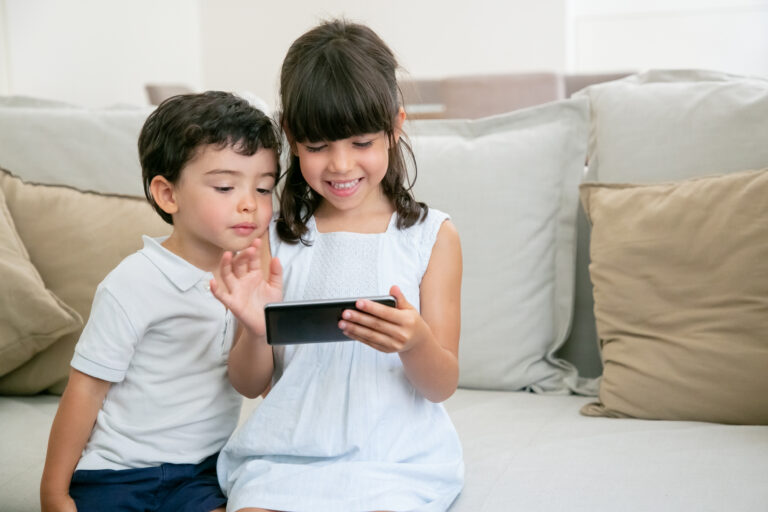
Myth 4: “Screen time is fine if it’s educational.”
The American Academy of Pediatrics recommends no screen time for children under 18-24 months (except video chatting), and very limited, high-quality content for children ages 2-5. Even ‘educational’ screen time cannot replicate the rich, multi-sensory, relationship-based learning that happens through real-world interaction.
What Parents Can Do Starting Today
You do not need to wait to enroll in the perfect school or buy the right curriculum. The most powerful early childhood education happens in everyday moments at home. Here is a simple, practical framework:
The TALK Principle for Parents
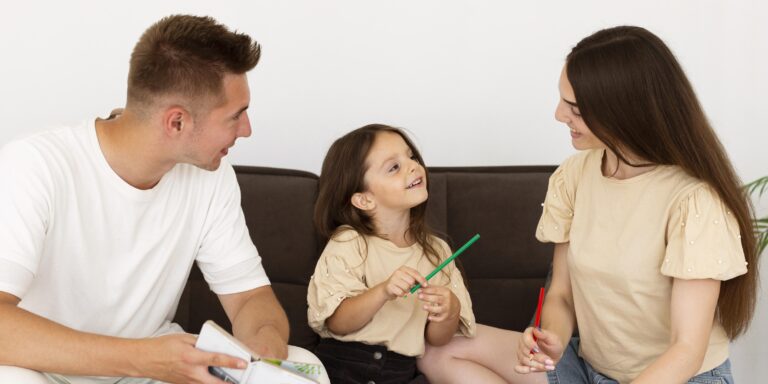
T | TALK — and listen Narrate your day. Ask open questions. Have real conversations — not just instructions. |
A | ACT — with your hands and body Cook together, build things, go outside. Physical, sensory experiences grow the brain. |
L | LOVE — unconditionally Consistent warmth and emotional safety are the most critical inputs for healthy brain development. |
K | KNOW — your child as an individual Every child has a unique pace and learning style. Trust their timeline. Observe before intervening. |
The Takeaway: You Have More Power Than You Know
“It is easier to build strong children than to repair broken men.” — Frederick Douglass |
The early years of your child’s life are not just a ‘phase’ to get through. They are the most extraordinary window of human development — a time when the brain is more open, more flexible, and more responsive to nurturing input than it will ever be again.
You do not need to be a perfect parent. You do not need a perfect school. What you need is presence, warmth, curiosity, and consistency. The conversations you have at the dinner table, the books you read at bedtime, the way you respond when your child is upset — all of it matters, all of it counts, and all of it is building the person your child will become.
At KS Montessori, we are here to be your partner in this extraordinary journey. Whether you are just beginning to explore early education options or looking to deepen your understanding of your child’s development, we would love to connect with you.
Explore more resources, schedule a visit, or reach out to our team at
www.ksmontessori.com
References & Further Reading
The information in this post is grounded in established research from the following organizations and sources:
- Harvard Center on the Developing Child — developingchild.harvard.edu
- Centers for Disease Control and Prevention (CDC) — Developmental Milestones
- American Academy of Pediatrics — Screen Time Guidelines
- National Scientific Council on the Developing Child — Working Papers
- Perry, B.D. — The Boy Who Was Raised as a Dog (Basic Books, 2006)
- Heckman, J.J. — The Heckman Equation (heckmanequation.org)
- Montessori, M. — The Absorbent Mind (Holt, 1967)
This blog post is intended for educational and informational purposes for parents and caregivers worldwide.