Have you ever noticed how a child who builds a block tower learns something completely different from a child who simply watches someone else build one? That difference — between doing and watching — lies at the heart of one of the most important questions in early childhood education: How do children learn best?
As parents and educators, understanding the difference between active and passive learning can transform the way we support children’s growth — especially in those critical first six years of life. In this blog post, we explore both learning styles, what the research tells us, and how the Montessori method puts active learning front and centre.
What Is Passive Learning?
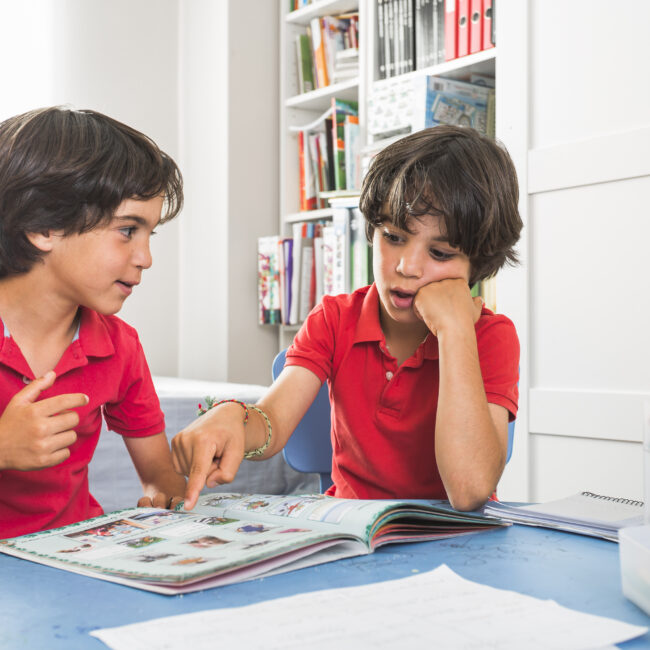
Passive learning happens when a child receives information without engaging with it directly. In this mode, the child is primarily an observer or listener — absorbing content rather than interacting with it.
Common examples of passive learning include:
- Watching an educational video or TV programme
- Listening to a lecture or explanation without doing anything with the information
- Being shown how to do something without getting a turn to try it
- Reading a textbook page without applying the knowledge
Passive learning isn’t entirely without value — children do absorb language, concepts, and ideas through observation. However, on its own, it tends to produce surface-level understanding that fades quickly without reinforcement.
What Is Active Learning?
Active learning, by contrast, is when a child is mentally and physically engaged in the learning process. The child is not just receiving information — they are exploring, doing, creating, questioning, and making meaning.
In active learning, the child:
- Manipulates real objects with their hands
- Solves problems through trial and error
- Makes choices and experiences natural consequences
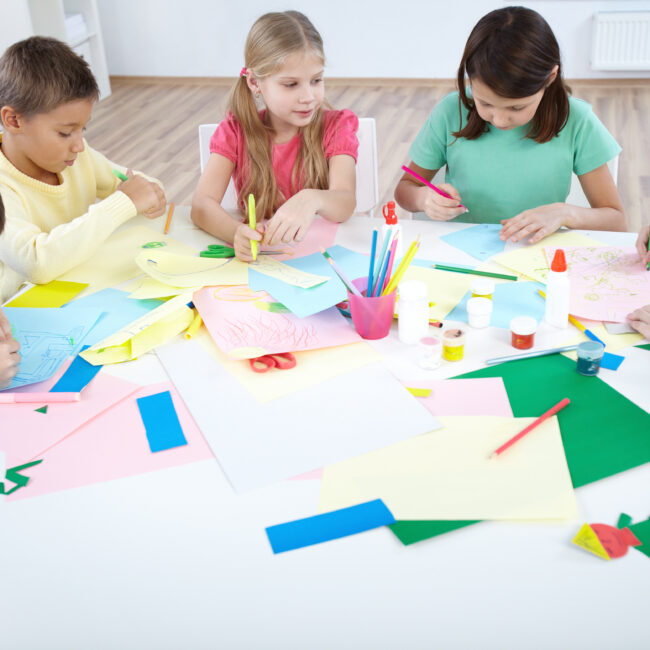
- Collaborates, communicates, and constructs understanding
- Connects new knowledge to what they already know
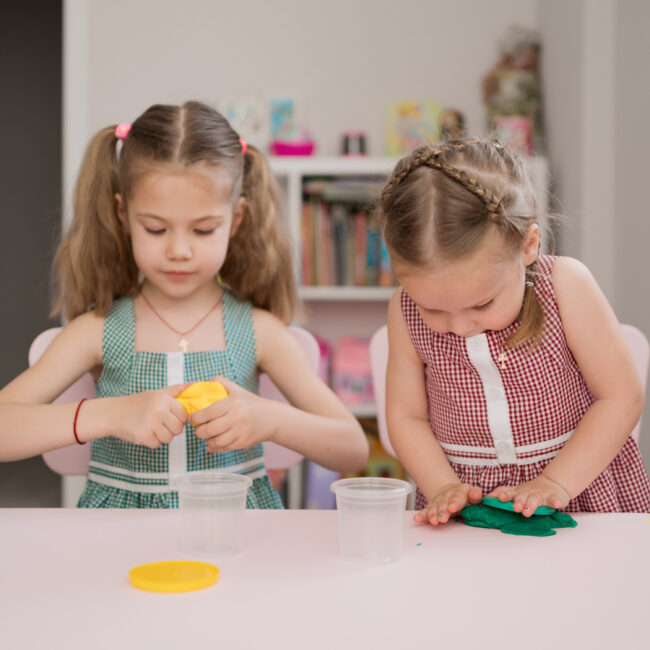
The difference is the child’s role. In passive learning, the child is an audience. In active learning, the child is the protagonist.
What Does the Research Say?
Decades of research in developmental psychology and neuroscience consistently show that active, hands-on experiences produce deeper, more lasting learning — especially in young children.
The Brain Needs Engagement to Learn
When a child actively engages with a task, multiple areas of the brain light up simultaneously — the sensory cortex, the motor cortex, the prefrontal cortex, and the limbic system. This multi-area activation strengthens neural pathways and makes learning stick.
Passive watching, on the other hand, tends to activate only the visual and auditory cortices. The learning is shallower and more easily forgotten.
Jean Piaget’s Theory of Constructivism
The influential Swiss psychologist Jean Piaget argued that children are not empty vessels waiting to be filled with knowledge. Instead, they are active constructors of their own understanding. Children build their knowledge through hands-on experience and interaction with the world around them.
Key Insight: Children don’t learn by being told — they learn by doing, discovering, and experiencing.
Lev Vygotsky and Social Learning
Vygotsky’s work highlighted how active, collaborative learning — where children interact with peers and supportive adults — leads to higher-order thinking. When children talk through problems, explain their reasoning, and work alongside others, they consolidate learning far more effectively than in isolated passive settings.
Active Learning in the Montessori Method
Dr. Maria Montessori was a pioneer of active learning long before the term became popular in modern educational research. She observed children carefully and recognised that they learn most powerfully through purposeful, self-directed activity in a prepared environment.
The Montessori approach is built on active learning at every level:
- Hands-On Materials
Montessori materials — such as the Pink Tower, the Brown Stair, Sandpaper Letters, and the Number Rods — are designed so that children use their hands to explore abstract concepts. A child doesn’t just hear that 10 is larger than 1 — they feel the weight and size of the materials and discover it for themselves.
This sensorial foundation is critical. When concepts are experienced physically before they are understood abstractly, children develop genuine comprehension rather than rote memorisation.
- Freedom of Movement
In a Montessori classroom, children are free to move around, choose their work, and engage with materials at their own pace. This freedom is not chaos — it is purposeful. Movement is understood as essential to learning, not a distraction from it.
Research supports this: physical activity and fine motor engagement are directly linked to cognitive development in young children.
- Self-Correction Through the Control of Error
Most Montessori materials are designed with a built-in control of error — meaning the child can see for themselves when something is not right, without needing to be told by an adult. A cylinder that doesn’t fit its socket, a tower that topples because a block is placed incorrectly — these moments of self-correction are powerful active learning experiences.
This builds independence, perseverance, and intrinsic motivation — qualities that passive learning rarely cultivates.
- The Three-Period Lesson
Even when a Montessori teacher introduces a concept verbally, the lesson is structured to move quickly into active engagement. The Three-Period Lesson — Introduce, Recognise, Recall — ensures that the child doesn’t simply hear information but actively works with it to cement understanding.
The Role of the Prepared Environment
One of Dr. Montessori’s greatest insights was that the environment itself must be an active participant in learning. A Montessori classroom is not arranged for a teacher to perform at the front — it is arranged for children to engage.
Every shelf, every material, every piece of furniture is placed intentionally to invite exploration, promote independence, and support active engagement. The environment says to the child: this is your space; you are capable; discover for yourself.
Parents can apply this principle at home too. A low shelf with accessible, open-ended materials; a kitchen stool so a child can participate in cooking; a small watering can for tending to plants — these simple changes turn a home into a rich active learning environment.
Finding the Right Balance
This is not to say that passive learning has no place. Storytelling, reading aloud, age-appropriate films, and music all have tremendous value in a child’s development. The key word is balance.
When passive experiences are followed by active ones — reading a story about plants, then going outside to plant seeds — learning deepens dramatically. The passive experience provides vocabulary and ideas; the active experience anchors them in reality.
A useful principle: Passive learning introduces; active learning transforms
Practical Tips for Parents: Encouraging Active Learning at Home
- Swap worksheets for real objects — use buttons, stones, or beans for counting instead of printed number pages
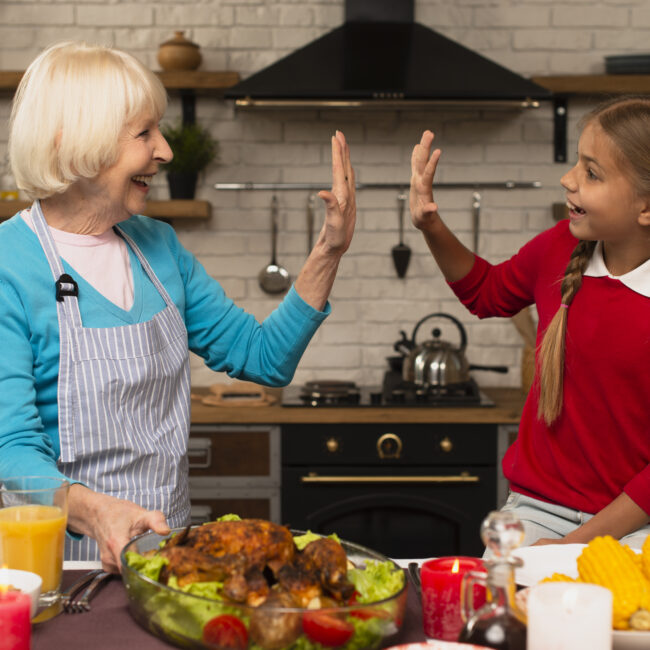
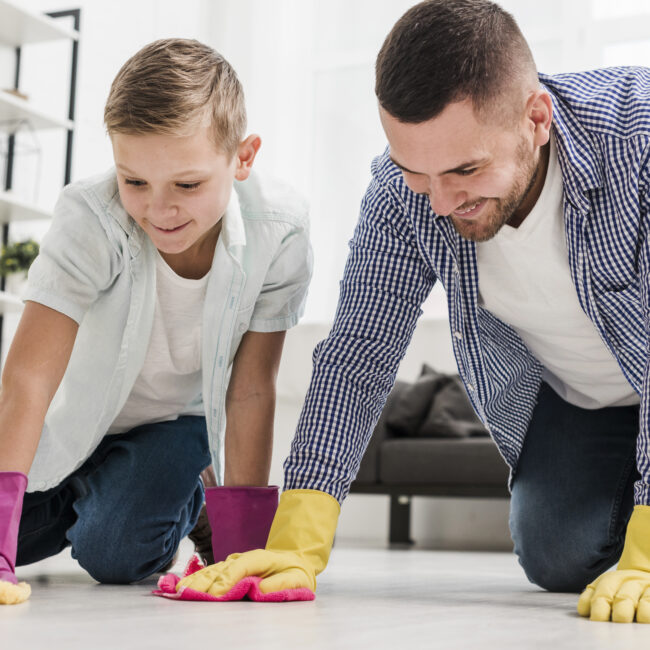
- Let children participate in daily life — cooking, cleaning, gardening, and shopping are all rich learning experiences
- Resist the urge to help too quickly — allow children to struggle productively before stepping in
- Ask open questions — instead of ‘Do you like this?’ try ‘What do you notice about this?’
- Create unstructured time — free, imaginative play is one of the purest forms of active learning
- Follow the child’s interest — a child who is curious about insects will learn far more from exploring the garden than from a workbook about animals
Conclusion
Children are not passive recipients of knowledge — they are natural scientists, explorers, and creators. The role of parents and educators is not to fill children with information, but to create the conditions in which children can discover, question, and learn for themselves.
The Montessori method, grounded in over a century of observation and practice, understands this deeply. By prioritising active, hands-on, self-directed learning from the very earliest years, it honours the child’s natural drive to understand the world — and gives them the tools to do so with confidence, curiosity, and joy.
At KS Montessori we provide a variety of toys and learning materials that helps parents to choose right resources for their childs mental and physical growth.
Learning through hands on activities and Educational toys is far better experience for kids and bring ease to parents.