A Real Parent’s Guide — With Everyday Examples and Scripts
By Kiran Saif | Certified Montessori Educator | kiransaifmontessori.com
It is 8am. Your two-year-old has just thrown their cereal bowl on the floor because the spoon was the wrong colour. Not the wrong spoon — the wrong colour. Yesterday they did the same with their shoes because you put the left one on first instead of the right.
You love this child with every cell in your body. And right now, in this moment, you genuinely do not know what to do.
This is two. Not terrible — just two. A two-year-old is not being naughty when they melt down over a spoon. They are being a perfectly normal human being whose emotional brain is fully switched on but whose thinking brain — the part that manages impulse control and rational thought — will not be fully developed until they are approximately twenty-five years old.
That gap — between what a two-year-old feels and what they can manage — is where all the big emotions live. And gentle discipline is simply the art of helping your child bridge that gap, with compassion, with firmness, and without anyone losing their dignity.
This guide gives you the understanding, the techniques, and the actual words to say — in everyday situations — so that discipline at two feels less like a battle and more like a partnership.
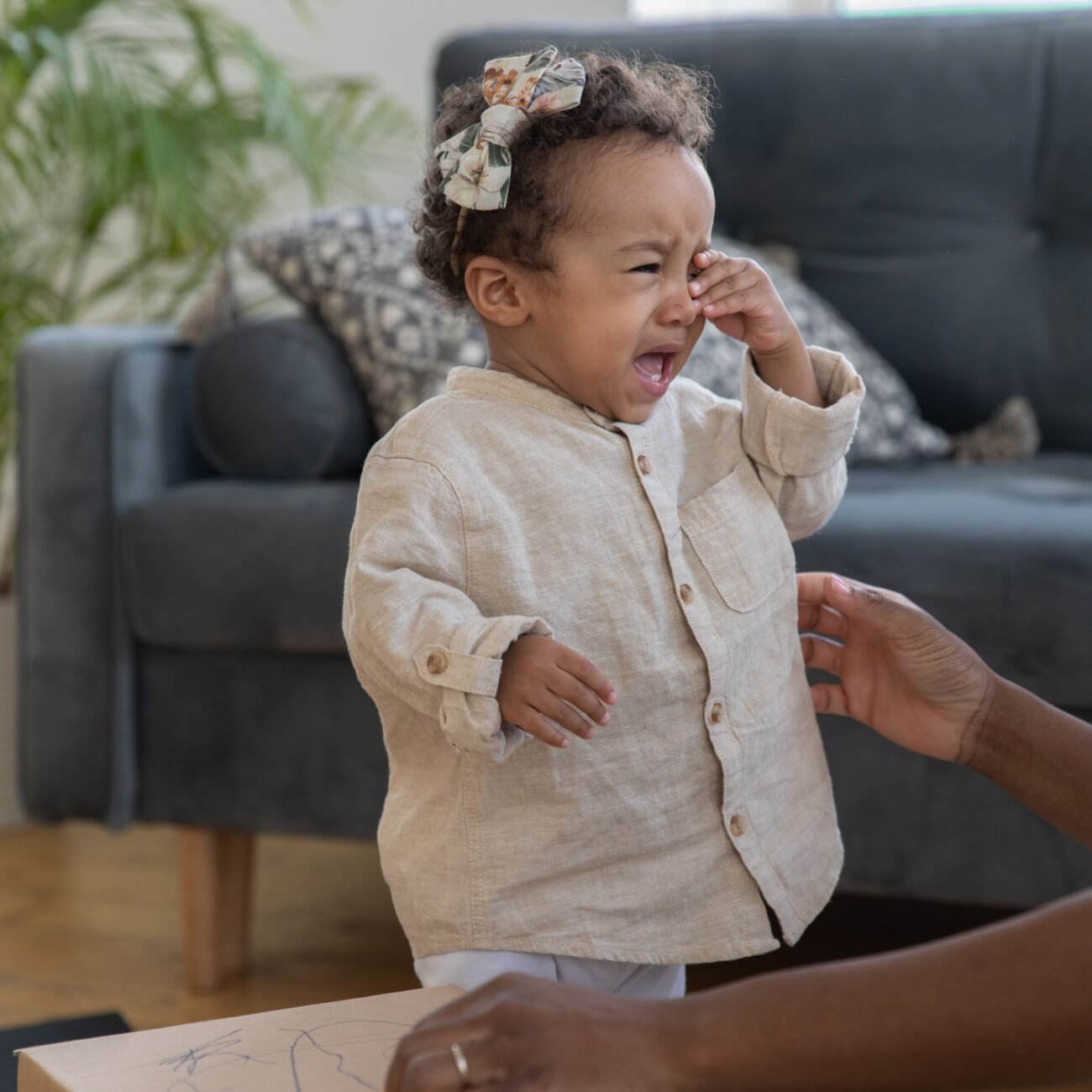
First — Understanding Why Two-Year-Olds Behave the Way They Do
Before we talk about what to do, it helps to understand what is actually going on inside your two-year-old. Because once you understand it, so much of the behaviour that feels maddening starts to make sense.
Their brain is not fully connected yet
The human brain develops from back to front. The back part — the emotional, reactive brain — is fully active from birth. The front part — the thinking, reasoning, impulse-controlling prefrontal cortex — is still very much under construction at age two and will not be complete until the mid-twenties.
When your two-year-old has a tantrum, they are not choosing to be difficult. Their emotional brain has flooded, and the thinking brain that could calm them down is not yet powerful enough to do so. They genuinely cannot stop themselves in that moment — any more than you could stop yourself crying if you received devastating news.
🔬 The Science in Simple Words: When a child has a meltdown, their brain is in ‘alarm mode’. Shouting at them, lecturing them, or punishing them in this state does not teach anything — because the learning part of the brain has temporarily gone offline. What brings it back online is safety, connection, and calm. That is why gentle discipline works and harsh discipline does not.
They are discovering they are a separate person
Between 18 months and 3 years, children go through one of the most profound psychological developments of their lives: they discover that they are a separate person from their parents, with their own wants, preferences, and will. ‘No’ and ‘mine’ and ‘I do it myself’ are not defiance — they are declarations of selfhood.
This is worth celebrating, even when it is exhausting. A child who pushes back is a child who is developing a healthy sense of self. Your job is not to squash that emerging identity — it is to channel it safely.
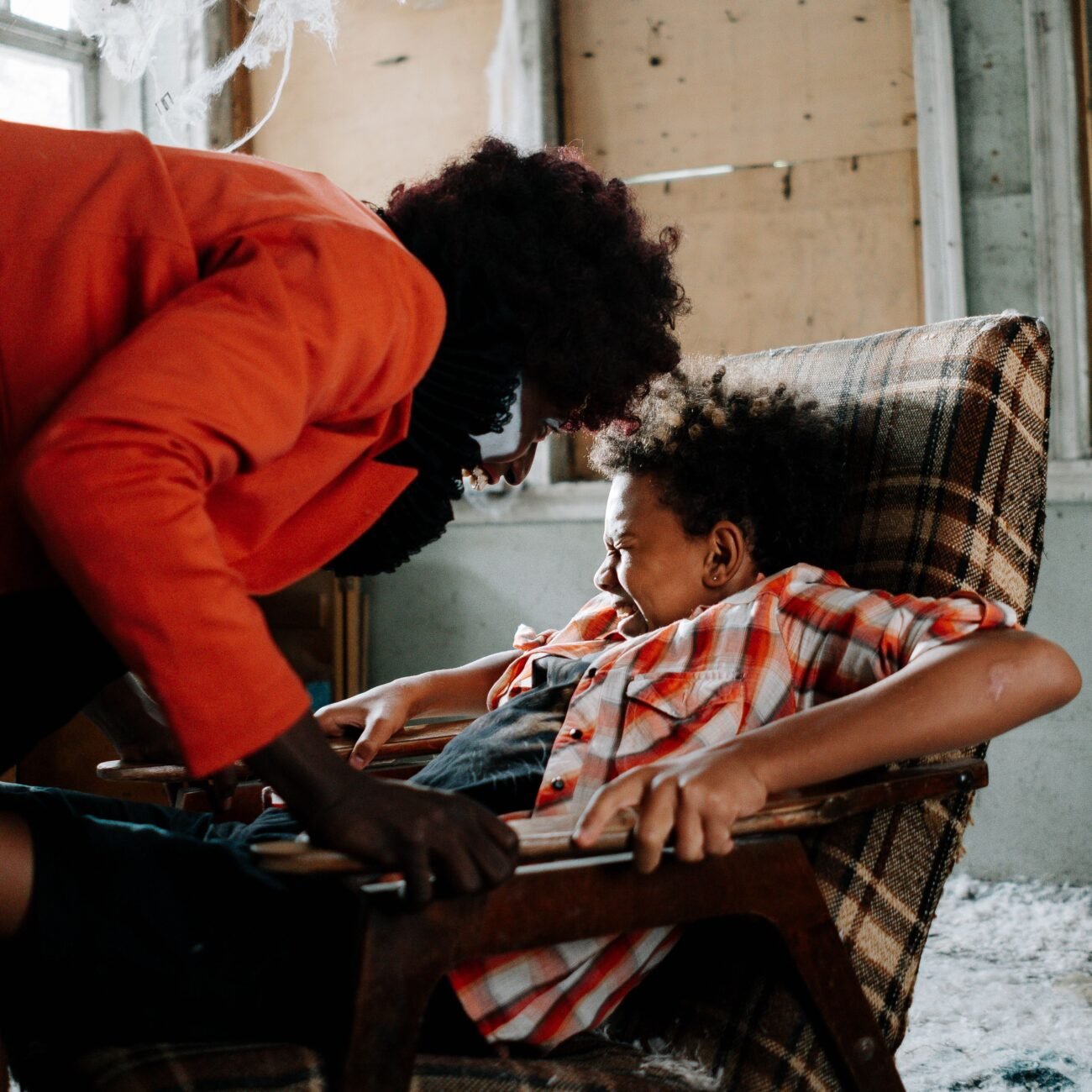
They cannot yet manage their emotions
Emotional regulation — the ability to feel a big feeling without being completely overwhelmed by it — is a skill. It is not innate. It is built, slowly, over years of experience, with the support of adults who model and scaffold it. At two, this skill is in its earliest infancy.
When you stay calm during your child’s storm, you are literally teaching their brain how to regulate. Every time you say ‘I can see you are really angry’ instead of ‘stop crying right now’, you are building a neural pathway that will serve your child for life.
💛 The Most Helpful Reframe: Your two-year-old is not giving you a hard time. They are having a hard time. That shift in perspective changes everything about how you respond.
What Gentle Discipline Actually Means — And What It Is Not
Gentle discipline is one of the most misunderstood phrases in parenting. So let us be very clear about what it means — and what it absolutely does not mean.
Gentle discipline IS:
- Setting clear, consistent limits — children need boundaries to feel safe
- Responding to behavior with curiosity rather than punishment — asking ‘what does my child need?’ instead of ‘how do I stop this?’
- Staying calm yourself, even when it is hard — your calm is the most powerful tool you have
- Following through on what you say — gentle does not mean inconsistent
- Teaching skills rather than just stopping behavior — the goal is a child who can eventually regulate themselves
- Treating your child with the same respect you would want for yourself
Gentle discipline is NOT:
- Permissive parenting — limits still exist, and they are firm
- Giving in to every demand to avoid a tantrum
- Endless negotiating with a two-year-old
- Never saying no
- Letting your child do whatever they want
- Being a pushover
🌱 The Montessori View: Dr. Montessori called it ‘freedom within limits’. The child has real freedom — to choose, to explore, to express themselves — within a clear, consistent, loving structure. The limits are not punishments. They are the shape of the safe space within which the child can grow.
Gentle vs Harsh — Seeing the Difference in Real Situations
Sometimes it helps to see the contrast clearly. Here are common two-year-old situations and how a harsh response compares to a gentle one:
Situation | Harsh Response ❌ | Gentle Response ✅ |
Child hits another child | “Stop it! That is naughty! Say sorry right now!” | “Hitting hurts. I won’t let you hurt your friend. Let’s find another way.” |
Tantrum in the supermarket | “Stop crying or we are going home right now!” | “You’re really frustrated. I’m here. When you’re ready we’ll finish together.” |
Refuses to get dressed | “If you don’t get dressed NOW there’s no park!” | “Would you like to put your top on first or your trousers? You choose.” |
Throws food on the floor | “That’s disgusting behaviour! Go to your room!” | “Food stays on the table. If you’re done eating, let’s get down and clean up together.” |
Grabs toy from sibling | “Give that back! You’re so selfish!” | “You really wanted that toy. Your brother is using it right now. What can we find for you?” |
Won’t leave the playground | “I’m counting to three and then we’re going!” | “Five more minutes, then we say goodbye to the swings. What shall we do last?” |
10 Positive Discipline Techniques That Work for Two-Year-Olds
1. Get Down to Their Level
When your child is upset or you need to redirect them, physically get down to their eye level. Crouch, kneel, sit on the floor. This one act — which costs nothing and takes two seconds — changes the entire dynamic of an interaction. Instead of a big person looming over a small person, you become two people in connection. Children calm faster, listen better, and feel safer when we come to them rather than towering above them. Try saying: "I can see something is wrong. I'm right here with you."
2. Name the Emotion Before Anything Else
Before you redirect, correct, or solve anything — name what your child is feeling. This is called emotional labelling, and it is one of the most powerful tools in gentle discipline. When you name a feeling accurately, something remarkable happens: the emotional part of the brain calms down slightly because it feels understood. A child who feels understood is a child who can begin to listen. Try saying: "You are really angry that we have to go. That feels so unfair."
3. Offer Two Choices — Not an Open Question
Two-year-olds desperately need to feel in control. When you ask 'what do you want to wear?' you get overwhelm. When you ask 'do you want the red top or the blue top?' you get a decision. Two choices — both of which you are happy with — gives the child genuine autonomy while keeping the situation manageable. Use this technique for everything: food, activities, the order of getting ready, which book to read. Try saying: "It's time to clean up. Would you like to start with the blocks or the books?"
4. Give a Warning Before Transitions
Two-year-olds live fully in the present moment. When you suddenly announce that it is time to stop and do something else, it genuinely feels like a shock — and the meltdown is the protest. Giving a warning — a few minutes before a transition — allows the child to mentally prepare. Pair the warning with a visual or physical signal for children who are not yet reliably tracking time. Try saying: "In five minutes we're leaving the park. You have time for two more goes on the slide."
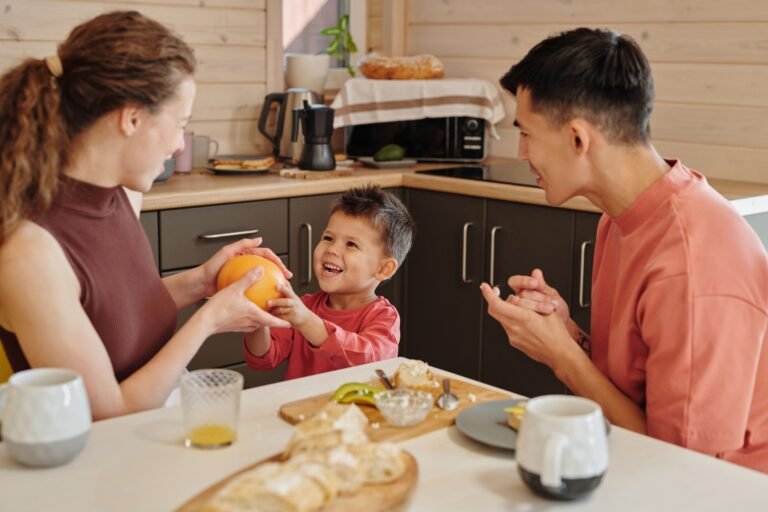
State the Limit Clearly and Kindly — Once
Gentle does not mean uncertain. When you set a limit, state it clearly, calmly, and once. Do not repeat it ten times with increasing volume. Do not bargain or negotiate. Say it, mean it, and follow through. A child who hears a clear, calm limit — delivered without anger — is far more likely to respond to it than a child who hears an anxious, repeated, increasingly frustrated instruction. Try saying: "We're leaving in five minutes. I know you don't to go. We're going anyway."
6. Redirect to What They CAN Do
Two-year-olds respond much better to information about what is allowed than information about what is not. 'Don't run' tells them what to stop. 'Walking feet inside please' tells them what to do instead. Wherever possible, swap the 'no' and the 'stop' for a redirect to the permitted alternative. This is not about never saying no — it is about being specific about what yes looks like. Try saying: "The wall is not for drawing on. Paper is for drawing. Here — let's find some paper."
7. Stay Calm During the Storm — Even When It Is Hard
Your two-year-old's nervous system is directly influenced by yours. When you escalate — raise your voice, tense your body, let your own frustration flood — their alarm system ramps up further. When you stay physically calm — slow your breathing, lower your voice, relax your shoulders — you are sending a biological signal that the situation is safe. This is called co-regulation and it is the foundation of how children learn to self-regulate. You cannot teach calm by being unclam. Try saying: "I know this is really hard. I'm staying right here with you until you feel better."
8. Natural and Logical Consequences — Not Punishments
A consequence is connected to the behaviour. A punishment is imposed and often unrelated. If your child throws their food, the natural consequence is that mealtime ends and the food is gone. If they are rough with a toy, the logical consequence is that the toy is put away for a while. These consequences teach cause and effect — the most fundamental lesson of self-regulation. They work because the child can make sense of them. Random punishments teach only fear, not understanding. Try saying: "You threw your food, so I can see you're done eating. Let's clean up together."
9. Validate Feelings, Hold the Limit
This is the hardest technique and the most powerful one. It looks like this: the feeling is always valid and always acknowledged. The behaviour may still not be permitted. Both things are true at the same time. 'You can be angry AND you may not hit.' 'I understand you want to stay AND we are leaving.' This approach does not reward the tantrum — it teaches the child that feelings are acceptable and some behaviours are not. Try saying: "I hear you. You're really upset. And we are still leaving. I'll carry you to the car"
10. Repair After the Hard Moments
Gentle discipline does not mean you will never lose your temper, never say the wrong thing, never handle a situation poorly. You will. All parents do. What matters enormously is what happens after. When you repair — 'I shouted earlier and I shouldn't have. I was frustrated. I love you' — you model accountability, emotional honesty, and the fact that relationships survive mistakes. This teaches your child more about emotional health than anything else. Try saying: "I'm sorry I raised my voice. That wasn't fair. I love you and I'm always here"
Real Situations — Exactly What to Say and Do
Let’s take the most common two-year-old discipline challenges and walk through them step by step. These are the moments most parents find hardest — and here is exactly how to handle them:
🌪️ The Supermarket Meltdown
❌ Old approach: Threatening, bribing with sweets, hissing through gritted teeth, abandoning the trolley in shame.
Gentle approach: Get down to their level. Name the feeling: ‘You are really tired and you’ve had enough of the supermarket. So have I, honestly.’ Give them a job: ‘Can you help me find the pasta?’ or let them hold one item. If it’s beyond rescuing, calmly leave — without drama and without giving the tantrum what it may be asking for.
💡 Why it works: A child who is given a job feels purposeful rather than passive. Purposeful children have fewer meltdowns. And your calm exit — without shame or punishment — teaches them that big feelings pass and the world stays safe
👊 Hitting or Biting
❌ Old approach: Hitting back (‘see how it feels’), shaming (‘you are so naughty’), time-out with anger.
✅ Gentle approach: Calmly and firmly step in: ‘I won’t let you hurt. Hitting hurts.’ Move between the children if needed. Do not demand an apology immediately — it will be hollow. Later, when everyone is calm, return to it: ‘Earlier you hit. That hurt your friend. What could you do next time when you feel that angry?’ Help them practise: ‘You could say stop, or come and get me.’
💡 Why it works: Hitting at two is almost always communication — ‘I am overwhelmed and I don’t have the words yet.’ Your job is to teach the words, not punish the symptom
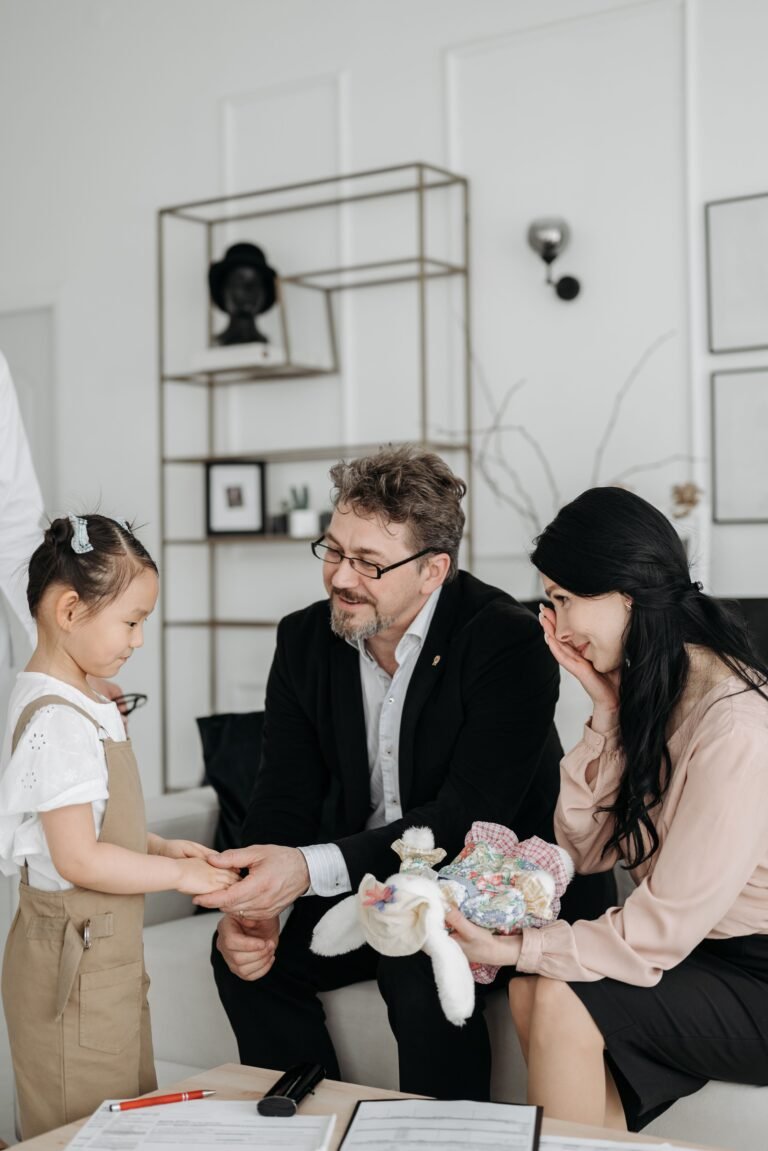
🧸 Refusing to Share
❌ Old approach: Forcing them to hand over the toy, lecturing about selfishness, taking it away from both children.
✅ Gentle approach: Normalise: ‘You’re not ready to share that yet. That’s okay.’ Coach turn-taking: ‘Amelia, Omar is using that right now. When he’s finished, it will be your turn. Omar, Amelia is waiting. Can you let her know when you’re done?’ Trust the process. Forced sharing teaches nothing except resentment.
💡 Why it works: True sharing is a complex social skill that develops between ages 3 and 4. At two, ownership is still a new and thrilling concept. Expecting genuine voluntary sharing at this age is developmentally unrealistic.
🛁 Refusing Bedtime or Bath
❌ Old approach: Power struggles, threats, carrying a screaming child, everyone in tears by 8pm.
✅ Gentle approach: Give control within the routine: ‘Bath time now. Would you like bubbles or your boats tonight?’ Use transition warnings: ‘Three more minutes, then it is bath time.’ Make it predictable — the same sequence every night means less resistance over time. And offer genuine choice about what comes after: ‘After your bath, you choose two books.’
💡 Why it works: Resistance to routine often comes from a lack of predictability and a lack of perceived control. When the routine is consistent and the child has real choices within it, resistance drops significantly within 1–2 weeks.
🍽️ Refusing to Eat
❌ Old approach: Bribing, forcing, making separate meals for the toddler, making mealtimes stressful for everyone.
✅ Gentle approach: Remember the division of responsibility: you decide what is offered, when, and where. Your child decides whether and how much. Put small portions of a new food alongside accepted ones without comment. Eat together and eat the same food. Do not react when they refuse — just remove the plate calmly. Never force, bribe, or make a separate meal.
💡 Why it works: A child who is never pressured to eat develops a healthy, intuitive relationship with food. Mealtime battles are almost always the result of the child feeling controlled — remove the control battle, and eating often improves.
How the Montessori Approach Reduces the Need for Discipline
Here is something that surprises many parents: in a well-prepared Montessori environment, the need for discipline dramatically reduces. Not because children are suppressed — but because most behaviour problems at two arise from unmet needs. And the Montessori environment is specifically designed to meet those needs.
The need for independence
Most two-year-old defiance is the word ‘no’ wearing different clothes. It is a child saying ‘I want to do it myself.’ The Montessori approach meets this by building independence into the environment — low shelves they can access alone, routines they can manage themselves, activities designed for independent engagement. When a child can do things for themselves, they stop fighting for the right to.
The need for order
Two-year-olds are in a sensitive period for order. They find deep comfort in predictability — the same spoon, the same routine, the same path to the park. When order is disrupted, distress follows. A Montessori home maintains consistent routines, consistent places for things, and consistent limits — which creates the felt safety that reduces reactivity.
The need for purposeful work
A bored two-year-old is a challenging two-year-old. The Montessori approach gives children real work to do — pouring, sorting, cleaning, cooking, caring for plants. When children are genuinely engaged in purposeful activity, behavior problems reduce dramatically. The hands that are busy building something are not hands throwing things on the floor.
The need for movement
Two-year-olds need to move. A lot. A child who has been still for too long — in a car, in a supermarket, in front of a screen — is a child who is going to find it very hard to regulate their behaviour. The Montessori approach builds movement into the entire day: children carry materials, work on the floor, go outside, move their bodies in purposeful ways. Movement is not a break from learning — it is learning.
Montessori Materials That Support Self-Regulation and Independence
The right materials do more than teach academic skills. They build the concentration, independence, fine motor control, and sense of competence that make a two-year-old easier to live with — because a child who feels capable is a child who does not need to fight for control. Here are our top recommendations from KS Montessori:
For Building Independence and Practical Life Skills
Dressing Frames — Directly addresses the ‘I do it myself’ drive that drives so much two-year-old defiance. When a child can dress themselves independently, morning battles reduce. Each frame teaches one fastening — buttons, zips, buckles — building genuine capability and enormous self-esteem.
Spindle Boxes — Absorbing, independent, self-correcting counting work. A child deep in concentration with spindles is a child who is calm, purposeful, and not making a bid for control through challenging behaviour.
Montessori Shelf, Wooden Toy Storage Organizer
The prepared environment is where gentle discipline begins. When everything has a place your child can reach independently, the morning battles over ‘I can’t find it’ disappear before they start
For Building Concentration and Calm Focus
Counter Cards and Counters — Laying out counters in careful rows builds the sustained attention and fine motor control that underpin emotional regulation. A child who can focus deeply on a task is a child who is developing self-regulation.
Metal Insets with Stand — Tracing and filling geometric shapes is deeply calming — the repetitive, purposeful hand movement creates a meditative focus state that children return to willingly. Excellent for children who need to channel physical energy into something productive.
Constructive Triangles — Open-ended, self-directed shape building that children can do entirely independently. Independent work builds the self-sufficiency that reduces the need for attention-seeking behaviour.
For Building a Sense of Order and Competence
Number Rods — Ordering and comparing rods gives children a satisfying sense of mastery and completion. A child who experiences the deep satisfaction of completing work independently has less need to assert control through defiance.
Long Rods — Carrying, organising, and ordering the Long Rods meets the two-year-old’s need for movement, order, and purposeful work simultaneously — three of the biggest needs driving difficult behaviour at this age.
Kids Cleaning Set — 8 Pcs for Ages 3–5 “Give your two-year-old real work to do and watch the power struggles reduce. This child-sized cleaning set channels the ‘I do it myself’ energy into something purposeful — and they will be so proud of themselves.”
Busy Board Montessori Toys for Toddler “When little hands are busy with buttons, zips, and latches, they are not busy throwing things or demanding your attention. The Busy Board builds fine motor skills and independence simultaneously — the two-year-old’s greatest needs.”
Wooden Stacking Rings for Toddlers Age “Simple, beautiful, and endlessly satisfying. Stacking rings teach size, order, and patience — and a child absorbed in stacking is a child in their own calm, focused world
Questions Every Parent of a Two-Year-Old Asks
First, check that you are actually being consistent — gentle discipline done inconsistently teaches a child that persistence pays off. Second, check the basics: is your child tired, hungry, or overwhelmed? Most behaviour problems at two have a physical root. Third, remember that gentle discipline is a long game. You are building skills, not just stopping behaviour. Results come over weeks and months, not moments
Absolutely. Gentle discipline does not mean no limits. It means thoughtful limits, communicated respectfully. Save ‘no’ for things that genuinely matter — safety, harm, non-negotiables. If you say no to everything, it loses its power. If you say no to the things that count, and find gentle alternatives for the rest, your ‘no’ is taken seriously.
Long tantrums — beyond 20–30 minutes — can happen, especially in children with big emotional temperaments. Stay as calm as you can, stay physically present without engaging with the tantrum itself, and wait it out. If very long, very frequent, or very intense tantrums are affecting family life significantly, a conversation with your paediatrician or a family therapist is worthwhile — not because something is wrong, but because extra support is always allowed
Traditional time-out — sending a child to sit alone as a punishment — is not effective with two-year-olds and can actually increase the behaviour it is trying to stop. What can work is a ‘time-in’ — sitting together in a quiet space until the child is regulated again. This keeps the connection intact, supports co-regulation, and teaches the child that feeling overwhelmed is something you manage together rather than something they are punished for
You do not always manage it. Neither does anyone else. The goal is not perfection — it is direction. Most of the time in the right direction is enough. When you do lose it — and you will — repair it. Say sorry. Explain. Move on without guilt. The repair is as important as the original response, and it teaches your child something irreplaceable: that we can make mistakes, own them, and come back to each other.
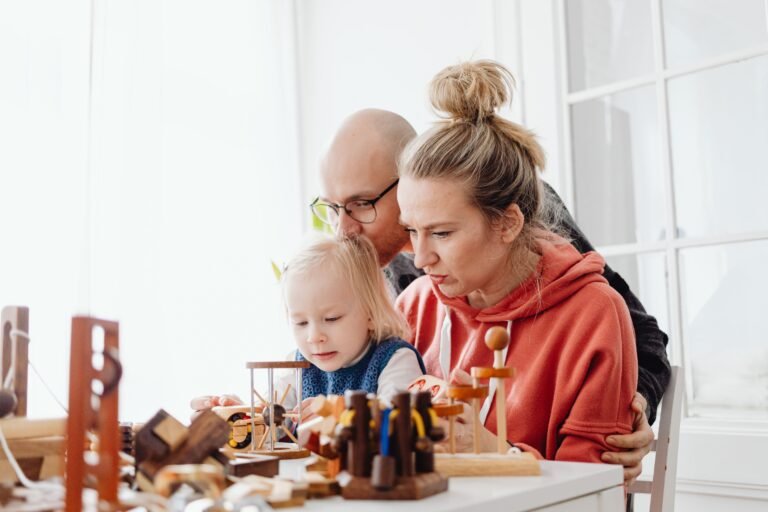
You Are Already Doing Better Than You Think
Parenting a two-year-old is one of the most intense, humbling, surprising experiences a human being can have. The love is enormous. The exhaustion is real. The moments of doubt — ‘am I doing this right?’ — are universal.
Here is what I know from years of working with children this age and the families who love them: the fact that you are reading this, thinking this carefully about how to respond to your child’s behavior, wondering how to do it with more kindness and more skill — that already makes you a better parent than you are giving yourself credit for.
Gentle discipline is not about being a perfect parent. It is about being a connected one. A parent who stays in the relationship even when the behavior is hard. A parent who sees the child behind the tantrum. A parent who is willing to learn, to repair, and to try again.
That is you. And that is enough.
For Montessori materials that build your child’s independence, concentration, and emotional confidence — reducing the need for discipline at the root — visit us at KS Montessori. Every material we offer is chosen with this goal in mind: a child who feels capable does not need to fight for control. And a parent with the right tools does not need to either.
Explore Montessori materials and parents guides at: kiransaifmontessori.com