You don’t need to enroll your child in a Montessori school to give them a Montessori education. Some of the most powerful Montessori learning happens not in a classroom, but at home — in the kitchen, in the bedroom, in the garden, in the simple rhythms of daily family life.
Creating a Montessori-inspired home environment is not about buying expensive materials or redesigning every room. It is about a shift in perspective — seeing your home through your child’s eyes and asking: does this space help my child feel capable, independent, and respected?
In this blog post, we walk you through the core principles of a Montessori home environment and give you practical, room-by-room guidance on how to bring those principles to life — whatever your budget, whatever your space.
The Core Principles of a Montessori Home
Before we get into the practicalities, it helps to understand the philosophy behind the Montessori home environment. Dr. Maria Montessori spoke often about the prepared environment — a space consciously arranged to support the child’s independence, development, and natural curiosity. Every element of that environment sends a message to the child. The question is: what message do we want to send?
A Montessori home environment is guided by five core principles:
Independence
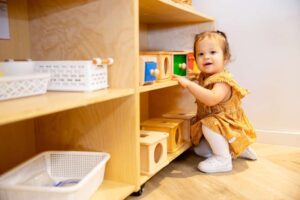
The environment is arranged so that the child can do as much as possible for themselves — without waiting for adult help. Low shelves, child-sized furniture, accessible materials, and reachable hooks all say to the child: you are capable; this is your space too.
Order
Young children thrive on order. It is not simply a preference — it is a developmental need. During the sensitive period for order (roughly ages one to three), children find deep comfort and security in a predictable, well-organised environment. In a Montessori home, everything has a place, and that place is consistent.
Beauty and Simplicity
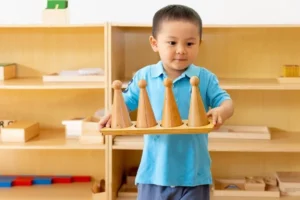
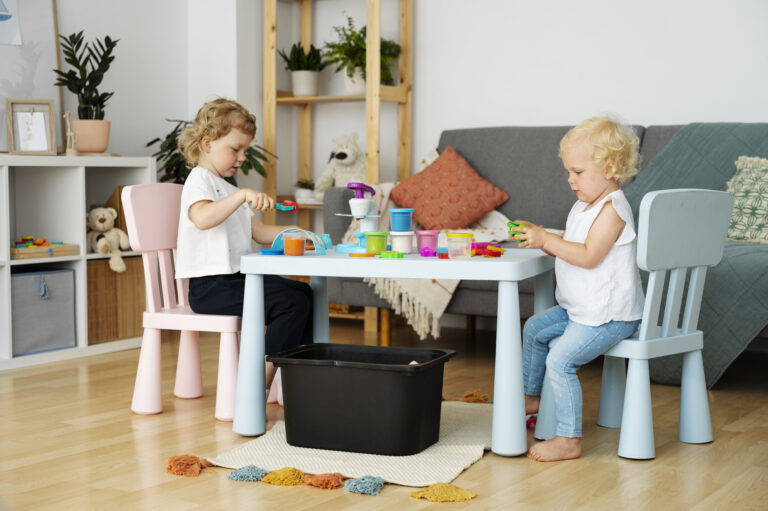
A Montessori environment is beautiful but uncluttered. Rather than overwhelming the child with dozens of toys and stimuli, the Montessori home offers fewer, more carefully chosen materials — each one worthy of the child’s attention. Natural materials, soft colours, and real objects are preferred over plastic and synthetic alternatives.One of the best choice for this beautiful experience is Ks montessorri kitchen set
Freedom Within Limits
Children are free to explore, choose their activities, and move through the home — within clear, consistent boundaries. The environment itself defines those limits, so the adult does not need to be constantly redirecting or correcting. A well-prepared home environment reduces conflict and increases harmony.
Adena Montessori Color Tablets
provide a learning and joyful environmet for kids at home.
Connection to Real Life
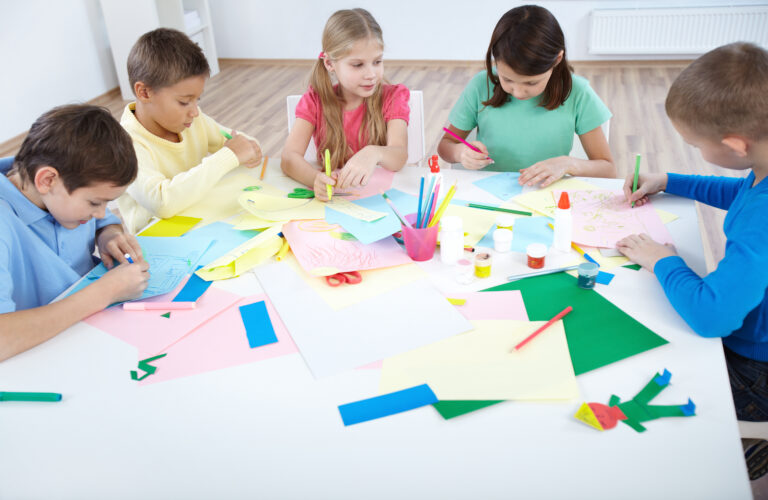
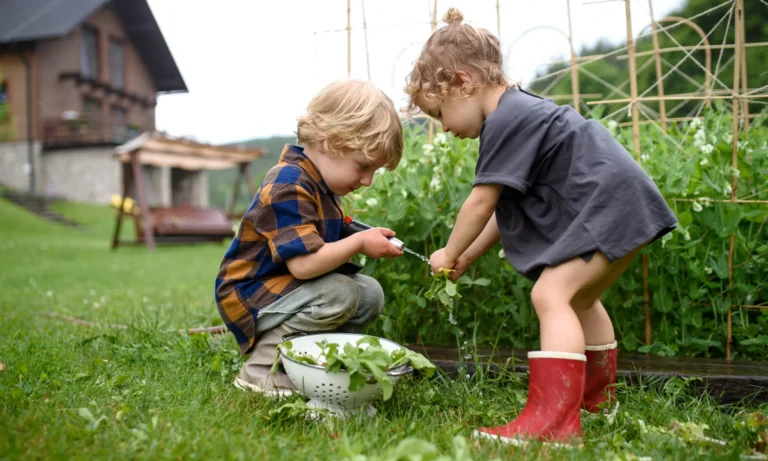
Montessori children are not kept separate from the real work of the household. They participate in cooking, cleaning, caring for plants and animals, and managing their own belongings. This participation is not a burden — it is a profound source of purpose, competence, and belonging.
Room by Room: Setting Up Your Montessori Home
The Child’s Bedroom
The bedroom is the child’s most personal space — and the place where independence begins each morning and ends each night. A few thoughtful adjustments can transform it into a true Montessori sanctuary.
The Floor Bed
One of the most distinctive features of a Montessori bedroom is the floor bed — a mattress placed directly on the floor, or a very low bed frame, so the child can get in and out independently from the earliest months of life. Rather than being lifted in and out of a cot by an adult, the child develops autonomy over their own sleep space from the very beginning.
This is not only about independence — it also gives the child the freedom to explore their room safely during the natural moments of wakefulness that occur throughout the night, without distress or danger.

A Low, Open Wardrobe
Hanging clothes and folded items at the child’s eye level and reach allows them to choose their own outfit and dress themselves — a practical life milestone that builds confidence, fine motor skills, and a sense of personal identity. Limit the choices to two or three options per day to make decision-making manageable
The Kitchen
The kitchen is arguably the richest Montessori learning environment in the home — and one that most families have never thought of this way. Cooking involves maths, science, language, practical life skills, sensorial exploration, and above all, the deep satisfaction of contributing to family life.
A Learning Tower or Step Stool
A sturdy step stool or learning tower brings the child to counter height, allowing them to participate safely in food preparation alongside an adult. Even a two-year-old can wash vegetables, tear salad leaves, stir batter, or pour water — all meaningful, developmentally rich tasks.
A Low Snack Station
Dedicate a low shelf or drawer in the kitchen to the child’s snacks and drinking water. A small pitcher, a glass, a plate, and a few healthy snack options allow the child to serve themselves independently when they are hungry — building body awareness, self-regulation, and confidence.
Child-Sized Real Tools
Invest in a small set of real — not plastic — child-sized kitchen tools: a blunt spreading knife, a vegetable peeler, a small chopping board, a grater. Children know the difference between real and pretend, and real tools communicate trust and respect. Used under appropriate supervision, they are safe and deeply satisfying.
A Place for Cleaning Up
Keep a small dustpan and brush, a child-height mop, and a cloth at accessible levels. Spills are learning opportunities — and a child who can clean up after themselves feels enormously capable. Resist the urge to swoop in and clean for them.
The Living and Play Area
The main living space of the home is where much of the child’s free exploration and play will take place. The Montessori approach transforms this area from a place where the child plays while adults watch, into a shared space where the child is a genuine participant.
The Yes Space
Create a designated area — even just a corner of the room — that is completely child-safe and child-appropriate. In this space, the child has full freedom to explore without constant adult redirection. No ‘don’t touch that’, no ‘be careful’, no ‘put that down.’ This freedom is deeply nourishing for the child’s developing sense of autonomy and self-trust
Open Shelves, Not Toy Boxes
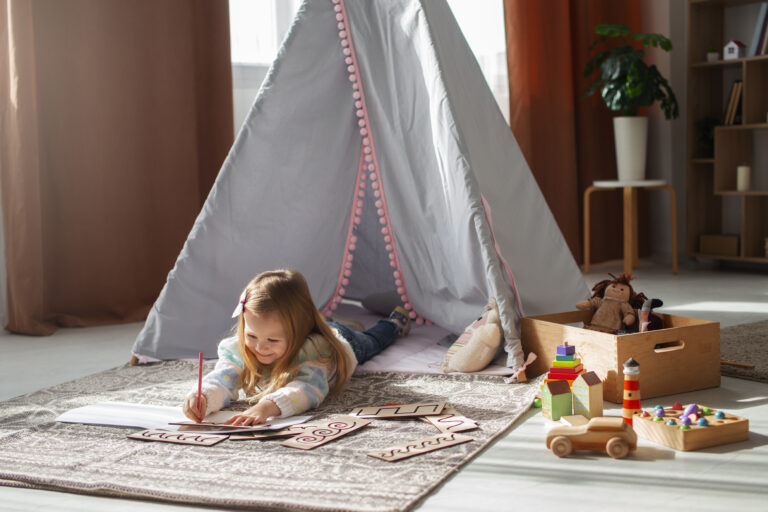
When toys are stored in a box, the child must tip everything out to find what they want — leading to chaos and overwhelm. When materials are displayed on open shelves, each with its own defined space, the child can see their options clearly, make a deliberate choice, and return the item when finished. Order becomes natural and intuitive.
Natural and Open-Ended Materials
Fill the shelves with materials that invite imagination and exploration: wooden blocks, loose parts (stones, shells, pinecones, wooden discs), art supplies, puzzles, simple musical instruments, and books. These materials grow with the child and never have only one ‘correct’ way to be used.
Books at Eye Level
Store books with their covers facing outward, at the child’s eye level, so they can browse and choose independently. A small rotating selection of five to ten books, changed regularly, is more engaging than a packed bookshelf where nothing stands out.
The Bathroom
With a few simple adjustments, the bathroom becomes a place of remarkable independence — where the child learns to manage their own personal hygiene with dignity and confidence.
A Step Stool at the Sink
A non-slip step stool at the bathroom sink allows the child to wash their own hands and face, brush their teeth, and look in the mirror — all independently. These daily routines are among the most important practical life skills a child can develop.
Accessible Towels and Toiletries
Hang a small towel at the child’s height. Keep their toothbrush, toothpaste, and soap within their reach. Small baskets or low hooks make this simple to arrange without any renovation.
Toilet Independence
A small toilet insert and a sturdy step stool make toilet use fully independent far earlier than a standard setup allows. Dressing for toilet independence matters too — elasticated waistbands are far more manageable for small hands than buttons and zips.
Outdoors and the Garden
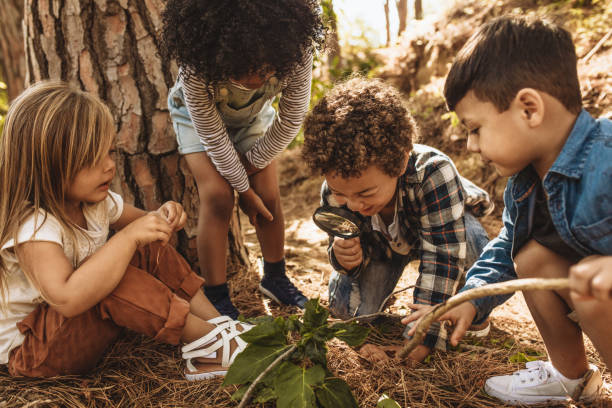
Dr. Montessori believed deeply in the importance of nature and the outdoor environment for the developing child. Time outside — in all weathers — is not a luxury but a necessity.
A Child’s Garden Space
Even a small pot or a window box gives a child responsibility for living things — watering, tending, observing growth and change. Gardening connects children to the natural cycles of life and teaches patience, care, and the rewards of sustained effort.
Tools and Equipment at Child Scale
A small watering can, a trowel, a brush for sweeping the path — real tools, small enough for small hands, invite genuine participation in outdoor care. Children who tend their outdoor environment develop a relationship with the natural world that will last a lifetime.
Space to Move
Ensure there is space to run, climb, dig, and explore freely. Unstructured outdoor time is among the most valuable gifts we can offer a young child — it builds gross motor skills, spatial awareness, risk assessment, and a sense of adventure.
Common Mistakes to Avoid
- Over-buying materials — more is rarely better. Start with a few well-chosen items and observe what your child is drawn to
- Doing too much for the child — resist the urge to help before help is needed. Pause, observe, and only step in when truly necessary
- Changing everything at once — introduce changes gradually. Sudden transformation can be disorienting for children who thrive on order and familiarity
- Expecting perfection — a Montessori home is a living environment, not a showroom. Mess, experimentation, and imperfection are all part of the learning
- Forgetting to observe — the most important Montessori tool is not a material but a mindset: watch your child carefully and let what you see guide your decisions
You Don’t Have to Do Everything at Once
Creating a Montessori-inspired home is a journey, not a destination. You do not need to transform your entire house before your child wakes up tomorrow morning. Start with one small change — a low hook by the door for their coat, a step stool at the bathroom sink, a single open shelf in their room — and observe the difference it makes.
Each small adjustment that increases your child’s independence and sense of belonging in their home is a Montessori victory. There is no such thing as a perfect Montessori home. There is only a home where the child is seen, respected, and trusted — and that is within every family’s reach.
Conclusion: Home as the First Prepared Environment
Long before Dr. Montessori designed her first classroom, the home was — and always will be — the child’s first prepared environment. The care we take in arranging that environment, the trust we extend to our children within it, and the invitation we offer them to participate in real family life: these are the foundations of a Montessori home.
At KS Montessori, we are here to support you every step of the way — with authentic materials, practical guidance, and a community of families who share your commitment to raising capable, curious, confident children. Explore our shop for beautiful Montessori materials that will bring your home environment to life.
Buy best Montessori toys in USA. Shop quality Montessori materials for your home based learning for kids age 2-3years old and 3-5 years old.