Process Art vs Product Art:Which One Actually Helps Your Child?

“A Montessori perspective on creative development — and why the mess matters more than the masterpiece“ Picture two scenes. In the first one, a four-year-old sits at a table covered in newspaper. In front of her are three pots of paint, a large sheet of white paper, and no instructions whatsoever. She starts by dipping her brush in the blue. Then she uses her finger and discovers that mixing blue and yellow makes something interesting happen. She spends twenty-five minutes doing this, completely absorbed, occasionally humming. The painting she produces looks, to an adult eye, like an energetic mess. To her, it is exactly what she wanted. In the second scene, a four-year-old sits at a table with a printed outline of a butterfly. He has been told which sections to colour in which colour. He works carefully within the lines. When he finishes, the butterfly looks like the example the teacher held up. His parent puts it on the fridge. Both children made art today. But only one of them actually did. That is the difference between process art and product art. And understanding it — really understanding it, not just as a theory but as a lived choice you make every time you sit your child down with a paintbrush — changes how you think about creativity, learning, and what art is actually for. So What Exactly Is the Difference? Process art Process art is child-led, open-ended creative experience where the activity itself is the point. There is no template to follow, no correct outcome, no example to replicate. The child decides what to make, how to make it, when it is finished, and what it means. An adult’s role is to provide materials, space, and enough trust to step back and let the exploration happen. It looks messy or may be often looks like nothing in particular. You cannot always tell what it is supposed to be — and that is completely fine, because it is not supposed to be anything. It is supposed to be whatever the child’s hands and mind made of the materials they were given. Product art Product art is adult-led, outcome-focused creative activity where the goal is a specific, predetermined result. The child follows a template, copies a model, colours within provided lines, or assembles pre-cut pieces. An adult has decided in advance what the finished piece should look like and child’s job is to execute the plan. It often looks impressive. Parents can immediately tell what it is. It photographs well and fills the fridge for a few weeks. And it teaches the child almost nothing about creativity, expression, or their own capacity for original thought. A child who has only ever done product art learns that art is something other people design and they execute. A child who has done process art learns that art is something they invent. These are not the same lesson. Why Process Art Matters — What It Actually Builds This is not just a philosophical preference. Process art builds specific, measurable capacities in young children that product art simply does not — and some that product art actively undermines. Here is what the research and the developmental science say: Creative thinking and problem-solving When a child has no template to follow, they have to make decisions. What colour? How much? What next? If I mix these what will happen? These micro-decisions, made hundreds of times across a creative session, are exactly the cognitive work of creative thinking. The child is generating options, evaluating them, choosing, executing, and adapting. This is problem-solving — the same cognitive process that will serve them in mathematics, science, writing, and every domain of human endeavour. Product art offers none of this. When the template has already decided what color the sky should be, the child’s creative brain is not needed. Intrinsic motivation and the love of making things Children who do process art regularly develop an intrinsic relationship with the act of making — they create because creating is satisfying, not because the result will earn praise. This is one of the most valuable things a child can develop: the ability to be motivated from within, to pursue something because it genuinely matters to them, regardless of how it looks to anyone else. Product art, by contrast, is almost entirely driven by external motivation — the approval of the finished result, look on the parent’s face, and the thing on the fridge. When that external validation is removed, the motivation evaporates. This is why children who have only done product art often say ‘I can’t draw’ and mean ‘I can’t draw in a way that looks right.’ The bar they are measuring themselves against is always someone else’s standard. Confidence and self-efficacy A child who decides what to make and then makes it has had an experience of being genuinely capable. They set the intention, executed the plan, and produced something that was entirely their own. This feeling — I made something that came from me — is one of the most powerful confidence-builders available to a young child. A child who colours inside someone else’s lines has had a different experience: they have done something correctly, which is not the same thing. Correctness is measured against an external standard. Capability is measured against their own intention. Concentration and sustained attention Children in genuine process art experiences concentrate for far longer than children doing product art. The reason is simple: they are genuinely engaged and are making real decisions, encountering real surprises, and doing real creative work. The attention is self-generated rather than externally maintained. This is the same principle behind the Montessori work cycle. Genuine engagement, freely chosen, generates the deepest and most sustained concentration available to a young child. Emotional expression and regulation Art is one of the oldest human tools for expressing what cannot be said in words. For young children who are still developing verbal communication, the ability to express emotion through colour, mark-making, and
What Is the Three-Period Lesson In Montessori
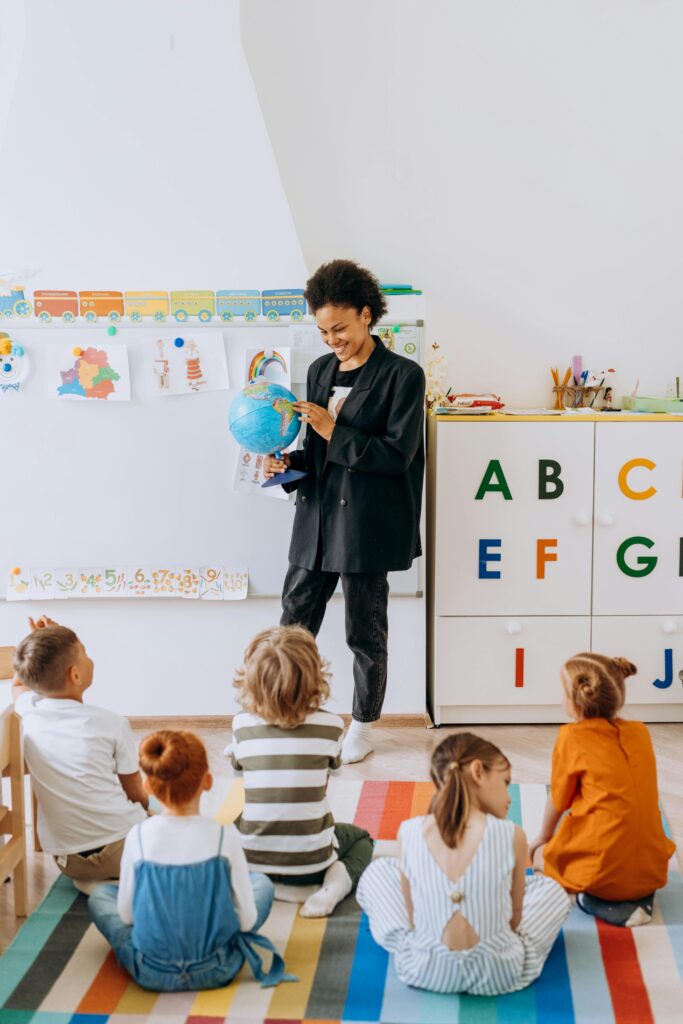
A Simple, Gentle Teaching Technique Every Parent Can Use Have you ever tried to teach your child something — a colour, a shape, a word — and felt like no matter how many times you said it, it just wasn’t sticking? And then you started to wonder: is it me? Is it them? Am I doing something wrong? First of all — you’re not doing anything wrong. Learning, especially for young children, simply doesn’t work the way most of us were taught to teach. It isn’t a one-way street where we say the thing, and they know the thing. Actually it’s a journey — a back-and-forth, a gentle loop that takes time, repetition, and the right kind of invitation. The Montessori Three-Period Lesson is one of the most beautiful tools ever designed for that journey. It’s a simple three-step teaching method that respects how children actually learn — without pressure, without testing, without anxiety. And the wonderful thing is that once you understand it, you will start seeing it everywhere. Not just in the classroom, but at the dinner table, in the garden, at bedtime. Let’s break it down — simply, clearly, and with plenty of real-life examples you’ll immediately recognise. Where Did the Three-Period Lesson Come From? The Three-Period Lesson was not invented by Dr. Maria Montessori — she adapted it from a French physician and educator named Edouard Seguin, who developed it in the 1800s while working with children who had been written off by the educational system of his time. Dr. Montessori saw in Seguin’s method something powerful and universal. She refined it, brought it into her classroom, and made it the backbone of how Montessori teachers introduce new concepts to children. Over a century later, it remains one of the most effective and humane teaching techniques in early childhood education. The idea is simple: before you can expect a child to recall something independently, they need to first hear it, then recognise it, and only then produce it. These three stages mirror exactly how the brain builds and consolidates new memories — and when we skip steps or rush ahead, that’s usually when children (and adults!) get confused, frustrated, or shut down. The Three Periods — Explained Simply Think of the Three-Period Lesson like planting a seed, watering it, and then watching it bloom. You can’t rush any stage. But when you give each one its proper time, something wonderful grows. Period 1: “This Is…” — Introducing This is the introduction stage. You name something clearly and simply while the child experiences it directly — through their hands, eyes, or ears. The child is not expected to say or do anything except absorb. There is no right or wrong here. No pressure at all. You are simply planting a seed. What you say: “This is rough. This is smooth.” — “This is red. This is blue.” — “This is the circle.” Period 2: “Show Me…” — Recognising Now you invite the child to show you what they remember — but without making them speak. You ask them to point, fetch, touch, or place. Because you are not asking them to produce a word yet, the pressure is lifted. Most children love this stage. It feels like a game, not a test. And importantly, if they get it wrong, there is no failure — you simply go back to Period 1 naturally and gently. What you say: “Can you show me the rough one?” — “Where is the blue one?” — “Can you put the circle in my hand?” Period 3: “What Is This?” — Recalling Only now — when you sense the child is confident and ready — do you ask them to produce the word themselves. This is the recall stage. It might come quickly, or it might need days, weeks, or more time in Period 2 first. And that is perfectly fine. The child is never wrong for needing more time. You simply return to an earlier period without any fuss. What you say: “What is this?” — “What colour is this one?” — “What shape is this?” 💛 The Most Important Thing to Remember: If a child gets Period 3 wrong, do NOT correct them. Simply smile, return the object, and say ‘Let’s look at this one again.’ Then go back to Period 1. There is no failure in the Three-Period Lesson — only more time needed. Everyday Examples You’ll Immediately Recognise The magic of the Three-Period Lesson is that once you understand it, you realise you can use it anywhere — not just with Montessori materials, but in real life, every single day. Here are a few examples that will feel very familiar: 🍎 Teaching Fruit Names at the Kitchen Table Period 1: Introduce Hold up an apple and say: ‘This is an apple.’ Then hold up a banana: ‘This is a banana.’ Let your child touch them, smell them, hold them. Period 2: Recognise ‘Can you give me the apple?’ Your child picks it up and hands it to you. ‘Can you put the banana on the chair?’ They do it — no words needed yet. Period 3: Recall Hold up the apple: ‘What is this?’ Your child says ‘apple!’ (or maybe ‘app-ul’ — and that counts completely). 🎨 Learning Colours with Crayons Period 1: Introduce Pick up a red crayon: ‘This is red.’ Pick up the blue one: ‘This is blue.’ Let your child hold each one while you say the name. Period 2: Recognise ‘Can you find the red one?’ or ‘Give me the blue one.’ Your child searches and picks — no pressure to say the word. Period 3: Recall Point to the red crayon: ‘What colour is this?’ Now they tell you. If they’re unsure, no big deal — back to Period 2 for another round. 🌿 Exploring Nature on a Walk Period 1: Introduce Pick up a leaf and a stone: ‘This is a leaf. This is
Best Montessori Toys for 18-Month-Olds on Amazon (2026 Picks)
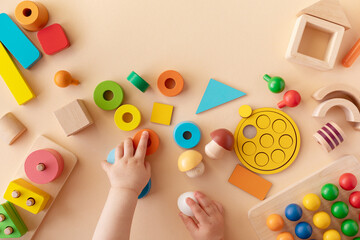
Affiliate Disclosure: As an Amazon Associate, I earn from qualifying purchases at no extra cost to you. I only recommend products that are personally vetted by our AMI-trained team and genuinely align with Montessori principles. Your 18-month-old is into absolutely everything — dumping, stacking, pulling, throwing, and doing it all over again five minutes later. If you’ve been searching for the best Montessori toys for 18-month-olds on Amazon, you already know the problem: the platform is flooded with brightly coloured plastic labelled “Montessori” that has nothing to do with the real philosophy.We get it. As AMI-trained Montessori educators, I’ve seen parents spend good money on toys that their toddler ignores after two days — because the toy does all the work and leaves nothing for the child to discover. That’s why we put together this guide. Every product below has been vetted against AMI Montessori principles: natural materials, single purpose, no batteries, and genuine developmental value for a child at the 18-month stage. Amazon is explored by our team so you don’t have to guess.Here are the 7 best Montessori toys for 18-month-olds you can order on Amazon today What Makes a Toy Truly Montessori at 18 Months? Before we get into the picks, it’s worth spending a moment on what we’re actually looking for — this will help you make smarter buying decisions beyond this list too. At 18 months, toddlers are in what Dr. Maria Montessori called sensitive periods — windows of heightened receptivity where the brain is primed to absorb specific skills. At this age, those sensitive periods are centred around: Movement — walking, climbing, carrying, and using their hands with increasing precision Language — absorbing words at a rapid pace, even if they aren’t speaking many yet Order — a strong need for routine, sequence, and things being “just so” A genuine Montessori toy at this age should honour those windows. Practically, that means Made from natural materials — wood, cotton, or wool. These engage the senses differently than plastic and feel more satisfying to handle. Single clear purpose — one skill at a time. A shape sorter teaches shape recognition. A stacking ring teaches seriation. Simple is better. The child does the work — no batteries, no lights, no music. If the toy entertains without the child’s effort, it’s doing the learning for them. Sized for little hands — knobbed pieces, chunky grips, and child-scaled tools all support the development of the tripod grip used later in writing. Invites repetition — toddlers learn by doing the same thing 20 times in a row. A good Montessori toy never gets “finished.” With that in mind, here are our top picks. Product Skill Focus Best Age Price Range Rating Wooden Shape Sorter Cognitive Fine Motor 12-15 month 15-25$ 5stars Knobbed Puzzle 3piece Fine motor, problem solving 15–30 mo 18-30$ 5 stars Object Permanence Box Cognitive development 10–18 mo 20-35$ 5 stars Practical Life Pouring Set Concentration, independence 12–24 mo 15-28$ 5stars The 7 Best Montessori Toys for 18-Month-Olds on Amazon 1. Wooden Shape Sorter — Best for Cognitive Development If there is one toy that belongs on every Montessori toddler shelf, it is a well-made wooden shape sorter. At 18 months, your child’s brain is beginning to form categories — round things, square things, things that fit and things that don’t. A shape sorter puts that cognitive process directly in their hands. The Montessori purpose: Shape sorting teaches discrimination (recognising differences), spatial reasoning (rotating the shape to find the correct angle), and the deeply satisfying concept of “fitting in.” When a toddler finally slots the triangle through the triangle hole after six attempts, the look on their face tells you everything. That moment of self-correction — without any adult telling them “well done” — is pure Montessori. What we love about it: A good wooden shape sorter has no sounds, no flashing lights, and no cheerful jingle when the piece goes in. The feedback is the piece dropping through the hole. That’s it. That’s enough — and it’s far more powerful developmentally than any electronic version. What to look for on Amazon: Natural wood with a water-based or non-toxic finish. Avoid versions with more than 6–8 shapes at this age — too many choices overwhelms an 18-month-old and leads to frustration rather than focus. Look for chunky, smooth-edged pieces large enough to avoid any choking risk. AMI educator tip: Present the shape sorter with only one shape and its matching hole visible at first. Once your child masters that shape, introduce the second. This graduated approach — classic Montessori — keeps the activity challenging but never discouraging. Price range: $15–25 on Amazon Age range: 12–24 months. For a Box shape sorter: Check Price on Amazon And for Wooden Knobbed Shape Sorter 🛒 Check Price on Amazon → 2. Wooden Knobbed Puzzle (3-Piece) — Best for Fine Motor Skills You will find knobbed puzzles in every authentic Montessori classroom in the world, and for good reason. The design — a flat wooden board with shaped cut-outs and chunky knobbed pieces — is one of the most elegant learning tools ever made for a toddler. The Montessori purpose: The knob itself is everything. When an 18-month-old reaches for the knob with their thumb, index, and middle finger, they are practising the exact same grip they will use to hold a pencil in three years’ time. This is what Montessori called indirect preparation — building a skill long before the child is asked to use it formally. Beyond the grip, the puzzle develops spatial awareness, problem-solving (which shape fits where?), and the satisfaction of completing a task from start to finish independently. What we love about it: Three pieces is the right number for this age. Fewer than three gives too little challenge. More than five overwhelms. A well-designed 3-piece knobbed puzzle can hold an 18-month-old’s attention for a surprising stretch of time — and every time they complete it, they are building concentration as much as motor skill.
AMI Montessori Education: A Complete Guide for Parents
AMI Montessori Education: A Complete Guide for Parents Ks Montessori – Building Strong Foundations for Lifelong Learning Choosing the right educational environment for your child is one of the most important decisions a parent can make. Early childhood education not only shapes academic skills but also influences confidence, independence, emotional intelligence, and social behavior. At Ks Montessori, we follow the AMI Montessori approach, a globally respected method of education designed to support a child’s natural development. This guide will help parents understand AMI Montessori education, its benefits, and why Ks Montessori is an ideal choice for families seeking quality, trust, and long-term success. Understanding AMI Montessori Education The Association Montessori International (AMI) was founded by Dr. Maria Montessori to preserve her original educational philosophy. AMI Montessori schools follow strict international standards to provide authentic Montessori education, not a modified or diluted version. Keywords naturally included in this section: AMI Montessori education AMI Montessori school Montessori early childhood education Montessori learning environment Montessori materials Montessori teaching method AMI Montessori education respects each child as an individual, allowing learning to happen naturally through exploration, movement, and hands-on experience. The Philosophy Behind AMI Montessori AMI Montessori believes children are naturally curious and capable learners. Instead of traditional teacher-led instruction, children are guided to learn independently in a carefully prepared environment. Core Principles: Freedom within limits Self-directed learning Hands-on Montessori materials Mixed-age classrooms Respect for each child’s pace and interests At Ks Montessori, these principles are practiced daily in every classroom. Why Early Childhood Education Matters The first six years of a child’s life are crucial for brain development. During this period, children absorb information effortlessly from their surroundings. AMI Montessori education takes advantage of this sensitive period by creating an environment that encourages curiosity, independence, and responsibility. Benefits of Montessori classrooms: Learn through real-life activities Develop concentration and focus Build confidence through achievement Enjoy learning instead of fearing mistakes Benefits of AMI Montessori Education Independence and Self-Confidence Practical life activities such as pouring, dressing, cleaning, and organizing help children become independent. These small achievements boost confidence and self-esteem. Focus and Concentration AMI Montessori classrooms offer uninterrupted work periods, allowing children to fully engage with tasks and complete them at their own pace. Emotional and Social Development Mixed-age classrooms encourage cooperation, empathy, leadership, and mutual respect. Children naturally learn social skills by interacting with peers of different ages. Solid Academic Foundation AMI Montessori provides strong preparation in: Language and communication Mathematics Sensorial development Cultural studies Children understand concepts deeply because they learn through experience rather than memorization. Why Choose Ks Montessori? At Ks Montessori, we provide authentic AMI Montessori education in a safe, nurturing, and stimulating environment. AMI-Trained Educators Our teachers are professionally trained according to AMI standards. They observe, guide, and support children without pressure or comparison. Prepared Montessori Environment Each classroom is thoughtfully arranged with Montessori-approved materials that encourage independence and exploration. Individual Attention Every child is unique. Teachers carefully observe each child and adapt guidance according to individual needs. Learn more about Ks Montessori programs here Montessori Learning Materials AMI Montessori classrooms use scientifically designed materials that support hands-on learning. Children understand concepts through touch, movement, and repetition. Key Montessori materials with affiliate links: Practical Life Montessori Tools– pouring, spooning, dressing frames Language Montessori Materials– sandpaper letters, movable alphabet Mathematics Montessori Materials– number rods, golden beads Complete Montessori Kit– all-in-one Montessori learning set AMI Montessori vs Traditional Education Traditional education often expects all children to learn at the same pace. AMI Montessori respects each child’s development. In Montessori classrooms: Children choose their work Learning is self-paced Mistakes are part of growth Teachers act as guides, not lecturers This approach develops confident, curious learners who enjoy learning naturally.