How to Raise a Child Who Loves Reading
Think back to a book that changed something in you. Maybe it was a story you read as a child, curled up somewhere quiet, so absorbed that the world around you went silent. Maybe it was a character who felt like a friend. Maybe it was a sentence that described exactly how you felt but had never been able to say. That experience — of being genuinely lost inside a book — is one of the most extraordinary gifts a human being can give themselves. And it starts, almost always, in the first few years of life. Not with formal reading instruction. Not with sight word drills. But with a parent, a book, a lap, and twenty minutes when nothing else mattered. This guide is about how to create that experience for your child. How to build a relationship with books that begins in infancy and grows stronger with every year. How to raise a child who does not just know how to read — but who genuinely, deeply, joyfully loves it. There is a big difference between the two. And this guide is entirely about the second one. The Most Important Thing — And the One Thing Most Parents Get Wrong Before we talk about strategies, there is one truth so important that everything else in this guide depends on it: You cannot make a child love reading. But you can absolutely kill the love of reading before it has a chance to grow. The most common way parents do this — with the very best intentions — is by turning reading into a performance. Drilling sight words at the kitchen table. Asking comprehension questions after every page. Correcting every mispronounced word. Rewarding finishing books. Testing. Assessing. Measuring. Every one of these things sends the same message to the child: reading is work. Reading is something I do for you. Reading is something I can fail at. And a child who believes reading is work will stop doing it the moment no one is making them. The goal is not a child who can read. The goal is a child who wants to read. Those two outcomes require completely different approaches — and this guide is built around the second one. 💛 The Single Most Powerful Thing You Can Do: Read aloud to your child every single day. Not to teach them. Not to test them. Just because stories are wonderful and being together is wonderful and that combination — story plus togetherness — is the most powerful reading motivation in the world What the Research Actually Says About Raising Readers The science on this is remarkably clear and remarkably consistent. Here is what decades of reading research tells us: Reading aloud is the single highest-impact literacy activity Study after study — including the landmark report Becoming a Nation of Readers — identifies being read aloud to as the single most important activity for building the language, vocabulary, comprehension, and love of reading that underpin all later literacy. Not phonics worksheets. Not sight word flashcards. Read-aloud. Every time you read aloud to your child, you are building vocabulary they have never heard in conversation, exposing them to the rhythm and structure of written language, showing them that stories have the power to transport and delight, and associating books with warmth, safety, and your voice. That is an extraordinary amount of learning happening on a single couch. 🔬 Research Finding: A child who is read aloud to for just 20 minutes a day will have heard approximately 1.8 million words per year more than a child who is not read to. By the time they start school, that gap in vocabulary, comprehension, and world knowledge is enormous — and it affects reading success for years. Access to books matters enormously Children who have books at home read more. This seems obvious but the scale of the effect is striking — research from the University of Nevada found that having as few as 20 books in the home has a significant positive effect on children’s educational achievement. It is not about the number — it is about books being present, visible, and accessible as a normal part of life. Intrinsic motivation is the key variable Children who read because they want to read — because reading is pleasurable, because stories are interesting, because books feel like friends — develop into far stronger readers than children who read because they are made to. Extrinsic motivation (rewards, points, competition) produces short-term reading but undermines long-term love. Intrinsic motivation, once established, is self-sustaining. The parent’s own relationship with reading matters Children who see their parents reading are more likely to become readers themselves. Not because of instruction or encouragement — but because children model what they see. A parent who visibly, genuinely enjoys a book is sending a message that books are worth enjoying. That message lands. 15 Practical Strategies That Actually Build Reading Love These are not theories. They are real, practical, immediately usable strategies — some require nothing at all, some require a small change in how you set up your home, and some will take a few weeks to become habit. All of them work. .Read Aloud Every Single Day — Without Exception Not sometimes. Not when you have time. Every day. Even if it is only ten minutes. Even if you are tired. Even if they have already had a book today. The daily habit of read-aloud is the single most powerful thing you can do for your child’s reading life, and its power comes from the consistency — from the child knowing that this is what we do, every day, because stories matter in this family. Try saying: “Let’s find our book. This is my favourite part of the day.” Never Stop Reading Aloud — Even When They Can Read Themselves One of the most common mistakes parents make is stopping reading aloud the moment their child learns to read independently. This is exactly backwards. Children
My Child Won’t Share and Hides
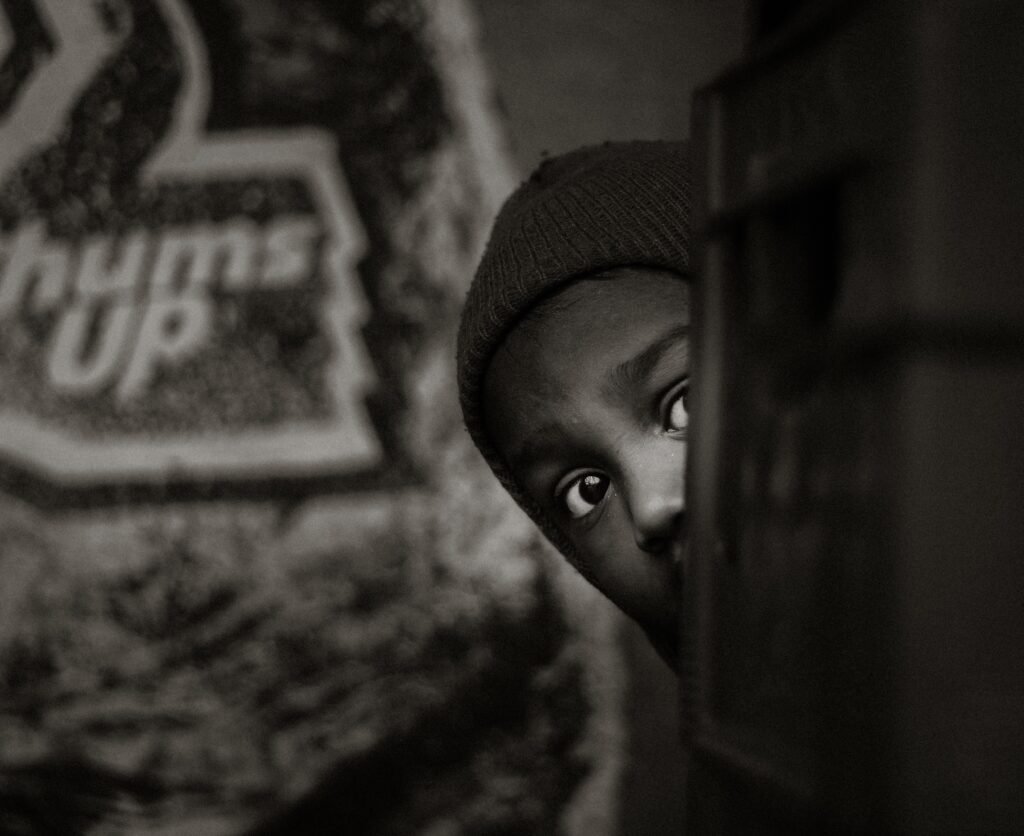
Behind My Legs at Parties — Is Something Wrong? A Warm, Honest Guide for Parents of Shy Children and Reluctant Sharers | kiransaifmontessori.com The birthday party is in full swing. Every other child is running, shouting, grabbing cake, and making instant friends. Your child is pressed firmly against your leg, face buried in your side, absolutely certain they are not coming out until it is time to go home. Later, at the park, another child reaches for your toddler’s favourite digger. Your child snatches it back so fast it makes everyone flinch. No negotiation. No warning. Just a very clear: that is mine. You smile apologetically at the other parent, feel the familiar mix of embarrassment, worry, and love and wonder — is my child okay? Is something wrong? Should I be doing something differently? Here is the answer, and it is a good one: almost certainly, no. Both of these behaviours — shyness in social situations and reluctance to share — are completely normal parts of child development. They are not character flaws. They are not signs of bad parenting. They are signs of a child who is developmentally right on track. But normal does not mean you cannot help. And that is exactly what this guide is for. How to Help a Shy Child Build Confidence First — What Is Shyness, Really? Shyness is not a personality defect. It is not a sign that something has gone wrong. It is a temperament trait — a way of being in the world that some children are simply born with. Researchers estimate that around 15 to 20 percent of children are born with what psychologist Jerome Kagan called a ‘behaviourally inhibited’ temperament — meaning they are naturally more cautious, more sensitive to new stimuli, and slower to warm up to unfamiliar people and situations. This is biological. It is not something you caused. It is not something your child can simply choose to switch off. And crucially — it is not something that needs to be fixed. Shy children grow into thoughtful, perceptive, deeply empathetic adults who notice things that others miss and build fewer but profoundly deeper relationships. What parents can do is not eliminate shyness — but help their child move through it with confidence rather than being paralysed by it. There is a big difference between a shy child who feels supported and a shy child who feels ashamed of who they are. 🔬 Research Note: Studies by Dr. Jerome Kagan at Harvard found that while temperament is largely inborn, the environment makes an enormous difference to how it plays out. Shy children with warm, supportive, non-pressuring parents develop much better social outcomes than shy children who are pushed, labelled, or made to feel their shyness is a problem. The Things We Say That Make Shyness Worse Before we talk about what helps, let’s talk about what does not — because many of the instinctive things parents say in social situations can unintentionally make a shy child’s experience harder, not easier 😬 At a family gathering when a relative says hello ❌ What NOT to do: Pushing them forward: ‘Go on, say hello! Don’t be rude!’ or labelling them to the relative: ‘She’s shy, sorry.’ ✅ What works instead: Crouch down to your child’s level and say quietly: ‘It’s okay to feel shy. Take your time. I’m right here.’ Let them watch from the safety of your side until they are ready. Most shy children will engage — on their own timeline. 🌿 Montessori note: In Montessori we call this the sensitive period for warming up. Every child has their own pace of engagement with new people. Rushing it or shaming it does not accelerate it — it entrenches it. 🎂 At a birthday party where your child won’t join in ❌ What NOT to do: Separating from them before they are ready: ‘Go and play! You’ll be fine!’ or comparing them: ‘Look how all the other children are playing nicely.’ ✅ What works instead: Stay nearby and give a running, calm commentary: ‘There’s a sandpit over there. There’s a girl with a red dress building something.’ Let curiosity do the work. Do not push. When they are ready — and they usually are within 20 to 30 minutes — they will move toward the activity on their own. 🌿 Montessori note: The Montessori prepared environment principle applies here too. A warm, predictable, low-pressure social setting where a child can observe before participating is the ideal environment for a shy child to flourish. 🧒 When another adult asks your child a direct question ❌ What NOT to do: Answering for them immediately or pressuring: ‘Answer Aunty! Tell her your name!’ ✅ What works instead: Give your child a moment of silence — longer than feels comfortable. If they genuinely cannot respond, say gently: ‘He knows his name. He might need a moment.’ Then move the conversation on. Never answer for them unless they have clearly indicated they want you to. 🌿 Montessori note: Answering for a child repeatedly teaches them that they do not need to speak for themselves — which is the opposite of the independence and confidence we are trying to build 10 Gentle Ways to Help a Shy Child Build Real Confidence These are not tricks or hacks. They are genuine, research-informed, Montessori-aligned approaches that build confidence from the inside out — not a performance of confidence that falls apart when the pressure is on. Never Label Them as Shy — In Front of Them or Anyone Else The moment you say ‘she’s shy’ in front of your child, you have given them a story about themselves that they will carry and live up to. Children become what we name them. Instead of ‘she’s shy’, try ‘she takes a little time to warm up — she’ll get there.’ That is a story about a process, not a permanent identity. It leaves the door open. Try saying: “She is still getting comfortable. Give
What Skills Should a 5-Year-Old Have Before Starting School?
A Complete School Readiness Guide for Parents — With Checklist, Tips, and the Montessori Approach By Kiran Saif | Certified Montessori Educator | kiransaifmontessori.com The school bag is bought, uniform is ready and the name labels are sewn in. And somewhere between the excitement of the new pencil case and the quiet of the evening, a question surfaces that almost every parent of a nearly-five-year-old carries: is my child actually ready for this? Not ready in the sense of having the right stationery. Ready in the sense that matters — emotionally, socially, academically, practically. Ready to sit in a group, to follow instructions from an unfamiliar adult, to manage their own lunchbox, to handle the feelings that come with a new and demanding environment. This guide answers that question thoroughly and honestly. As a certified Montessori educator who has prepared hundreds of children for the school transition, I can tell you this: the skills that matter most before school are not the ones most parents worry about. And the skills most parents overlook are the ones that make the biggest difference on day one. Let us go through all of them — with practical signs of readiness, tips for building each skill at home, and the honest reassurance that most five-year-olds are more ready than their parents believe. Before We Begin — A Word About Readiness School readiness is not a fixed checklist that your child either passes or fails. It is a profile — a collection of developing skills, some stronger than others, that together give a child the foundations to thrive in a school environment. No five-year-old arrives at school with every skill perfectly in place. That is not the expectation — and if any teacher or school suggests it is, they have misunderstood child development. The expectation is that your child has enough foundation across enough areas to begin — and that the school environment will continue to build on that foundation. 💛 The Most Reassuring Truth: Research consistently shows that a child’s readiness to learn is more important than what they already know. A curious, confident, emotionally regulated five-year-old who cannot yet read will outperform an anxious, academically drilled child who can recite letters but struggles to manage their feelings in a group setting. The 8 Key Skill Areas — What Schools Actually Look For 💬 1. Language and Communication Skills The ability to communicate — to express needs clearly, to listen and follow instructions, to ask for help when confused — is perhaps the single most important school readiness skill there is. A child who cannot yet say ‘I don’t understand’ or ‘I need to use the toilet’ will struggle regardless of their academic ability. Communication is the tool through which everything else in a classroom happens. Signs of readiness: Can speak in full sentences of 5+ words. Asks questions. Answers questions about a story. Can tell an adult what they need. Listens when spoken to and waits their turn in a conversation. How to help at home: Talk with your child constantly — at mealtimes, on walks, during play. Ask open questions: ‘What do you think will happen next?’ Read aloud every day and discuss the story. Play ‘show and tell’ at home so they practise speaking to an audience. 😊 2. Emotional Regulation — Managing Big Feelings This is the skill most parents underestimate and most teachers desperately wish more children arrived with. A classroom of twenty-five five-year-olds is a high-stimulation, high-demand environment. Children who can manage frustration, wait their turn without melting down, recover from disappointment, and express their feelings in words rather than actions will have a dramatically easier first year than those who cannot. Signs of readiness: Can wait for a few minutes without becoming distressed. Recovers from upsets within a reasonable time. Can say ‘I am angry’ or ‘I am sad’ instead of immediately hitting or crying. Accepts ‘no’ without a prolonged meltdown most of the time. How to help at home: Name emotions in daily life: ‘You look frustrated. That puzzle is tricky, isn’t it?’ Validate feelings before solving problems. Read books about characters who experience and manage big emotions. Practice the pause — ‘Let’s take three big breaths’ — so it becomes a familiar strategy. 👥 3. Social Skills — Getting Along with Others For most children, school is the first environment in which they must navigate a large group of peers without a parent nearby. The social demands are significant: taking turns, sharing resources, joining a group already at play, resolving disagreements, following group rules, and making and maintaining friendships. These skills are built over years of social experience — not drilled in the weeks before school starts. Signs of readiness: Can play cooperatively with at least one other child. Takes turns without major conflict. Can say ‘can I play?’ and accept ‘not right now’ without falling apart. Understands basic rules of a group game. Can disagree without becoming aggressive. How to help at home: Arrange regular playdates with same-age peers before school starts. Let children resolve minor conflicts without adult intervention — they need practise. Enrol in a group activity — swimming, gymnastics, art class — where following group instruction is practised in a safe environment. 🖊️ 4. Early Literacy — Language Foundations for Reading Here is what many parents get wrong: reading readiness is not about knowing the alphabet by rote or being able to spell your name. It is about phonemic awareness — the ability to hear individual sounds within words. A child who can hear that ‘cat’ has three sounds (c-a-t), who knows that ‘ball’ and ‘bat’ start with the same sound, who can clap the syllables in their name — that child is genuinely ready for reading instruction. A child who can recite A-Z but has no phonemic awareness is not. Signs of readiness: Recognises their own name in writing. Shows interest in books and print in the environment. Can hear and produce rhymes. Can clap syllables in simple words.
Why the Right School Bag Matters for Your Child’s Health and Learning
Every morning, millions of children across the world sling a bag over their shoulders and head to school. It seems like a small, everyday thing — but the school bag your child carries can have a surprisingly big impact on their posture, comfort, focus, and even their love of learning. At Kiran Saif Montessori, we believe that every detail of a child’s environment matters. That includes what they carry on their back. The Hidden Importance of a Good School Bag Most parents focus on what goes inside the bag — the books, the lunch box, the stationery. But the bag itself deserves just as much attention. A poorly designed school bag can lead to back pain, shoulder strain, and poor posture in children as young as 4 years old. According to pediatric health experts, a child’s school bag should never weigh more than 10–15% of their body weight. A good bag, on the other hand, supports the spine, distributes weight evenly, and keeps a child comfortable throughout the school day. 5 Reasons the Right School Bag Is Important for Kids Protects Posture and Spine Health Children’s spines are still developing. Carrying a heavy or poorly fitting bag forces them to lean forward or hunch their shoulders, which can lead to chronic back problems over time. A bag with padded, adjustable shoulder straps and a structured back panel keeps the spine in a natural, healthy position. Reduces Fatigue When a bag fits well and distributes weight properly, children expend less energy just carrying it. This means they arrive at school — and come home — less tired. Less fatigue means better attention, better mood, and better learning. Keeps Learning Materials Organized A well-designed bag with multiple compartments helps children learn organization from a young age — a foundational Montessori skill. When everything has its place, children feel more confident and in control of their school day. Builds Independence A bag that a child can open, close, pack, and carry on their own empowers them. Lightweight bags with easy-access zips and ergonomic designs are especially important for toddlers and kindergarteners who are just developing their fine motor skills Expresses Personality and Boosts Confidence Children feel proud when they love what they carry. A fun, colorful bag — whether it’s dinosaur-themed, floral, or bold and sporty — gives kids a small sense of identity and ownership. That matters more than we think. What to Look for When Buying a School Bag for Kids When shopping for your child’s next school bag, keep these key features in mind: Ergonomic design with padded back and straps Lightweight materials — the empty bag itself should be as light as possible Right size for your child’s age and body frame Durable, easy-to-clean fabric Multiple compartments for organization Reflective strips for safety, especially for early morning commutes Breathable back panel to prevent sweating Our Top Picks for Kids’ School Bags We’ve handpicked a selection of school bags that tick all the right boxes — ergonomic, durable, fun, and loved by kids and parents alike. Whether you’re shopping for a toddler heading to nursery or a primary schooler, you’ll find something perfect in our Schools Bags collection. Each product is available on Amazon for fast, reliable delivery — just click “Buy at Amazon” on any product to grab yours today. Final Thoughts The school bag is more than just a container for books. It’s a daily companion that affects your child’s physical health, organizational habits, and self-confidence. Investing in the right bag early is one of the simplest ways to support your child’s wellbeing and development. Explore our curated collection of kids’ school bags and give your child the comfort they deserve every school day. 🎒 Looking for more tips on Montessori-inspired learning tools and resources? Browse our blog for expert advice on raising confident, independent learners.
How to Create a Montessori-Inspired Home Education Environment
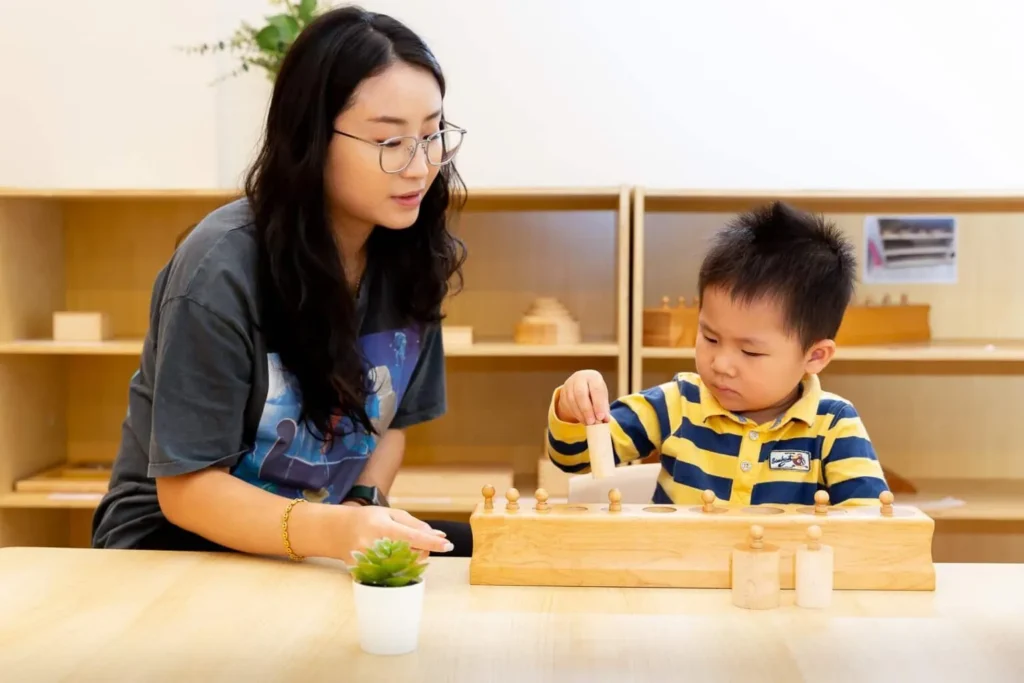
You don’t need to enroll your child in a Montessori school to give them a Montessori education. Some of the most powerful Montessori learning happens not in a classroom, but at home — in the kitchen, in the bedroom, in the garden, in the simple rhythms of daily family life. Creating a Montessori-inspired home environment is not about buying expensive materials or redesigning every room. It is about a shift in perspective — seeing your home through your child’s eyes and asking: does this space help my child feel capable, independent, and respected? In this blog post, we walk you through the core principles of a Montessori home environment and give you practical, room-by-room guidance on how to bring those principles to life — whatever your budget, whatever your space. The Core Principles of a Montessori Home Before we get into the practicalities, it helps to understand the philosophy behind the Montessori home environment. Dr. Maria Montessori spoke often about the prepared environment — a space consciously arranged to support the child’s independence, development, and natural curiosity. Every element of that environment sends a message to the child. The question is: what message do we want to send? A Montessori home environment is guided by five core principles: Independence The environment is arranged so that the child can do as much as possible for themselves — without waiting for adult help. Low shelves, child-sized furniture, accessible materials, and reachable hooks all say to the child: you are capable; this is your space too. Order Young children thrive on order. It is not simply a preference — it is a developmental need. During the sensitive period for order (roughly ages one to three), children find deep comfort and security in a predictable, well-organised environment. In a Montessori home, everything has a place, and that place is consistent. Beauty and Simplicity A Montessori environment is beautiful but uncluttered. Rather than overwhelming the child with dozens of toys and stimuli, the Montessori home offers fewer, more carefully chosen materials — each one worthy of the child’s attention. Natural materials, soft colours, and real objects are preferred over plastic and synthetic alternatives.One of the best choice for this beautiful experience is Ks montessorri kitchen set Freedom Within Limits Children are free to explore, choose their activities, and move through the home — within clear, consistent boundaries. The environment itself defines those limits, so the adult does not need to be constantly redirecting or correcting. A well-prepared home environment reduces conflict and increases harmony. Adena Montessori Color Tablets provide a learning and joyful environmet for kids at home. Connection to Real Life Montessori children are not kept separate from the real work of the household. They participate in cooking, cleaning, caring for plants and animals, and managing their own belongings. This participation is not a burden — it is a profound source of purpose, competence, and belonging. Room by Room: Setting Up Your Montessori Home The Child’s Bedroom The bedroom is the child’s most personal space — and the place where independence begins each morning and ends each night. A few thoughtful adjustments can transform it into a true Montessori sanctuary. The Floor Bed One of the most distinctive features of a Montessori bedroom is the floor bed — a mattress placed directly on the floor, or a very low bed frame, so the child can get in and out independently from the earliest months of life. Rather than being lifted in and out of a cot by an adult, the child develops autonomy over their own sleep space from the very beginning. This is not only about independence — it also gives the child the freedom to explore their room safely during the natural moments of wakefulness that occur throughout the night, without distress or danger. A Low, Open Wardrobe Hanging clothes and folded items at the child’s eye level and reach allows them to choose their own outfit and dress themselves — a practical life milestone that builds confidence, fine motor skills, and a sense of personal identity. Limit the choices to two or three options per day to make decision-making manageable The Kitchen The kitchen is arguably the richest Montessori learning environment in the home — and one that most families have never thought of this way. Cooking involves maths, science, language, practical life skills, sensorial exploration, and above all, the deep satisfaction of contributing to family life. A Learning Tower or Step Stool A sturdy step stool or learning tower brings the child to counter height, allowing them to participate safely in food preparation alongside an adult. Even a two-year-old can wash vegetables, tear salad leaves, stir batter, or pour water — all meaningful, developmentally rich tasks. A Low Snack Station Dedicate a low shelf or drawer in the kitchen to the child’s snacks and drinking water. A small pitcher, a glass, a plate, and a few healthy snack options allow the child to serve themselves independently when they are hungry — building body awareness, self-regulation, and confidence. Child-Sized Real Tools Invest in a small set of real — not plastic — child-sized kitchen tools: a blunt spreading knife, a vegetable peeler, a small chopping board, a grater. Children know the difference between real and pretend, and real tools communicate trust and respect. Used under appropriate supervision, they are safe and deeply satisfying. A Place for Cleaning Up Keep a small dustpan and brush, a child-height mop, and a cloth at accessible levels. Spills are learning opportunities — and a child who can clean up after themselves feels enormously capable. Resist the urge to swoop in and clean for them. The Living and Play Area The main living space of the home is where much of the child’s free exploration and play will take place. The Montessori approach transforms this area from a place where the child plays while adults watch, into a shared space where the child is a genuine participant. The Yes Space