Social Skills:Montessori Grace & Courtesy for Holiday Guests

How to Prepare Your Child Before the Celebrations Begin The holiday season brings something children rarely experience on a regular day — a house full of people, unfamiliar routines, louder conversations, and much greater social expectations. For many children, this can feel exciting and overwhelming at the same time. That’s exactly why this time of year is a golden opportunity to practice Grace & Courtesy — one of the most meaningful and life-applicable areas within Montessori education. Grace & Courtesy is not about drilling children on etiquette or expecting them to behave like miniature adults. In the Montessori philosophy, it’s about equipping children with genuine social tools that respect both themselves and the people around them — things like how to greet someone warmly, how to offer help, how to step away from a situation politely, how to say no, and how to navigate conflict with dignity. The Montessori approach to teaching these skills relies on three pillars: modeling, gentle practice, and real-life application. Here’s a practical holiday guide you can use whether you’re a parent at home or a teacher in the classroom. Get a Head Start: Teach Three Core Skills Before Guests Arrive If you can only focus on a handful of things before family and friends show up, let it be these three. How to Greet Someone Keep it simple and pressure-free: Make eye contact if they feel comfortable doing so Smile if it feels natural Say something brief: “Hi, Uncle.” or “Hello.” Montessori tip: A quick 30-second role play each day is enough. This isn’t a performance rehearsal — it’s just building familiarity. 2.How to Take on a “Guest Helper” Role Give your child one specific task they can own during the gathering: Setting out napkins Showing visitors where to leave their shoes Carrying a small tray (with a grown-up nearby) Tidying up a corner after everyone has left. When children have a purposeful role, they feel settled rather than sidelined. . How to Leave a Conversation Respectfully Holidays are long, and children need an honest way to step back without it turning into a scene. Teach them one simple phrase: “Excuse me, I’m going to play.” “I need to use the bathroom.” “I just need a little break.” Giving children a script prevents the meltdowns that happen when they have no words for what they need. 2. Teaching Greetings, Helpfulness, and Gratitude the Montessori Way Let Greetings Be Low-Pressure Some children are naturally reserved or take time to warm up to people. This is completely normal, and Montessori deeply respects individual temperament. What you can do: Stand beside your child when guests arrive Greet the visitor yourself, calmly and warmly Offer your child a gentle, low-stakes option: “You can say hello, or you can wave — whichever feels okay.” What to avoid: Demanding an immediate greeting in front of others Labeling shyness as rudeness Bribing or threatening compliance A child who feels safe will greet others genuinely. Pressure only creates resistance. Channel Energy Into Contribution When children start acting out or seeking attention around guests, it’s often a sign they feel forgotten or pushed to the edges. Giving them a meaningful job solves this beautifully. Try: “I need your help — could you bring these napkins to the table?” or “Can you show Grandma where we keep the cups?” Contribution transforms restless energy into pride. Encourage Gratitude Without Forcing It We all want our children to express thanks — but barking “Say thank you!” often turns into a standoff. A gentler approach: Model it yourself: “Thank you so much for coming.” Offer a choice: “Would you like to say thank you now or when they leave?” Build a closing ritual: at the door, prompt softly — “Say goodbye to Auntie.” Gratitude expressed freely lands far more sincerely than gratitude that is demanded. 3. Making Hosting a Real Montessori Practical Life Experience The holidays are essentially one giant Practical Life lesson — real serving, real care, real awareness of others. Take advantage of it. Serving: A Simple Tray Routine Choose something your child can carry safely and teach a small sequence: Hold it with both hands Walk at a steady pace Offer with one sentence: “Would you like one?” Return the tray to its spot when done Even carrying a basket of crackers becomes a lesson in focus, coordination, and care. Offering: The Art of Being a Little Host Children can learn to make others feel welcome in very simple, age-appropriate ways: “Would you like to sit here?” “Do you want to see my drawing?” These aren’t scripted performances — they’re natural moments of connection you can gently encourage. Closing with Care of the Environment After guests have gone, invite your child to help reset the space: Wipe down the table Gather cups or plates Fold any cloths that were used Return small decorations to their basket This post-gathering reset is calming for children — it provides closure after the stimulation and reconnects them to the idea of caring for their home. Setting Boundaries with Relatives: Scripts That Protect Everyone This is often the trickiest part of holiday gatherings, especially when family dynamics are involved. Montessori supports respect for elders and respect for the child — these two things are not in conflict. Give Your Child Words Before the Event Children often freeze in the moment if they don’t have language ready. Prepare them ahead of time: “No thank you.” “Not right now.” “I need some space.” “I’m going to stay with Mum/Dad.” “I don’t want to talk about that.” (for older children) How Parents Can Back Their Child Calmly Your steadiness in these moments matters enormously. Some phrases that help: “We’re working on letting her make her own choices.” “He takes a little time to warm up — he’ll join when he’s ready.” “Thanks for understanding.” If a relative pushes further: “We don’t force that.” “Please respect his ‘no.’” No lengthy explanation necessary. Short and calm is enough 5. Body Autonomy
How to Create a Montessori-Inspired Home Education Environment
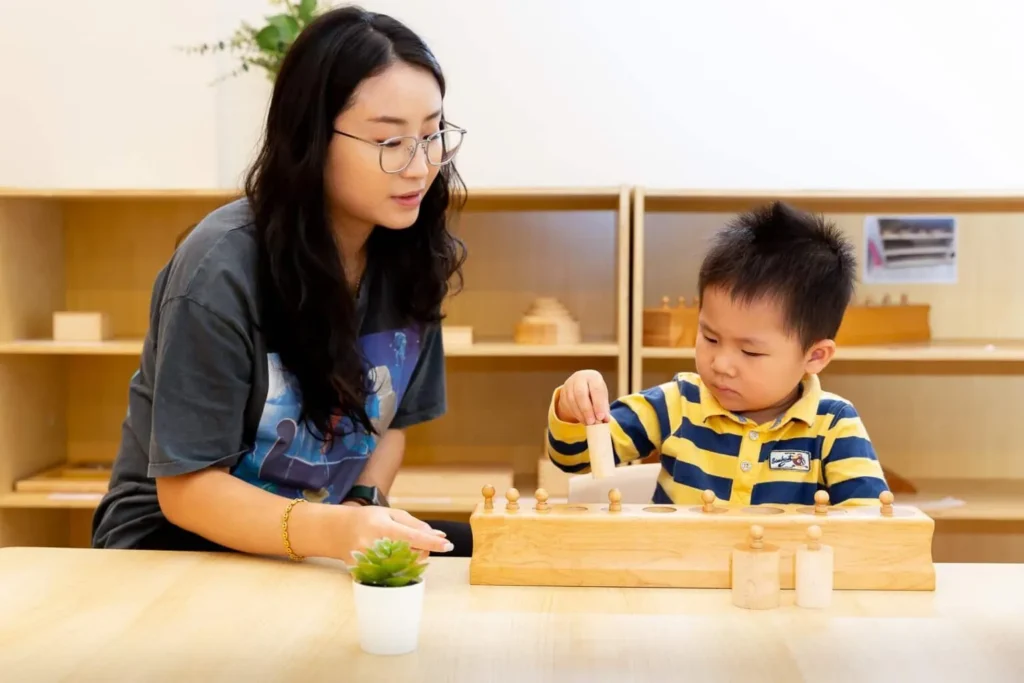
You don’t need to enroll your child in a Montessori school to give them a Montessori education. Some of the most powerful Montessori learning happens not in a classroom, but at home — in the kitchen, in the bedroom, in the garden, in the simple rhythms of daily family life. Creating a Montessori-inspired home environment is not about buying expensive materials or redesigning every room. It is about a shift in perspective — seeing your home through your child’s eyes and asking: does this space help my child feel capable, independent, and respected? In this blog post, we walk you through the core principles of a Montessori home environment and give you practical, room-by-room guidance on how to bring those principles to life — whatever your budget, whatever your space. The Core Principles of a Montessori Home Before we get into the practicalities, it helps to understand the philosophy behind the Montessori home environment. Dr. Maria Montessori spoke often about the prepared environment — a space consciously arranged to support the child’s independence, development, and natural curiosity. Every element of that environment sends a message to the child. The question is: what message do we want to send? A Montessori home environment is guided by five core principles: Independence The environment is arranged so that the child can do as much as possible for themselves — without waiting for adult help. Low shelves, child-sized furniture, accessible materials, and reachable hooks all say to the child: you are capable; this is your space too. Order Young children thrive on order. It is not simply a preference — it is a developmental need. During the sensitive period for order (roughly ages one to three), children find deep comfort and security in a predictable, well-organised environment. In a Montessori home, everything has a place, and that place is consistent. Beauty and Simplicity A Montessori environment is beautiful but uncluttered. Rather than overwhelming the child with dozens of toys and stimuli, the Montessori home offers fewer, more carefully chosen materials — each one worthy of the child’s attention. Natural materials, soft colours, and real objects are preferred over plastic and synthetic alternatives.One of the best choice for this beautiful experience is Ks montessorri kitchen set Freedom Within Limits Children are free to explore, choose their activities, and move through the home — within clear, consistent boundaries. The environment itself defines those limits, so the adult does not need to be constantly redirecting or correcting. A well-prepared home environment reduces conflict and increases harmony. Adena Montessori Color Tablets provide a learning and joyful environmet for kids at home. Connection to Real Life Montessori children are not kept separate from the real work of the household. They participate in cooking, cleaning, caring for plants and animals, and managing their own belongings. This participation is not a burden — it is a profound source of purpose, competence, and belonging. Room by Room: Setting Up Your Montessori Home The Child’s Bedroom The bedroom is the child’s most personal space — and the place where independence begins each morning and ends each night. A few thoughtful adjustments can transform it into a true Montessori sanctuary. The Floor Bed One of the most distinctive features of a Montessori bedroom is the floor bed — a mattress placed directly on the floor, or a very low bed frame, so the child can get in and out independently from the earliest months of life. Rather than being lifted in and out of a cot by an adult, the child develops autonomy over their own sleep space from the very beginning. This is not only about independence — it also gives the child the freedom to explore their room safely during the natural moments of wakefulness that occur throughout the night, without distress or danger. A Low, Open Wardrobe Hanging clothes and folded items at the child’s eye level and reach allows them to choose their own outfit and dress themselves — a practical life milestone that builds confidence, fine motor skills, and a sense of personal identity. Limit the choices to two or three options per day to make decision-making manageable The Kitchen The kitchen is arguably the richest Montessori learning environment in the home — and one that most families have never thought of this way. Cooking involves maths, science, language, practical life skills, sensorial exploration, and above all, the deep satisfaction of contributing to family life. A Learning Tower or Step Stool A sturdy step stool or learning tower brings the child to counter height, allowing them to participate safely in food preparation alongside an adult. Even a two-year-old can wash vegetables, tear salad leaves, stir batter, or pour water — all meaningful, developmentally rich tasks. A Low Snack Station Dedicate a low shelf or drawer in the kitchen to the child’s snacks and drinking water. A small pitcher, a glass, a plate, and a few healthy snack options allow the child to serve themselves independently when they are hungry — building body awareness, self-regulation, and confidence. Child-Sized Real Tools Invest in a small set of real — not plastic — child-sized kitchen tools: a blunt spreading knife, a vegetable peeler, a small chopping board, a grater. Children know the difference between real and pretend, and real tools communicate trust and respect. Used under appropriate supervision, they are safe and deeply satisfying. A Place for Cleaning Up Keep a small dustpan and brush, a child-height mop, and a cloth at accessible levels. Spills are learning opportunities — and a child who can clean up after themselves feels enormously capable. Resist the urge to swoop in and clean for them. The Living and Play Area The main living space of the home is where much of the child’s free exploration and play will take place. The Montessori approach transforms this area from a place where the child plays while adults watch, into a shared space where the child is a genuine participant. The Yes Space
Montessori Sandpaper Letters
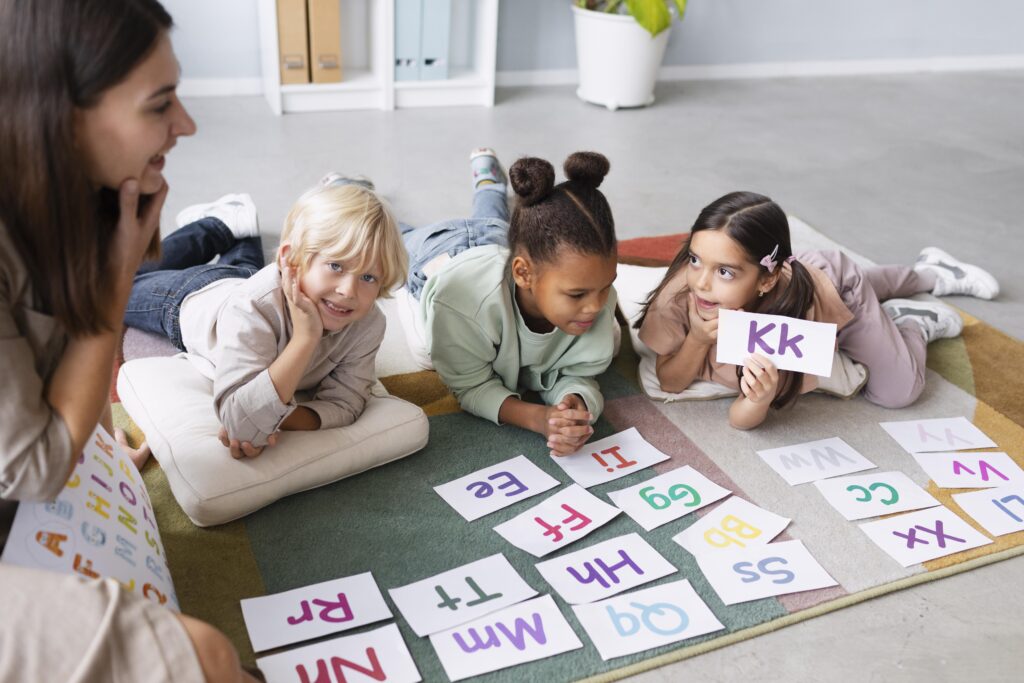
Best Montessori Learning Material At Home Close your eyes for a moment and imagine tracing your finger along the raised, rough surface of a letter. You feel its curves, its angles, the direction it travels. Now imagine doing that dozens of times, day after day, with no pressure — only curiosity and the simple pleasure of touch. By the time you sit down to write that letter, your hand already knows the way. This is the quiet genius of the Montessori Sandpaper Letters — one of the most beloved and effective materials in early childhood education. Simple in appearance, profound in impact, these rough-textured letter tiles have helped generations of children unlock the mysteries of reading and writing in a way that feels entirely natural, unhurried, and joyful. In this blog post, we explore what Sandpaper Letters are, the science behind why they work so powerfully, how to use them at home, and what to expect as your child moves through this remarkable journey to literacy. What Are Sandpaper Letters? Sandpaper Letters are a set of wooden tiles, each featuring a single letter of the alphabet cut out of fine sandpaper and mounted onto a smooth wooden or board background. The consonants are traditionally mounted on blue (or pink) boards and the vowels on red (or pink) boards — a colour distinction that will later help children understand the difference between vowel and consonant sounds. The letters are always presented in their cursive or print form — depending on the school’s approach — and they represent sounds, not letter names. This is a crucial distinction that sets Montessori literacy apart from traditional phonics instruction. Important note: In Montessori, we teach the sound of the letter first — not its name. The letter ‘s’ is introduced as the sound ‘sss’, not as ‘ess’. This makes the leap to blending sounds into words far more intuitive for the child. The Science Behind the Sandpaper Letters Why sandpaper? Why not simply show a child a printed letter on a flashcard or a screen? The answer lies in how the young brain learns — and in particular, how multi-sensory experiences create stronger, more durable memory traces than single-sense experiences. The Three-Pathway Approach Sandpaper Letters engage three distinct learning pathways simultaneously: Visual — the child sees the shape of the letterAuditory — the child hears the sound of the letter from the teacher or parentTactile-Kinesthetic — the child traces the letter with their fingers, feeling its shape and direction When all three pathways fire at the same time, the brain forms a much richer, more deeply encoded memory of the letter. Neuroscientists call this multi-modal encoding — and research consistently shows it produces superior retention compared to single-modal learning. A child who has traced the letter ‘s’ with their fingers thirty times does not need to think about how to write it. The motor memory is already in the hand. The body knows. Muscle Memory and the Writing Hand Every time a child traces a Sandpaper Letter, they are rehearsing the exact motor pattern required to write that letter. The direction, the pressure, the flow — all of it is being deposited into muscle memory long before a pencil is ever introduced. This is why Montessori children often begin writing before they begin reading — a sequence that surprises many parents but makes complete neurological sense. The hand has been preparing quietly all along. Phonemic Awareness Through Sound Alongside the physical tracing, the child hears and repeats the phonetic sound of the letter. This builds phonemic awareness — the ability to hear, identify, and manipulate individual sounds in language — which decades of reading research identifies as the single strongest predictor of early reading success. By connecting sound, sight, and touch simultaneously, the Sandpaper Letters lay a triple foundation for literacy that is both scientifically sound and developmentally appropriate. When to Introduce Sandpaper Letters Most children are ready to begin working with Sandpaper Letters between the ages of three and four, though as with all Montessori materials, the child’s readiness is the true guide — not their age. Signs that your child may be ready include: Showing interest in books, stories, and print in the environment Asking questions about letters or words they see around them Able to sit quietly and focus on a task for several minutes Has developed a good three-finger (pincer) grip through practical life and sensorial work Showing interest in drawing, mark-making, or writing-like activities It is perfectly normal for some children to show readiness at two and a half, and others not until four or five. Both are entirely healthy. Montessori is not a race — it is a journey taken at each child’s own pace. How to Present Sandpaper Letters: The Three-Period Lesson The Sandpaper Letters are introduced using Dr. Montessori’s Three-Period Lesson — a beautifully simple teaching sequence that moves from introduction to recognition to recall. Introduce only two or three letters at a time, beginning with sounds that are phonetically distinct and appear frequently in simple words — such as ‘s’, ‘m’, and ‘a’. Step 1: The First Period — Introduction Hold up the Sandpaper Letter and say the sound clearly and naturally: ‘This is sss.’ Trace the letter with two fingers (index and middle) in the direction of writing, and invite the child to do the same while you repeat the sound together. Step 2: The Second Period — Recognition Lay out two or three letters the child has been introduced to and ask: ‘Can you show me sss?’ The child points to or picks up the correct letter. Vary the activity — ‘Can you put sss on your head? Can you trace sss on the floor?’ Step 3: The Third Period — Recall Point to a letter and ask: ‘What sound is this?’ If the child recalls correctly, celebrate! If not, simply return to Period One — there is no failure, only more time needed. Remember: Keep sessions short, light, and joyful. Five
Active and Passive learning:How children learn best
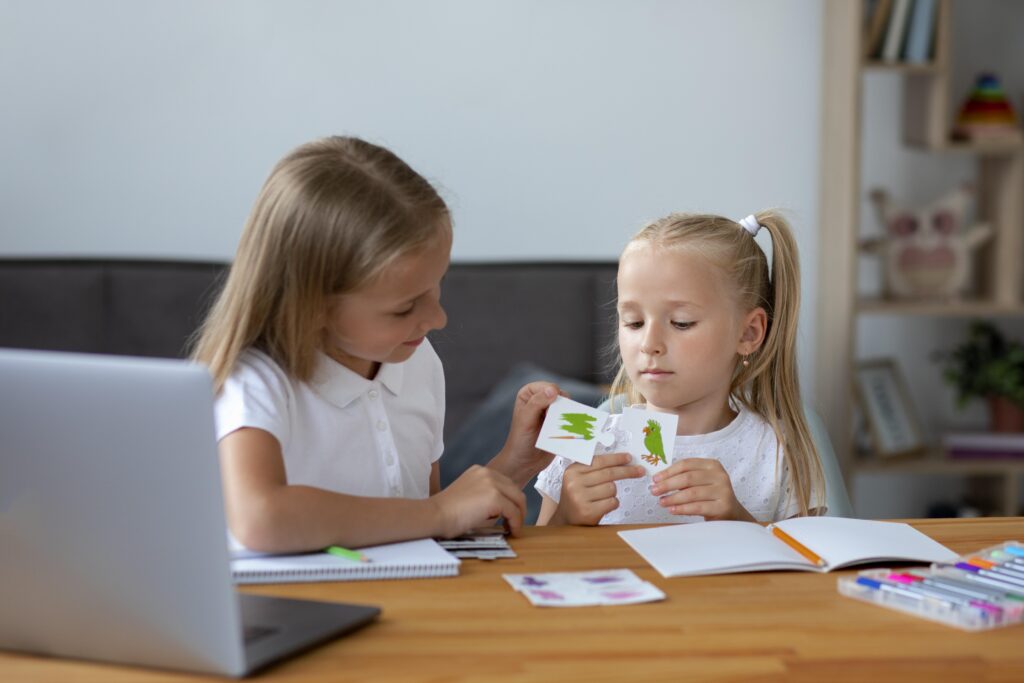
Have you ever noticed how a child who builds a block tower learns something completely different from a child who simply watches someone else build one? That difference — between doing and watching — lies at the heart of one of the most important questions in early childhood education: How do children learn best?As parents and educators, understanding the difference between active and passive learning can transform the way we support children’s growth — especially in those critical first six years of life. In this blog post, we explore both learning styles, what the research tells us, and how the Montessori method puts active learning front and centre. What Is Passive Learning? Passive learning happens when a child receives information without engaging with it directly. In this mode, the child is primarily an observer or listener — absorbing content rather than interacting with it. Common examples of passive learning include: Watching an educational video or TV programme Listening to a lecture or explanation without doing anything with the information Being shown how to do something without getting a turn to try it Reading a textbook page without applying the knowledge Passive learning isn’t entirely without value — children do absorb language, concepts, and ideas through observation. However, on its own, it tends to produce surface-level understanding that fades quickly without reinforcement. What Is Active Learning? Active learning, by contrast, is when a child is mentally and physically engaged in the learning process. The child is not just receiving information — they are exploring, doing, creating, questioning, and making meaning. In active learning, the child: Manipulates real objects with their hands Solves problems through trial and error Makes choices and experiences natural consequences Collaborates, communicates, and constructs understanding Connects new knowledge to what they already know The difference is the child’s role. In passive learning, the child is an audience. In active learning, the child is the protagonist. What Does the Research Say? Decades of research in developmental psychology and neuroscience consistently show that active, hands-on experiences produce deeper, more lasting learning — especially in young children. The Brain Needs Engagement to Learn When a child actively engages with a task, multiple areas of the brain light up simultaneously — the sensory cortex, the motor cortex, the prefrontal cortex, and the limbic system. This multi-area activation strengthens neural pathways and makes learning stick. Passive watching, on the other hand, tends to activate only the visual and auditory cortices. The learning is shallower and more easily forgotten. Jean Piaget’s Theory of Constructivism The influential Swiss psychologist Jean Piaget argued that children are not empty vessels waiting to be filled with knowledge. Instead, they are active constructors of their own understanding. Children build their knowledge through hands-on experience and interaction with the world around them. Key Insight: Children don’t learn by being told — they learn by doing, discovering, and experiencing. Lev Vygotsky and Social Learning Vygotsky’s work highlighted how active, collaborative learning — where children interact with peers and supportive adults — leads to higher-order thinking. When children talk through problems, explain their reasoning, and work alongside others, they consolidate learning far more effectively than in isolated passive settings. Active Learning in the Montessori Method Dr. Maria Montessori was a pioneer of active learning long before the term became popular in modern educational research. She observed children carefully and recognised that they learn most powerfully through purposeful, self-directed activity in a prepared environment. The Montessori approach is built on active learning at every level: Hands-On Materials Montessori materials — such as the Pink Tower, the Brown Stair, Sandpaper Letters, and the Number Rods — are designed so that children use their hands to explore abstract concepts. A child doesn’t just hear that 10 is larger than 1 — they feel the weight and size of the materials and discover it for themselves. This sensorial foundation is critical. When concepts are experienced physically before they are understood abstractly, children develop genuine comprehension rather than rote memorisation. Freedom of Movement In a Montessori classroom, children are free to move around, choose their work, and engage with materials at their own pace. This freedom is not chaos — it is purposeful. Movement is understood as essential to learning, not a distraction from it. Research supports this: physical activity and fine motor engagement are directly linked to cognitive development in young children. Self-Correction Through the Control of Error Most Montessori materials are designed with a built-in control of error — meaning the child can see for themselves when something is not right, without needing to be told by an adult. A cylinder that doesn’t fit its socket, a tower that topples because a block is placed incorrectly — these moments of self-correction are powerful active learning experiences. This builds independence, perseverance, and intrinsic motivation — qualities that passive learning rarely cultivates. The Three-Period Lesson Even when a Montessori teacher introduces a concept verbally, the lesson is structured to move quickly into active engagement. The Three-Period Lesson — Introduce, Recognise, Recall — ensures that the child doesn’t simply hear information but actively works with it to cement understanding. The Role of the Prepared Environment One of Dr. Montessori’s greatest insights was that the environment itself must be an active participant in learning. A Montessori classroom is not arranged for a teacher to perform at the front — it is arranged for children to engage. Every shelf, every material, every piece of furniture is placed intentionally to invite exploration, promote independence, and support active engagement. The environment says to the child: this is your space; you are capable; discover for yourself. Parents can apply this principle at home too. A low shelf with accessible, open-ended materials; a kitchen stool so a child can participate in cooking; a small watering can for tending to plants — these simple changes turn a home into a rich active learning environment. Finding the Right Balance This is not to say that passive learning has no
Top 10 Amazon Montessori Materials for Toddlers
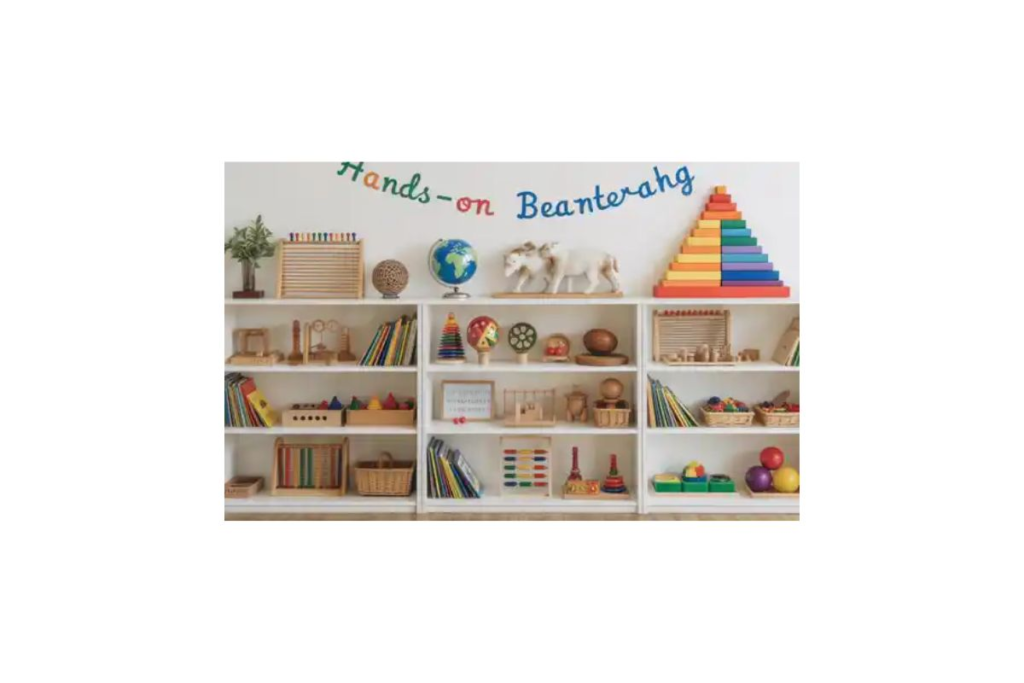
A Guide for Parents & Educators Published by KS Montessori | Your Child’s Learning Journey Starts Here Walk into any authentic Montessori classroom and you’ll notice something immediately different: the shelves are lined not with flashcard drills or battery-powered toys, but with beautiful, purposeful, hands-on materials. Every wooden block, every sandpaper letter, every spindle — has a reason for being there. Montessori materials are not just “learning toys.” They are scientifically designed tools rooted in over a century of child development research by Dr. Maria Montessori. When used consistently — at home or in the classroom — they support a child’s natural development across cognitive, motor, language, and mathematical domains in ways that passive instruction simply cannot replicate. In this guide, we’ll walk you through the core categories of Montessori materials, explain why each one matters, and point you to trusted, high-quality options you can bring into your home or classroom today. The Montessori Philosophy: Why Materials Are Central Dr. Montessori believed that children learn best through direct, multi-sensory interaction with their environment — not through rote memorization or passive listening. She observed that children have what she called “sensitive periods”: windows of time during which they are especially receptive to absorbing specific skills or knowledge. Montessori materials are designed to meet children precisely during these sensitive periods. They are: Self-correcting — the child can identify and fix mistakes without adult intervention, fostering independence and critical thinking. Hands-on — physical manipulation of materials builds neural pathways that abstract instruction cannot. Sequentially ordered — each material builds on the last, creating a scaffold toward mastery. Beautiful and inviting — aesthetics matter; children are drawn to work that looks purposeful and well-crafted. Together, these qualities turn learning into a joyful, intrinsically motivated activity — which is the cornerstone of the Montessori approach. Sensorial Materials: Training the Senses, Building the Mind Before a child can understand abstract concepts like “big” or “small,” “rough” or “smooth,” they need concrete, physical experiences that give those words meaning. Sensorial materials are designed to isolate and refine each of the senses — visual, tactile, auditory, and more. The Pink Tower Few Montessori materials are as iconic as the Pink Tower — ten solid wooden cubes that differ in three dimensions, from 1 cm³ to 10 cm³. This single material packs an enormous developmental punch: Develops visual discrimination and fine motor control as children carefully stack the cubes from largest to smallest. Introduces foundational mathematical concepts — dimension, order, and graduated series. It is self-correcting: if a cube is misplaced, the tower won’t look right — and the child learns to self-regulate. Recommended: Adena Montessori Pink Tower — expertly crafted for durability and dimensional accuracy. Geometry & Shape Recognition Geometric materials help children understand shape, symmetry, and spatial reasoning long before formal geometry is introduced in school. Research shows that early spatial reasoning is one of the strongest predictors of mathematical ability later in life. Recommended: Gudong Montessori Geometrical Materials — professional-quality shapes designed for early childhood exploration. Cylinder Blocks Mini cylinder blocks develop the three-finger pincer grip — the same grip used to hold a pencil — while simultaneously training the eye to discriminate size. These deceptively simple materials are doing double duty: preparing children for writing while sharpening visual perception. Recommended: Adena Montessori Mini Cylinder Blocks — a beautifully made set that engages children for years. Language Materials: From Letters to Literacy The Montessori approach to literacy is multi-sensory and deeply respectful of how children actually learn to read. Rather than drilling phonics charts, children feel, trace, and internalize letter sounds before they ever pick up a pencil. The result? Children who don’t just decode words — they understand language. Sandpaper Letters Sandpaper Letters are one of the most powerful pre-reading tools ever developed. Each letter is cut from sandpaper and mounted on a wooden board. Children trace the letter with their fingers while saying the phonetic sound — engaging sight, touch, movement, and hearing simultaneously. This multi-sensory approach is backed by neuroscience: encoding information through multiple senses creates stronger, longer-lasting memory traces. Children who learn letters through Sandpaper Letters often move to writing before they move to reading — they have physically internalized the letter forms. Helps children with dyslexia or reading difficulties by providing tactile reinforcement of letter shapes. Teaches correct letter formation before bad habits form. Lower and uppercase versions ensure full literacy preparation. Recommended: Lower & Capital Case Sandpaper Letters Set — a complete set covering both cases for comprehensive literacy readiness. Mathematics Materials: Concrete to Abstract One of the most transformative aspects of Montessori education is how it approaches mathematics. Rather than introducing numbers as abstract symbols, Montessori begins with concrete, tangible materials that give quantity a physical reality. Children who learn math this way don’t just memorize — they understand. Spindle Box The Spindle Box introduces children to the concept of zero and quantity in a concrete, hands-on way. Children count out spindles and place them in compartments numbered 0–9, physically experiencing what “none” (zero) looks and feels like — a concept that trips up many children when presented abstractly. Recommended: Spindle Box with 45 Spindles — a beautifully crafted traditional Montessori staple. Montessori Mathematics Materials Set For parents and educators looking to provide a complete foundation, a comprehensive mathematics materials set offers children progression from basic counting all the way through early operations. These materials span years of learning and grow with the child. Number rods build the concept of quantity as continuous, graded amounts. Bead materials make place value (tens, hundreds, thousands) physically tangible. Counters and cards connect numeral symbols to physical quantities. Recommended: Montessori Mathematics Materials Preschool Education Set — a comprehensive set supporting the full mathematical sequence. Practical Life & Sensory Materials: The Foundation of Everything In Montessori, practical life
The Role of well prepared Environment in Child Development|
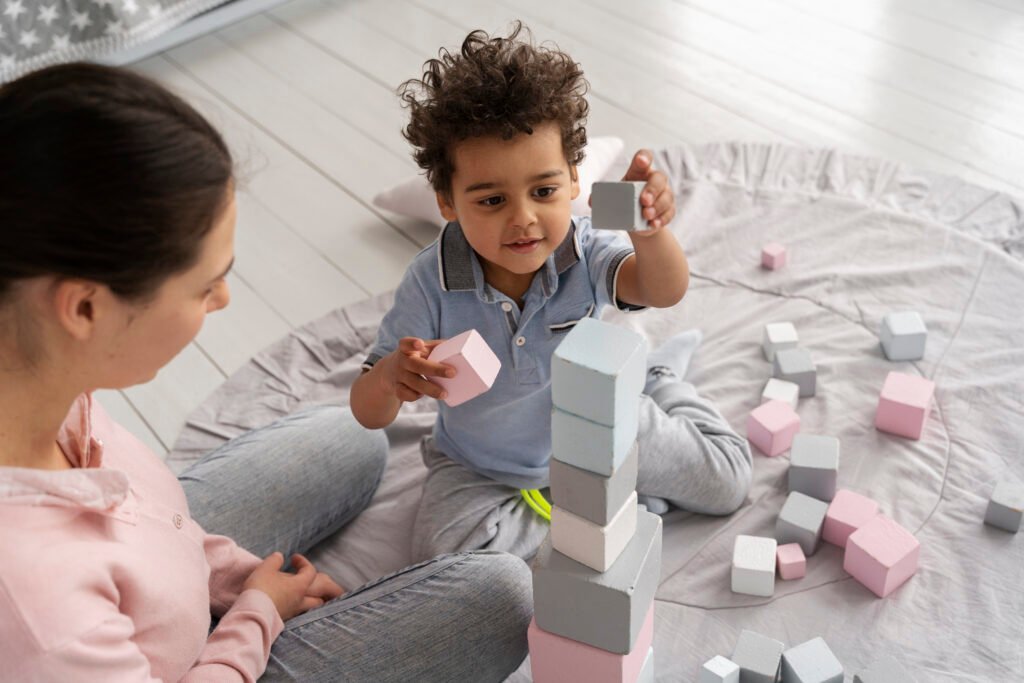
“Children do not need perfect parents. They need present, warm, consistent, and curious ones.” The role of environment in child development matters more than you think. Harvard’s Center on the Developing Child describes a concept called ‘serve and return’ — one of the most powerful tools in early childhood development. It simply means: your child reaches out (a look, a sound, a gesture), and you respond. This back-and-forth exchange builds the neural connections that form the foundation of communication, trust, and learning. What you need is: Consistency — routines help children feel safe and regulate their nervous system Warmth — physical affection and emotional validation build secure attachment Stimulation — new sights, sounds, textures, and experiences grow the brain Language — rich conversation is the single most impactful thing you can do at home Freedom to explore — children learn best through discovery, not instruction The stress of poverty, neglect, or exposure to violence — what researchers call ‘toxic stress’ — can disrupt brain development in measurable ways. On the flip side, a consistently warm and stimulating environment can help even children who face early challenges to thrive. The Montessori Approach — Building the Foundation Right The Montessori method, developed by Dr. Maria Montessori over a century ago, was built on a deep understanding of how young children naturally learn — long before modern neuroscience could confirm what she observed. Today, brain research consistently validates the principles that Montessori educators have applied for generations. At KS Montessori, we believe that children are not empty vessels waiting to be filled with knowledge. They are naturally curious, capable, and driven to explore. Our role — as educators and as parents — is to prepare the right environment and step back, allowing children to take ownership of their own learning. Key Montessori Principles That Support Early Brain Development: Child-led learning: Children work at their own pace, building confidence and intrinsic motivation Mixed-age classrooms: Younger children learn from older peers; older children reinforce their learning by teaching Hands-on materials: Every Montessori material is designed to isolate a specific concept, making abstract ideas concrete Freedom within limits: Children choose their work, but within a structured, purposeful environment Respect for the child: Every child is treated as a unique individual with their own timeline and strengths Children who attend high-quality early childhood programs are more likely to graduate high school, pursue higher education, maintain stable employment, and have healthier relationships as adults. The return on investment in quality early education is estimated at $7 to $12 for every $1 spent — in reduced social costs and increased productivity. Common Myths About Early Childhood — Busted Myth 1: “My child will catch up — there’s plenty of time.” While children are resilient and can absolutely learn and grow throughout their lives, certain windows of development are more sensitive than others. Language acquisition, emotional regulation, and attachment patterns are most powerfully shaped in the early years. Waiting is not the same as harmful — but intentionality now pays dividends later. Myth 2: “Academic pressure early leads to smarter kids.” Research consistently shows the opposite. Children who are pushed into formal, desk-based academics too early often experience increased anxiety and reduced love of learning. Play-based, child-directed learning in the early years produces better long-term academic outcomes than drilling letters and numbers before children are developmentally ready. Myth 3: “Good parenting means keeping children busy with activities.” Over-scheduling children actually deprives them of something crucial: unstructured play. Free play is where children develop creativity, resilience, and self-regulation. Some of the most important learning happens when children are ‘just playing.’ Myth 4: “Screen time is fine if it’s educational.” The American Academy of Pediatrics recommends no screen time for children under 18-24 months (except video chatting), and very limited, high-quality content for children ages 2-5. Even ‘educational’ screen time cannot replicate the rich, multi-sensory, relationship-based learning that happens through real-world interaction. What Parents Can Do Starting Today You do not need to wait to enroll in the perfect school or buy the right curriculum. The most powerful early childhood education happens in everyday moments at home. Here is a simple, practical framework: The TALK Principle for Parents T TALK — and listen Narrate your day. Ask open questions. Have real conversations — not just instructions. A ACT — with your hands and body Cook together, build things, go outside. Physical, sensory experiences grow the brain. L LOVE — unconditionally Consistent warmth and emotional safety are the most critical inputs for healthy brain development. K KNOW — your child as an individual Every child has a unique pace and learning style. Trust their timeline. Observe before intervening. The Takeaway: You Have More Power Than You Know “It is easier to build strong children than to repair broken men.” — Frederick Douglass The early years of your child’s life are not just a ‘phase’ to get through. They are the most extraordinary window of human development — a time when the brain is more open, more flexible, and more responsive to nurturing input than it will ever be again. You do not need to be a perfect parent. You do not need a perfect school. What you need is presence, warmth, curiosity, and consistency. The conversations you have at the dinner table, the books you read at bedtime, the way you respond when your child is upset — all of it matters, all of it counts, and all of it is building the person your child will become. At KS Montessori, we are here to be your partner in this extraordinary journey. Whether you are just beginning to explore early education options or looking to deepen your understanding of your child’s development, we would love to connect with you. Explore more resources, schedule a visit, or reach out to our team at www.ksmontessori.com References & Further Reading The information in this post is grounded in established research from the following organizations
The First 6 Years of a child :A life long Impact
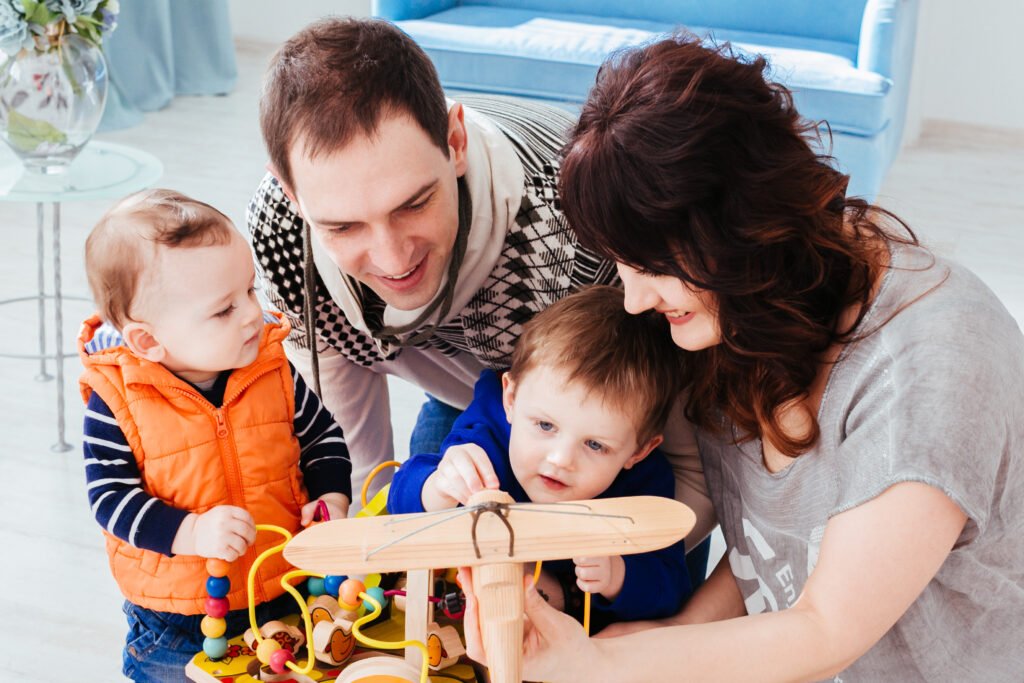
Why the Early Years of Your Child’s Life Are the Most Important “Your child’s brain at age 3 is twice as active as an adult’s — it’s working around the clock, building the foundations of everything they will ever learn, feel, and become. What happens in these early years doesn’t just shape childhood — it shapes an entire life.” As a parent, you are your child’s first and most important teacher. The choices you make in their early years — the environment you create, the language you use, the experiences you offer — have a ripple effect that extends decades into the future. This might sound overwhelming, but it is actually one of the most empowering truths about parenting. In this post, we are going to walk you through the science and heart behind early childhood development — in plain, everyday language — and show you why these golden years truly matter more than any other period in your child’s life. 1. The Brain Builds Itself — and It Does It Fast Imagine constructing a building. The foundation must be strong before you can build walls, add floors, or install the roof. Your child’s brain works the same way. At birth, a baby’s brain has about 100 billion neurons — almost as many as an adult. But those neurons are not yet connected. The magic happens in the first few years of life when these neurons begin forming connections (called synapses) at a breathtaking speed. 1 million new neural connections are formed every single second in a baby’s first 3 years 90% of a child’s brain development is complete by age 5 3x more active — a 3-year-old’s brain is three times more active than an adult brain These connections are built through every single experience — a song you sing, a word you say, a hug you give, a puzzle you solve together. Every positive, nurturing experience literally shapes the physical structure of your child’s brain. And here is the key: the brain never grows this fast again. After the early years, unused connections are pruned away — and the window to build certain foundations begins to narrow. This is not something to fear; it is something to embrace with action and intention. 2. What Exactly Is Developing in the Early Years? Early childhood development is not just about learning to talk or walk. It covers several critical areas that work together to shape the whole child: Cognitive Skills (Thinking and Problem Solving) Children learn to think, reason, remember, and solve problems through exploration and play. When a toddler stacks blocks and watches them fall, they are not just playing — they are discovering gravity, cause and effect, and spatial reasoning. Provide open-ended toys: blocks, sand, water, art materials Ask questions instead of always giving answers: ‘What do you think will happen?’ Let them make age-appropriate choices and experience natural consequences Emotional and Social Development A child who feels safe, loved, and understood develops a secure attachment — and this becomes the template for all future relationships. Children who develop strong emotional intelligence grow into adults who can manage stress, empathize with others, and build meaningful connections. Name emotions out loud: ‘You seem frustrated right now. That’s okay.’ Teach calming strategies: deep breaths, hugging a toy, counting to five Model kindness, patience, and conflict resolution in your own behavior Language and Communication Children absorb language like sponges in the first three years. The more words they hear — through conversation, reading, and storytelling — the richer their vocabulary becomes. Strong language skills at age 5 are one of the biggest predictors of academic success at age 10. Talk to your child constantly — narrate your day, describe what you see Read aloud every single day, even from infancy Respond to their babbles and attempts to communicate — this builds confidence. Physical Development Gross motor skills (running, jumping, climbing) and fine motor skills (holding a pencil, buttoning a shirt) both develop rapidly in the early years. Physical play is not a distraction from learning — it IS learning. Outdoor play every day for gross motor development Activities like drawing, playdough, and threading beads for fine motor skills Limit screen time — children need real-world, physical interaction with their environment Choosing the Right Early Childhood Program If you are considering an early childhood program for your child, here are the key qualities to look for — regardless of whether it is Montessori, Reggio Emilia, play-based, or another approach: Warm, responsive teachers who get on the child’s level — literally and emotionally Low child-to-teacher ratios (ideally 8:1 or less for toddlers, 10:1 for preschoolers) A rich, language-filled environment with books, conversation, and storytelling Time for unstructured play alongside guided activities An outdoor space and regular physical activity A curriculum grounded in developmental science, not just test preparation Clear communication and partnership with parents. At KS Montessori, we have designed our program with every one of these principles at its core. Our classrooms are calm, purposeful, and child-centered environments where every child is seen, valued, and supported to reach their full potential — at their own beautiful pace.
Montessori Brown Stair: Purpose andBenefits| Guide For Parents
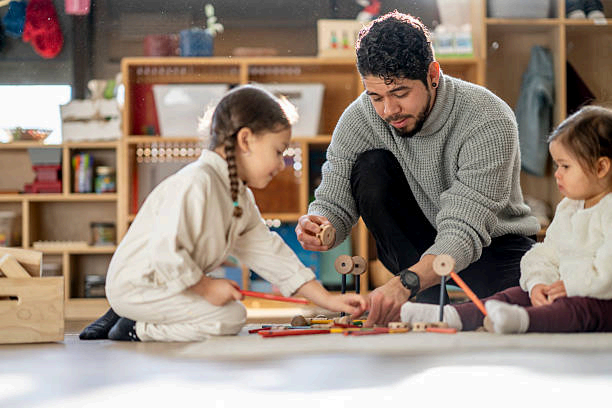
Montessorie Small Brown Stair Material 1: Understanding the Brown Stair Educational Benefits The Montessori Small Brown Stair helps children develop fine motor and visual discrimination skills through hands-on learning.” The material’s sensorial nature makes it an excellent resource for parents, Montessori teachers, or families who are home schooling children between the ages of 2 ½ – 6 years. The purpose of this guide is to outline the educational benefits of the Brown Stair. This guide explains the educational benefits of the Brown Stair. These benefits are important in Montessori education. It also shows the correct way to present the material. This helps children understand size and dimension concepts. In addition, it shares creative variations of the activity. These help children explore beyond the basic lesson. You will learn how ten wooden prisms support learning. They help develop mathematical thinking in children. Develops visual discrimination skills through size gradation Enhances mathematical concepts of dimension and volume Builds concentration and focus through precise manipulation Strengthens fine motor skills and hand-eye coordination Physical Components and Material Specifications Ten wooden prisms in progressive sizes Natural wood construction for sensory appeal Precise dimensional relationships for accuracy Develops visual discrimination skills through size gradation The Brown Stair provides a complete learning experience as a result of the methodically designe progression of size. The individual pieces differ by 1 cm in thickness and height while being the same length at 20 cm. The exact progression allows children to identify minute differences between almost identical objects. While playing with the Brown Stair, children will naturally inspect sizes and see the compare between them. As a result, they will begin to refine their eyesight by seeing size differences and developing their visual-motor processing skills regarding spatial relationships. This is an inherent ability that transfers to the next step of learning, reading, because as children learn to read, they must differentiate between letter shapes that are similar and identify textual patterns. This skill transfers directly to reading readiness, as children must distinguish between similar letter shapes and recognize patterns in text . The other benefit of the Brown Stair is that it will help develop logical thinking in children and allow them to determine how the pieces fit together both hierarchically and spatially The material also strengthens the ability to sequence objects logically. Children discover that each block has a specific place in the arrangement, developing their understanding of order and progression. Enhances mathematical concepts of dimension and volume It enhances the mathematical concepts of dimension and volume, as well as logical sequencing of objects. As children learn to arrange the blocks, they discover that there is only one place for each block to fit correctly . Children can see a complete progression of the Brown Stair and also visually demonstrate the Base Ten system. By using a physical doubling method, they will have the opportunity to visualise how significantly an object’s volume increases when the dimensions are doubled . The ability to visually see an order is necessary for developing counting, number recognition, and pattern recognition. By providing hands-on experience with the Brown Stair as a learning tool, children are able to learn the fundamental mathematical concepts of dimensions and volume through a complete tactile experience. The child uses three-dimensional blocks to demonstrate a dimensional volume, and they will be able to explore first-hand the impact of varying dimensions on the volume of a given object. Builds concentration and focus through precise manipulation The Brown Stair demands careful attention and deliberate movement , they develope sustained attention through precise movements when using it. The manipulative requires that childeren take care of every block, keeping in mind their weight, placement and relationship to one another. As a result, children are usually slower creator due to this added development of their ability to be more alert and focused. The Amount of time necessary for correction of error when the blocks’ order is not correct helps build persistence and problem-solving skill. When the blocks are not arranged in the correct order, the child sees the visual disruption caused by the error and tries to correct it. Working with blocks encourages children to plan and organize. In order to stack blocks in the correct order, children would think about which block to use first and how to place the blocks to achieve the most stability. As children learn this skill to plan for stability, it strengthness their executive functioning skills, and it teaches them how to prepare with care. Strengthens fine motor skills and hand-eye coordination Working with the Brown Stair blocks helps children learn how to perform precise hand movements through manipulation of varying size/weight of each block requires children to change their grip and control their movements based on size/weight of the block. For example, the smallest moving block can be picked up using the tips of the fingers, while the largest block requires two hands and careful positioning. The building of the stairs fully challenges children to accurately position the blocks so that they will stay upright. Children must coordinate what they see visually with their hand movements in order to create a stable structure with the blocks. As children develop this skills it prepares them for later tasks such as writing and drawing. Continuous practice with blocks develops increased strength and endurance in the hand. Children naturally develop muscle coordination through enjoyable activities. The gradual increase in block sizes offers a systematic approach for children to gradually progress in their physical development. 2: Proper Presentation Techniques for Maximum Learning Sequential introduction from largest to smallest block Encouraging independent exploration and discovery Demonstrating correct stacking methods Supporting child-led repetition and practice Sequential Introduction from Largest to Smallest Block Sequential presentation will begin with the Largest to the Smallest Block. At this stage, only the largest block will be brought to the floor, and children will feel the weight, the surface of the block,and its overall size/shape. Demonstrating to the child how to handle the block with care and
AMI Montessori Education: A Complete Guide for Parents
AMI Montessori Education: A Complete Guide for Parents Ks Montessori – Building Strong Foundations for Lifelong Learning Choosing the right educational environment for your child is one of the most important decisions a parent can make. Early childhood education not only shapes academic skills but also influences confidence, independence, emotional intelligence, and social behavior. At Ks Montessori, we follow the AMI Montessori approach, a globally respected method of education designed to support a child’s natural development. This guide will help parents understand AMI Montessori education, its benefits, and why Ks Montessori is an ideal choice for families seeking quality, trust, and long-term success. Understanding AMI Montessori Education The Association Montessori International (AMI) was founded by Dr. Maria Montessori to preserve her original educational philosophy. AMI Montessori schools follow strict international standards to provide authentic Montessori education, not a modified or diluted version. Keywords naturally included in this section: AMI Montessori education AMI Montessori school Montessori early childhood education Montessori learning environment Montessori materials Montessori teaching method AMI Montessori education respects each child as an individual, allowing learning to happen naturally through exploration, movement, and hands-on experience. The Philosophy Behind AMI Montessori AMI Montessori believes children are naturally curious and capable learners. Instead of traditional teacher-led instruction, children are guided to learn independently in a carefully prepared environment. Core Principles: Freedom within limits Self-directed learning Hands-on Montessori materials Mixed-age classrooms Respect for each child’s pace and interests At Ks Montessori, these principles are practiced daily in every classroom. Why Early Childhood Education Matters The first six years of a child’s life are crucial for brain development. During this period, children absorb information effortlessly from their surroundings. AMI Montessori education takes advantage of this sensitive period by creating an environment that encourages curiosity, independence, and responsibility. Benefits of Montessori classrooms: Learn through real-life activities Develop concentration and focus Build confidence through achievement Enjoy learning instead of fearing mistakes Benefits of AMI Montessori Education Independence and Self-Confidence Practical life activities such as pouring, dressing, cleaning, and organizing help children become independent. These small achievements boost confidence and self-esteem. Focus and Concentration AMI Montessori classrooms offer uninterrupted work periods, allowing children to fully engage with tasks and complete them at their own pace. Emotional and Social Development Mixed-age classrooms encourage cooperation, empathy, leadership, and mutual respect. Children naturally learn social skills by interacting with peers of different ages. Solid Academic Foundation AMI Montessori provides strong preparation in: Language and communication Mathematics Sensorial development Cultural studies Children understand concepts deeply because they learn through experience rather than memorization. Why Choose Ks Montessori? At Ks Montessori, we provide authentic AMI Montessori education in a safe, nurturing, and stimulating environment. AMI-Trained Educators Our teachers are professionally trained according to AMI standards. They observe, guide, and support children without pressure or comparison. Prepared Montessori Environment Each classroom is thoughtfully arranged with Montessori-approved materials that encourage independence and exploration. Individual Attention Every child is unique. Teachers carefully observe each child and adapt guidance according to individual needs. Learn more about Ks Montessori programs here Montessori Learning Materials AMI Montessori classrooms use scientifically designed materials that support hands-on learning. Children understand concepts through touch, movement, and repetition. Key Montessori materials with affiliate links: Practical Life Montessori Tools– pouring, spooning, dressing frames Language Montessori Materials– sandpaper letters, movable alphabet Mathematics Montessori Materials– number rods, golden beads Complete Montessori Kit– all-in-one Montessori learning set AMI Montessori vs Traditional Education Traditional education often expects all children to learn at the same pace. AMI Montessori respects each child’s development. In Montessori classrooms: Children choose their work Learning is self-paced Mistakes are part of growth Teachers act as guides, not lecturers This approach develops confident, curious learners who enjoy learning naturally.
Montessori Pink Tower
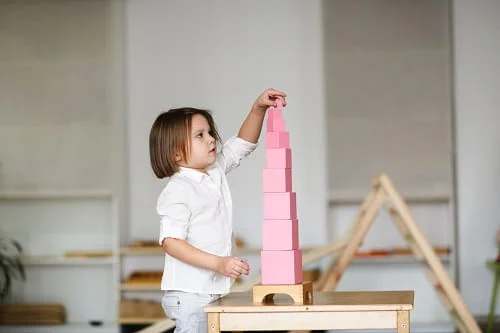
Montessori Pink Tower: Unlock Your Child’s Potential with ksMontessori As a parent or educator, you understand the importance of giving children tools that foster their development. You aspirefor tools that enhance creativity, and independence. One such essential Montessori material is the Montessori Pink Tower, a classic educational tool that helps children refine their fine motor skills, enhance their understanding of size and proportion, and build a strong foundation for early mathematics. At ksMontessori, we are passionate about providing high-quality Montessori materials that support children’s natural curiosity and growth. In this post, we will explore the numerous benefits of the Pink Tower, its educational value, and why it should be an essential part of your child’s learning experience. What is the Montessori Pink Tower? The Montessori Pink Tower is a set of 10 graduated cubes made from durable wood, each painted in a soft pink hue. The cubes range in size from 1 cm³ to 10 cm³, and the goal is to stack them in order of size, starting from the smallest to the largest. This simple yet effective educational material is part of the Montessori Sensorial curriculum, which helps children develop their senses, improve focus, and master critical early math skills. By engaging with the Pink Tower, children gain a tactile understanding of concepts like size, dimension, and proportion. The activity encourages independent learning and problem-solving, both core principles of the Montessori method. Benefits of the Montessori Pink Tower The Montessori Pink Tower offers a range of developmental benefits for children. From cognitive development to physical skills, here’s how the Pink Tower supports a child’s learning journey: 1. Enhances Fine Motor Skills and Hand-Eye Coordination As children handle and stack the cubes, they strengthen their fine motor skills. The precision required to stack the cubes without them toppling promotes hand-eye coordination, dexterity, and muscle control. These skills are vital for other everyday tasks, like writing, drawing, and using utensils. 2. Teaches Early Math Concepts The Pink Tower is a fantastic tool for introducing young children to early math concepts. The cubes offer a hands-on way to explore measurement, proportions, and volume. Children learn to understand how objects vary in size and volume, helping them grasp the basic concepts of mathematics in an intuitive and tangible way. 3. Promotes Spatial Awareness and Cognitive Development By arranging the cubes in different orders and patterns, children develop a strong sense of spatial relationships. The Pink Tower helps them visualize size gradation and order, which builds a solid foundation for geometry, problem-solving, and logical thinking. 4. Encourages Independence and Self-Correction One of the primary goals of the Montessori method is to foster independence in children. The Pink Tower is self-correcting; if the cubes are not stacked correctly, the structure will collapse. This encourages children to solve problems on their own, building critical thinking skills and boosting self-confidence. 5. Improves Concentration and Focus The process of stacking the cubes from smallest to largest requires a high level of concentration and patience. This simple activity encourages children to stay focused and be mindful of their actions, which contributes to their overall ability to concentrate in other areas of learning. How to Use the Montessori Pink Tower There are numerous ways to engage children with the Montessori Pink Tower. Here are a few ideas for maximizing its educational potential: 1. Stacking the Cubes by Size The primary activity is stacking the cubes from smallest to largest. This teaches children about size comparison, sequencing, and order, which are essential skills in early math. 2. Reversing the Order Once your child has mastered stacking the cubes from smallest to largest, challenge them to arrange the cubes in reverse order—from largest to smallest. This reinforces the concept of size and further develops cognitive skills. 3. Counting and Volume Exploration You can introduce counting with the cubes, helping children understand quantity while simultaneously exploring the concept of volume. For instance, ask your child to count how many cubes are in the tower or discuss how the volume changes as the cubes get larger. 4. Creative Play and Building Encourage your child to use the cubes for open-ended play. Have them build towers, houses, or other structures. This creative play helps children strengthen their problem-solving skills and think about balance, symmetry, and spatial relationships. Why Choose the Montessori Pink Tower from ksMontessori? At ksMontessori, we focus on providing high-quality, educational materials that are both durable and safe for children. Our Montessori Pink Tower is made from eco-friendly wood and is carefully crafted to ensure that it will last for years of educational play. Unlike plastic toys, which often lose their appeal over time, the Pink Tower is a timeless learning tool that grows with your child. Here’s why you should choose our Pink Tower: Durable & Safe: Made from high-quality, non-toxic wood for durability and child safety. Educational Value: Supports early learning in mathematics, fine motor skills, and spatial awareness. Timeless Design: The simple, elegant design appeals to children’s natural curiosity and encourages independent learning. Sustainable: Environmentally friendly materials ensure that the Pink Tower is safe for both children and the planet. Where to Buy the Montessori Pink Tower Are you ready to bring the Montessori Pink Tower into your home or classroom? You can easily purchase the Pink Tower through the link below. By buying through our affiliate link, you’ll not only be supporting ksMontessori but also investing in a valuable educational resource for your child. 👉 Click here to buy the Montessori Pink Tower on Amazon The Montessori Pink Tower is more than just a set of wooden cubes; it’s a valuable educational tool that helps children develop a wide range of skills, from fine motor abilities to early math concepts. Whether you are homeschooling or looking to enrich your classroom environment, the Pink Tower is an essential Montessori material that will provide your child with years of learning and growth. At ksMontessori, we are committed to offering the best in Montessori education. The Pink Tower is just one
An introduction to Dr. Maria Montessori
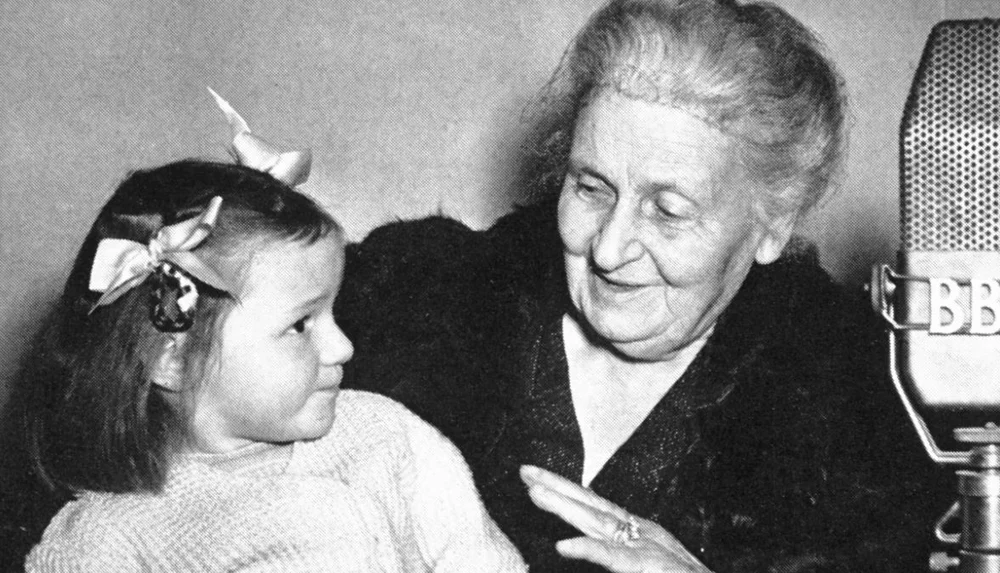
Dr. Maria Montessori: Who Introduced Early Childhood Education Early childhood is the most crucial time of human development.Not many people get that right, but Dr. Maria Montessori did better than anyone. She had a different vision of a child’s learning, growth and how they connect with everything around them. Her ideas are still changing early education all over the world by high quality early education programs that follow her philosophy, even the one at KSmontessori with its nurturing setup. It feels like her approach just sticks because it works so well for little kids. This blog looks into her life and what Dr.Maria Montessori theory is based on. Also, how she affected the world with her methods and why people trust it so much today in early education. Who Was Dr Maria Montessori? Dr Maria Montessori was an Italian physician, educator, and ideologist who forever changed the field of education. She was born back in 1870 and ended up being the first woman to become a doctor in Italy, breaking social barriers at a time when women had limited professional opportunities. When she started working with children she made some record breaking discoveries such as: Kids are just naturally curious and they can learn a lot if you keep them in the right place. Instead of pushing all these strict education systems on them, she believed in observing children scientifically and helping them grow in their own environment. That approach of hers basically started what we call Montessori education nowadays. It’s all focused on the child and the most trusted philosophy by parents and teachers worldwide. The Birth of the Montessori Method: The Montessori Method began in 1907 with the opening of the Casa dei Bambini (Children’s House) in Rome. Dr. Maria worked with children from lower backgrounds and closely observed how they interacted with specially designed learning materials. What she found was extraordinary. When given freedom within a structured environment, children: Developed focus and concentration. They learn on their own, without anyone pushing them. Showed self-discipline without punishment. Demonstrated a natural love for learning. These observations became the scientific basis of the Montessori Method, an educational approach built on respect for the child and hands-on learning. Core Principles of Montessori Education: The main pillar of Montessori education lies in its carefully designed principles, each aimed at nurturing the development of children. Respect for the Child The classrooms are set up in a unique way with materials accessible for different ages that every individual explores on their own with different interests and ways of learning. Child-Led Learning Students get an opportunity to pick what they want to do based on developmental needs, promoting intrinsic and motivation. The Prepared Environment Classrooms are thoughtfully designed with age-appropriate materials that encourage exploration and independence. Hands-On Learning The montessori material involves touching and seeing things, so abstract stuff becomes more real through hands-on play. Freedom with Responsibility Freedom comes with responsibility, like kids can choose but they learn to own their actions and build discipline. The Teacher as a Guide Teachers watch and guide instead of telling everyone what to do all the time. It feels a bit different from regular school. At KSmontessori, Dr maria montessori method is the heart of learning to ensure children’s academic, social and emotional development. Dr. Montessori’s View of the Child: Dr. Maria Montessori quotes that “children are not empty vessels waiting to be filled with information”. Instead, she viewed them as active participants in their own development. One of her most empowering theories was the concept of sensitive periods which explains specific times when children are especially receptive to learning certain skills such as language, movement, or order. When education aligns with these natural windows, learning becomes effortless and joyful. This Dr maria montessori philosophy of education empowers children to: Build confidence Develop independence Strengthen decision-making skills Cultivate lifelong curiosity The Global Impact of Dr. Maria Montessori: Today, Montessori education is practiced in over 140 countries, with thousands of schools serving millions of children. Dr. Montessori’s work influenced not only education but also psychology, neuroscience, and child development research. Her legacy includes: A scientifically grounded educational method International recognition as an educational reformer A timeless philosophy that adapts to modern learning needs From traditional classrooms to modern learning environments. Hence, Montessori education continues to shape confident and capable learning. Why Montessori Education Is More Relevant Than Ever? In this world that’s all about screens and rushing around all the time, Montessori seems like an alternative way to help kids build up those important skills they’ll need later on such as: Independent thinking Focus and concentration Problem-solving abilities Emotional intelligence Respect for others Parents seeking a balanced, holistic approach towards their kids’ education should start to look at places like KSmontessori more often. The learning there is focused on the child, making it purposeful and meaningful. Montessori Philosophy at KSmontessori: At KSmontessori, Dr. Maria Montessori’s vision comes alive every day. Our learning environment reflects her principles through: Carefully prepared classrooms Montessori-trained educators Hands-on, age-appropriate materials A strong focus on independence and confidence We believe education should inspire children, not pressure them. By honoring each child’s natural development, KSmontessori nurtures lifelong learners prepared for future success. Recommended Montessori Resource for Parents: For parents who want to increase their understanding of Montessori education at home, we recommend this highly trusted Montessori resource. Montessori Learning Materials & Books https://amzn.to/48RpxnG These carefully designed materials support hands-on learning, independence, and skill development perfect for extending Montessori principles beyond the classroom. Conclusion: Dr. Maria Montessori’s work was more than an educational method; it was a movement that respected childhood as a golden period of human development. Over a century later, her philosophy continues to shape confident, compassionate, and capable learners. At KSmontessori, we proudly carry forward her legacy by creating an environment where children thrive naturally. By choosing Montessori education, parents invest not just in academics but in their child’s lifelong success.